

Maddy summaryThis bill requires all public school staff in New Jersey to complete training on caring for students with epilepsy or seizure disorders every two years. It directly affects school staff (including teachers, coaches, and support personnel) and students with these conditions. The training, provided through Department of Health-approved courses by nonprofit organizations, covers recognizing seizures, emergency response, and daily care. This update builds on existing law (P.L.2019, c.290) that already requires schools to develop individualized health plans for affected students but adds the mandatory biennial staff training requirement. The law applies to all school-sponsored activities, including those outside regular school hours.
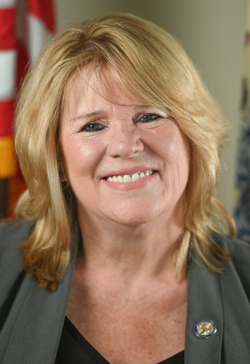
Asm. Carol Murphy
Sponsored bills
Maddy summaryThis bill allows motor vehicle franchisors (companies that distribute new vehicles) to sell, lease, or assign vehicles to their employees without needing a standard dealership license. It creates a special "M" license that permits franchisors to sell vehicles to employees or for promotional, testing, marketing, or product familiarity purposes (with a limit of 50 total vehicles), while requiring proof of employment to be kept on file for four years. The bill specifies that this license does not authorize retail sales to the general public, and vehicles sold to employees or used for promotional purposes can receive standard license plates. Franchisors using this special license are not required to maintain a physical storefront with display space for vehicles, as would be required for regular dealerships.
Maddy summaryThis bill creates a dedicated "Civil Air Patrol Fund" within New Jersey's Department of Military and Veterans' Affairs. It appropriates $100,000 annually from the state's General Fund to support the New Jersey Wing of the Civil Air Patrol. The fund will finance specific programs including cadet STEM and aviation training, search and rescue preparation, equipment like a Redbird Simulator, and disaster relief readiness. Unspent funds will carry forward to future years. The bill directly affects the Civil Air Patrol's operations in New Jersey by providing stable, annual funding for its training and mission support.
Maddy summaryThis bill (A1941) requires the New Jersey Commission on Human Trafficking to expand public awareness signage about human trafficking to 12 new types of establishments, including gas stations, staffing agencies, law enforcement offices, nail salons, and Motor Vehicle Commission offices. The signage must display the national 24-hour human trafficking hotline number and meet specific size (8.5" x 11") and language (English/Spanish) requirements. Businesses failing to comply face civil penalties of $300 for a first offense and $1,000 for subsequent violations. The bill directly affects all covered establishments by mandating visible signage to educate the public on trafficking resources.
Maddy summaryNew Jersey Assembly Bill A1930 broadens the criminal statute for cyber-harassment targeting minors. It lowers the age threshold for a third-degree offense from 21 to 18 years old and removes the requirement that offenders must impersonate a minor to be charged. The bill also mandates that minors under 16 convicted of cyber-harassment complete educational programs about online safety, and penalizes parents who fail to comply with court orders regarding these programs. These changes directly affect adults aged 18+ who cyber-harass minors, minors under 16 who commit such acts, and their parents or guardians. The bill takes effect immediately upon enactment.
Maddy summaryThis bill (A4941) provides educational support professionals in New Jersey school districts - non-teaching staff like paraprofessionals or administrative workers - with seniority credit for military service. It allows them to count up to four years of active U.S. military service toward seniority, as if they were continuously employed, if they qualify for federal veterans' benefits. The credit applies to all military service, including time served before their current school district employment. This extends an existing benefit currently available to teaching staff to support staff.
Maddy summaryAJR 126 designates April 18 of each year as "Worker Safety Day" in New Jersey. The bill encourages employers, workers, government agencies, and communities to promote workplace safety through public awareness. It requires the Governor to issue an annual proclamation urging New Jersey residents to observe the day with activities supporting safe work environments. This resolution has no regulatory effect but aims to highlight the importance of preventing workplace injuries and deaths.
Maddy summaryThis bill eliminates the statewide high school graduation proficiency test requirement in New Jersey. It removes the test from graduation standards, so students no longer need to pass it to receive a diploma, and school districts no longer need to administer it. The bill also amends school district report cards to remove test results and eliminates the requirement for out-of-school youth to pass the test for a State endorsed diploma. This directly affects all New Jersey high school students, school districts, and out-of-school youth seeking diplomas by changing graduation requirements from a standardized test to local standards developed by school boards.
Maddy summaryThis bill requires New Jersey's Commissioner of Children and Families to appoint a State Human Trafficking and Child Sexual Exploitation Prevention Coordinator. The Coordinator would develop training for child welfare, health care, and criminal justice professionals; coordinate state services; maintain a public resource list for survivors; and administer a grant program. The grant program funds trauma-informed, culturally specific services for youth aged 16-25 who are survivors or at risk of human trafficking or child sexual exploitation. It supports community organizations, law enforcement, and health providers to improve survivor identification, service coordination, and housing access for homeless youth survivors.
Maddy summaryThis bill establishes licensing requirements for emergency medical responders (EMRs) and emergency medical technicians (EMTs) and certification standards for mobility assistance vehicle operators, all administered by New Jersey's Department of Health. It revises the rules for delivering emergency medical services and non-emergency patient transportation by updating definitions (such as "mobile intensive care unit" and "hospital transfer center") and setting new provider standards. These changes directly affect ambulance services, non-emergency medical transportation providers, and healthcare staff who deliver these services across New Jersey.