

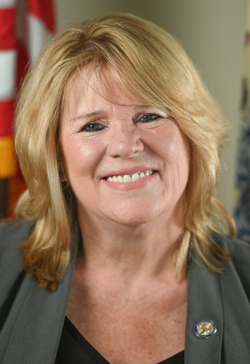
Photo of Carol Murphy
D New Jersey General Assembly · District 7

Asm. Carol Murphy

Compare
Total votes
5,690
all sessions
Attendance
98%
93 missed
Higher than 81% of chamber peers
With party
99%
of cast votes
Near the chamber average
Bipartisan score
0%
crosses aisle rarely
Near the chamber average
Sponsored
4,664
bills & resolutions
Higher than 93% of chamber peers
Committees
4
assignments
4,664 bills and resolutions

Sponsored bills

Total
4,664
Primary
2,686
Co-sponsor
1,978
This page
4,664
matching current filters
Co-sponsor A 2356
died · New Jersey General Assembly · Co-sponsor
Provides employment protections for paid first responders diagnosed with post-traumatic stress disorder under certain conditions.

Maddy summaryThis bill, now law as P.L.2025, c.272, provides employment protections for New Jersey paid first responders (including police, firefighters, EMTs, and 9-1-1 dispatchers) diagnosed with work-related PTSD. It prohibits employers from firing, harassing, or discriminating against employees who take leave for qualifying PTSD treatment, requiring reinstatement to their previous position after documented recovery. Employers violating these protections face civil fines ($5,000 for first violation, $10,000 for subsequent), court-ordered reinstatement, lost wages, and attorney fees. The law applies only when PTSD arises from on-the-job trauma or vicarious trauma experienced during official duties.

died Jan 13, 2026 1 co-sponsor
Co-sponsor A 1831
In committee · New Jersey General Assembly · Co-sponsor
Makes various changes to SHBP plan offerings and governance.

Maddy summaryThis bill restructures the governance of New Jersey's State Health Benefits Program (SHBP), which provides health coverage to state employees. It creates a new 11-member State Health Benefits Commission (replacing the previous structure) and a separate 12-member Plan Design Committee. The Commission includes the Treasurer, agency heads, and members appointed by labor unions representing state employees, while the Plan Design Committee focuses specifically on designing health plan benefits like medical, dental, and prescription coverage. These changes affect all state employees enrolled in the SHBP by altering who oversees their health plan offerings and administration. The bill does not change the actual benefits provided, only the decision-making bodies managing the program.

In committee Jan 13, 2026 1 co-sponsor
Co-sponsor A 1400
In committee · New Jersey General Assembly · Co-sponsor
Establishes protections for immigrants interacting with government agencies; designates "New Jersey Immigrant Trust Act."

Maddy summaryThis bill, the New Jersey Immigrant Trust Act (A-1400), prohibits state and local government agencies - including law enforcement, schools, and hospitals - from cooperating with federal immigration authorities on immigration detainer requests that lack judicial warrants. It directly affects immigrants and their families by ensuring they can access public services like healthcare and education without fear of deportation. Key provisions ban agencies from holding individuals beyond their release date based on federal immigration detainers (like I-247 forms) and require them to prioritize local safety over federal immigration enforcement. The law aims to prevent unconstitutional detentions and maintain community trust in public services, as federal detainers have been found to violate constitutional rights in multiple courts.

In committee Jan 13, 2026 1 co-sponsor
Primary A 978
In committee · New Jersey General Assembly · Lead sponsor
Includes Sikhs as protected class in bias intimidation law; appropriates $100,000.

Maddy summaryThis bill adds "Sikhism" to New Jersey's list of protected classes under the state's bias intimidation law (N.J.S.2C:16-1), explicitly including Sikhs in legal protections against hate crimes motivated by religious bias. It directly affects Sikh residents and community members who face discrimination or violence due to their religious identity, such as attacks targeting turbans, beards, or gurdwaras. The key mechanism amends the statute to cover offenses committed "because of their membership within a protected class," including Sikhism, and creates a legal presumption that bias was a motivating factor in such crimes. The bill also appropriates $100,000, likely for educational or support programs related to Sikh community awareness, though specific funding details aren't outlined in the text.

In committee Jan 13, 2026 0 co-sponsors
Primary A 994
In committee · New Jersey General Assembly · Lead sponsor
Establishes certain governance and service standards for developmental disability service providers; appropriates $300,000.

Maddy summaryThis New Jersey bill (A 994) establishes governance and financial standards for developmental disability service providers receiving $250,000+ in state-funded billable services annually. It requires these "covered provider agencies" to create independent boards (majority non-affiliated members), hold quarterly meetings, publicly share board details, and appoint recipient advocates as non-voting observers. Key financial provisions include limiting administrative costs to 15% of program revenue, setting salary caps for executives based on agency size, banning loans to staff/board members, and mandating annual audited financial reports. These rules directly affect agencies serving individuals enrolled in state disability waiver programs, aiming to ensure funds primarily benefit recipients rather than administrative costs.

In committee Jan 13, 2026 0 co-sponsors
Primary A 993
In committee · New Jersey General Assembly · Lead sponsor
Establishes framework for appointment of receiver for provider of services to individuals with developmental disabilities.

Maddy summaryThis bill (A 993) creates a legal process for New Jersey's Department of Human Services to request a court-appointed receiver (temporary manager) for a provider of services to individuals with developmental disabilities. It applies when a provider fails to correct serious health, safety, or care violations at a service site after being notified, as documented by the Department. The receiver would take control of the provider's assets, manage operations to fix violations, and ensure continuity of care for recipients, while being protected from certain creditor actions for 90 days. The bill also allows providers to propose a remediation plan instead of receiver appointment if they can demonstrate timely correction under court supervision.

In committee Jan 13, 2026 0 co-sponsors
Primary A 986
In committee · New Jersey General Assembly · Lead sponsor
Revises law on extended employment programs for persons with disabilities.

Maddy summaryThis bill revises New Jersey's law governing employment programs for people with disabilities, renaming it the "Extended Employment Act" and updating terminology (e.g., replacing "sheltered workshop" with "extended employment"). It directly affects individuals with significant disabilities who choose these programs, as well as nonprofit providers offering vocational services. Key provisions include defining "extended employment" as community-based work opportunities with flexible service models (like retail or restaurants), requiring nonprofit providers to be nationally accredited, and tying state funding to inflation (CPI-W) rather than fixed amounts. The law also expands program goals to include competitive integrated employment and requires providers to submit annual expense analyses for funding adjustments.

In committee Jan 13, 2026 0 co-sponsors
Primary A 1010
In committee · New Jersey General Assembly · Lead sponsor
"Public-Private Alliance to Retain Talent and Expand Regional Health Program Act"; creates grant program within DOH for student-loan and tuition relief and appropriates $5 million.

Maddy summaryThis bill establishes a $5 million grant program within New Jersey's Department of Health to help health care professionals repay student loans or tuition. It provides funding to nonprofit organizations (called "qualified recruitment and retention servicers") that partner with hospitals and educational institutions to connect students with job opportunities and cover up to $30,000 in loan or tuition costs per professional. Hospitals receiving the grants must provide matching funds equal to twice the grant amount (except for University Hospital) and require professionals to work at the hospital for at least three years. The program directly affects health care professionals in New Jersey, particularly those in fields not excluded by the bill (like doctors, nurses, and therapists), by reducing debt barriers to employment.

In committee Jan 13, 2026 0 co-sponsors
Co-sponsor A 3040
In committee · New Jersey General Assembly · Co-sponsor
Prohibits public officials from accepting virtual currency and non-fungible tokens as gifts.

Maddy summaryThis bill prohibits New Jersey state officials and employees from accepting virtual currency (like Bitcoin) or non-fungible tokens (NFTs) as gifts. It amends existing ethics laws to explicitly define "gift" as including these digital assets, covering all state officers and employees as defined in the statute. The key change adds virtual currency and NFTs to the list of items banned from being accepted as gifts to prevent potential conflicts of interest. This applies to all state agencies, departments, and elected officials, excluding members of the Legislature.

In committee Jan 13, 2026 1 co-sponsor
Primary A 3894
In committee · New Jersey General Assembly · Lead sponsor
Provides secondary classroom experience credit towards meeting requirements of classroom training portion of registered apprenticeship.

Maddy summaryThis bill requires apprenticeship program partners to get U.S. Department of Labor approval before counting high school classroom hours as credit toward the classroom training portion of registered apprenticeships. It applies to school-to-apprenticeship programs and standard apprenticeship programs established under New Jersey's existing apprenticeship law (P.L.1993, c.268). The key mechanism is a mandatory consultation and approval step with the U.S. Department of Labor before such credit agreements are made. This affects high school students, educators, and apprenticeship program sponsors who coordinate classroom learning with apprenticeship requirements. The bill does not change what counts as credit, only the process for approving such arrangements.

In committee Jan 13, 2026 0 co-sponsors
Showing 571 to 580 of 4,664 bills
Previous 1 … 57 58 59 … 467 Next