

Maddy summaryThis bill removes an exemption in New Jersey's Smoke-Free Air Act that previously allowed smoking in casinos and casino simulcasting facilities. Currently, these venues could permit smoking in areas used for gambling (like slot machine rooms or table games), but the bill would eliminate that exception. After passage, all indoor areas of casinos and simulcasting facilities open to the public for gambling would be required to be smoke-free. This change aligns these venues with the state's general indoor smoking ban, which applies to most public workplaces and spaces.
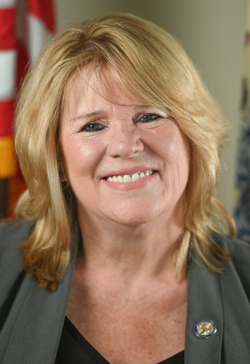
Asm. Carol Murphy
Sponsored bills
Maddy summaryThis New Jersey bill allows public school students to miss class for participating in musical performances at military funerals, including playing "Taps," without the absence counting as unexcused. It directly affects students in public schools who perform at these ceremonies honoring veterans or service members. The law requires schools to record such absences as excused on attendance records, exclude them from perfect attendance calculations, and not list them on transcripts or employment forms. Students must provide documentation to verify their participation, as determined by school administrators.
Maddy summaryThis bill, known as "Levi's Law" (A 3766), requires New Jersey's Department of Health (DOH) to provide updated, evidence-based information about spina bifida - alongside existing Down syndrome resources - to healthcare providers and families. Specifically, it mandates that DOH post clear, plain-language resources online covering physical, developmental, and support services for both conditions, in English and Spanish. Healthcare providers (including doctors, genetic counselors, and nurses) must then share this information with parents who receive a positive prenatal or postnatal test result for spina bifida or Down syndrome. The law aims to ensure families receive timely, accessible guidance during critical decision-making moments.
Maddy summaryThis bill would provide a property tax rebate to disabled veterans who own or rent their primary residence in New Jersey. It directly affects disabled veterans, including those experiencing financial hardship due to high property taxes and rental costs, as highlighted by the bill's findings (73% of NJ veterans have disabilities, with 518 homeless veterans in the state). The rebate is intended to help prevent homelessness and reduce financial burdens for this group. The bill defines key terms like "homestead" and "disabled veterans" but does not specify the rebate amount or exact eligibility calculations in the provided text. It is currently pending before the Assembly Military and Veterans' Affairs Committee.
Maddy summaryNew Jersey's Bill A1012 would create an interstate agreement (compact) allowing dentists and dental hygienists licensed in one participating state to more easily obtain licenses in other participating states. The bill establishes a shared system where licensees pass a uniform national exam (ADEX), maintain one set of professional records, and avoid duplicate paperwork or fees. It directly affects dental professionals seeking to practice across state lines, with special provisions for military members and spouses to get expedited licensing without fees. The compact maintains each state's authority to regulate dental practice and impose disciplinary actions while enabling faster licensure and cost savings for applicants.
Maddy summaryThis bill prohibits pharmacies and businesses with on-site pharmacies in New Jersey from selling tobacco products (including cigarettes and smokeless tobacco) or electronic smoking devices (like vapes and e-cigarettes) and their components. It directly affects pharmacy owners and retail businesses operating with pharmacies, such as grocery stores with in-house pharmacies. Exceptions include FDA-approved smoking cessation products and medical cannabis dispensaries serving registered patients. Violations carry escalating civil penalties starting at $250 for the first offense, with potential disciplinary action from the Board of Pharmacy.
Maddy summaryThis bill requires all 9-1-1 call takers and dispatchers working for public safety answering points (PSAPs) in New Jersey to obtain certification through the International Academies of Emergency Dispatch (IAED) in both Emergency Medical Dispatch (EMD) and Emergency Fire Dispatch (EFD). It applies to all PSAP employees in these roles, in addition to any existing training or certification requirements set by the Office of Emergency Telecommunications Services. The certification requirement becomes effective 13 months after the bill's enactment date. The law aims to standardize emergency dispatch training and ensure personnel meet specific national protocols for handling medical and fire-related calls.
Maddy summaryThis bill (A1684) amends New Jersey's brewery licensing laws but does not actually address wine shipping as its title suggests. The provided text only describes changes to *brewery* license classifications (for malt alcoholic beverages), including new tiers for breweries producing up to 300,000 barrels annually. It adds no provisions for wineries or direct wine shipping to consumers, contradicting the bill's title. The bill appears to be mislabeled or incomplete based on the text provided, as the amendments focus solely on brewery operations, not wine. No concrete policy changes for wineries or direct wine shipping are described in the text.
Maddy summaryAJR 27 is a ceremonial resolution designating May each year as "Law Enforcement and Correctional Police Officer Appreciation Month" in New Jersey. It calls for citizens and officials to observe the month with activities honoring these officers, and requests the Governor issue a proclamation to recognize their service. The bill directly affects all New Jersey law enforcement and correctional police officers by formally acknowledging their role in public safety through a symbolic annual observance. This is a non-binding resolution with no new funding, regulations, or policy changes.
Maddy summaryThis bill requires New Jersey school districts to add instruction about e-cigarette dangers to health education for students in grades 6-12, starting in the 2020-2021 school year. The curriculum must cover: nicotine content in e-cigarettes, how e-cigarette use can lead to addiction to tobacco or other drugs, health effects of chemicals like formaldehyde found in e-cigarettes, and the state's ban on e-cigarette use on school grounds. The state’s Education Commissioner will provide schools with sample lesson materials to support this teaching. The law directly affects all public school districts and students in grades 6-12 across New Jersey.