

Maddy summaryThis bill allows union officers representing probation officers, supervisors, and related Judiciary staff in New Jersey to participate in union activities - including lobbying, using union funds, and engaging in partisan political activity - while on full-time leave under state law. It specifically applies to officers serving on behalf of collective bargaining units for these judicial employees. The law overrides prior restrictions that might have prevented such participation. The bill takes immediate effect upon enactment.
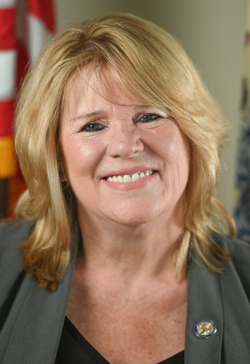
Asm. Carol Murphy
Sponsored bills
Maddy summaryThis bill requires New Jersey's Attorney General to review and update statewide policies for investigating human trafficking. It directs the AG to specifically consider: whether recording undercover investigations protects victims and investigation integrity, strict rules for sharing such recordings, and involving county prosecutors early in cases. The policy review must address these points to better protect victims and support law enforcement. The bill responds to a 2024 commission report on human trafficking in New Jersey's massage industry and applies directly to county/municipal law enforcement and victims of trafficking.
Maddy summaryThis bill requires New Jersey county clerks to provide accessible mail-in ballots to voters with disabilities who request them. It mandates that these ballots include specific accessibility features, such as electronic delivery, audio prompts for blind voters, compatibility with braille displays, and the ability to mark selections electronically. Voters who qualify as "electronic return eligible" (due to blindness, visual impairment, or physical disability preventing ballot handling) may return completed ballots electronically. The bill ensures voters can independently complete, verify, and submit their ballots, with printed materials provided unless electronic return is used, and sets uniform guidelines for election officials.
Maddy summaryThis bill (A3364) requires New Jersey pharmacies to sell hypodermic syringes and needles to any customer aged 18 or older without a prescription for quantities of 10 or fewer. Pharmacies must also post a sign at the counter informing customers of this right, maintain syringe supplies behind the counter, and provide information about safe disposal and substance abuse treatment at the time of purchase. It directly affects pharmacies (mandating sales) and adults over 18 (who can purchase without a prescription for small quantities). The bill builds on existing law (P.L.2011, c.183) that previously allowed but did not require such sales, aiming to increase access to clean syringes to help prevent bloodborne diseases like HIV and hepatitis C.
Maddy summaryThis bill establishes an independent Office of Professional Corporate Guardians within New Jersey’s Department of Human Services to regulate business entities serving as legal guardians for disabled or incapacitated individuals. The office will set standards for these guardians, require registration (with conditions like minimum staffing, liability insurance, and a New Jersey office), and enforce compliance through disciplinary actions. It directly affects professional corporate guardians (businesses providing guardianship services) and the disabled or incapacitated people (wards) who rely on them. The office will also maintain a public database of registered guardians to improve transparency and accountability.
Maddy summaryThis bill creates a grant program to help homeless veterans in Atlantic, Cape May, and Cumberland counties by funding the development of shelters. Counties must apply for grants by proposing specific locations and offering property for the state to build and operate shelters. Grants are available only if the legislature appropriates funds and are awarded based on criteria set by the state's Adjutant General. The program aims to improve access to shelter services for homeless veterans who face geographic barriers in southern New Jersey.
Maddy summaryThis bill requires age-restricted communities (like senior housing developments complying with federal fair housing rules) to offer accessible remote options for board meetings. Associations must provide at least one reasonable method - such as group virtual access in a dedicated space - not limited to personal devices. It excludes non-voting sessions but mandates inclusive participation for binding decisions. The Commissioner of Community Affairs will create implementing rules within four months of the bill's enactment.
Maddy summaryThis bill allows businesses registered with New Jersey's Division of Revenue to opt into receiving official business notices (like new rules or economic incentives) via email instead of paper mail. It applies to most business entities (corporations, nonprofits, etc.) that file registration documents, excluding government agencies. Businesses must still maintain physical mailing addresses for legal notices, and paper mail remains required where state law specifically mandates it. The Division of Revenue will collect email addresses and share them with relevant agencies (like Taxation and Economic Development) to enable electronic notifications.
Maddy summaryThis bill requires courts to appoint independent lawyers for adults needing guardianship (wards or proposed wards) and mandates that lawyers personally interview them. It creates clearer rules for limited guardianships, requiring courts to specify exactly which decisions a ward can still make and to choose the least restrictive option for their rights. New safeguards also apply to temporary guardians appointed before a full hearing, limiting their authority to urgent needs and requiring court approval for fees. The bill is currently pending in the Assembly Aging and Human Services Committee.
Maddy summaryThis bill establishes the "Food Desert Elimination Act" to incentivize supermarkets and grocery stores (18,000+ sq ft) to open in designated "food desert communities" - areas with limited access to fresh food, identified using USDA and CDC data. It provides property tax-based tax credits to businesses that open their *first* supermarket or grocery store in a designated food desert community, covering the full property tax assessed by the municipality for three years after opening. The New Jersey Economic Development Authority will designate up to 75 initial food desert communities, prioritizing areas with high poverty and limited healthy food access. This directly affects low-income residents in these communities by aiming to improve access to nutritious food through new retail options.