

Maddy summaryThis bill requires New Jersey State agencies to ask job applicants (after a first interview) to disclose any past or current criminal investigations, including those involving accusations from current State employees. The form specifically asks whether applicants were arrested, charged, or convicted under two sex offense statutes (N.J.S.2C:14-2 and N.J.S.2C:14-3) or in investigations related to workplace accusations. It mandates the Civil Service Commission to create this standardized disclosure form, aligning with existing employment rules. The policy takes effect 60 days after enactment, directly affecting all applicants for State government positions in classified, unclassified, and senior executive roles.
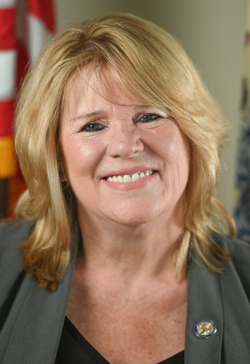
Asm. Carol Murphy
Sponsored bills
Maddy summaryThis bill establishes New Jersey's Deepfake Technology Unit within the Division of Criminal Justice to combat AI-generated deceptive media (deepfakes). The unit will provide law enforcement, prosecutors, and courts with technical expertise, training, and evidence analysis to detect and investigate deepfakes - defined as AI-manipulated videos, audio, or images that falsely depict people or events. It requires the unit to issue annual reports on detection methods, technological advances, and policy recommendations, and appropriates $2 million from the General Fund to cover operational costs. The unit directly supports state and local agencies in addressing a growing threat to public safety and legal integrity.
Maddy summaryThis bill sets minimum liability coverage requirements for standard auto insurance policies in New Jersey. It mandates specific bodily injury limits ($15,000-$35,000 per person, $30,000-$70,000 for multiple people) and property damage coverage ($25,000 per accident), effective in phases starting in 2023. It also requires insurers to offer uninsured/underinsured motorist coverage up to $250,000 per person/$500,000 per accident, while prohibiting "stacking" multiple policies to exceed these limits. The law directly affects drivers purchasing standard auto insurance policies by ensuring minimum coverage levels for injuries and property damage claims.
Maddy summaryThis bill (A 3592) would allow NJ FamilyCare to reimburse for multiple specialty medical visits at a Federally Qualified Health Center (FQHC) on the same day for enrollees, under specific conditions. It requires the referring provider to document medical necessity for each visit and mandates that each visit be with a different specialty provider. The change would directly affect NJ FamilyCare enrollees needing multiple same-day specialty appointments and the FQHCs serving them. The bill explicitly states it cannot override federal Medicaid rules, and currently, NJ FamilyCare typically limits coverage to one FQHC visit per day unless special circumstances apply.
Maddy summaryThis bill extends civil immunity to New Jersey first responders (including volunteer fire departments, emergency squads, EMTs, and medical personnel) who forcibly enter homes, businesses, or structures during emergencies. It applies when responders reasonably believe entry is necessary for emergency medical care or to prevent imminent harm, and no property occupant responds to entry requests within a reasonable time. The immunity covers civil damages from such entries but excludes liability for motor vehicle operations or willful/wanton misconduct. It amends multiple existing statutes to codify this protection across various emergency service roles.
Maddy summaryACR 103 proposes a constitutional amendment to provide a $250 annual property tax deduction on the primary residence for New Jersey law enforcement officers who suffer permanent disabilities directly from their job (not requiring total disability). The deduction would also extend to surviving spouses aged 65+ who remain unmarried and reside in the same primary home after the officer’s death. The Legislature would define eligible "law enforcement officers" in implementing legislation. This change would directly affect officers with qualifying work-related disabilities and their surviving spouses, without altering other tax rules.
Maddy summaryAJR 36 is a ceremonial resolution designating the weekend closest to Diwali (during October 15-November 14) as "Bandi Chhor Divas Weekend" in New Jersey. It directly honors the Sikh community, recognizing Bandi Chhor Divas - a holiday celebrating Guru Hargobind’s release from prison alongside 52 others in the 17th century and its connection to Diwali’s light displays. The resolution requests the Governor issue an annual proclamation to encourage public observance, including lighting homes and gurdwaras (Sikh places of worship). This is a symbolic recognition, not a law with enforcement, aimed at celebrating Sikh contributions and values of freedom and justice.
Maddy summaryThis bill establishes the New Jersey Veterans Assistance Trust, a new state entity within the Department of Military and Veterans Affairs. The trust will accept donations from federal, state, local, or private sources to provide grants or loans directly to veterans, veterans' families, and programs supporting them - without replacing existing government funding. It will operate under a 14-member board including agency commissioners, veterans advocates, business representatives, and legislative appointees. The trust may invest unspent funds in approved securities but must maintain separate accounting and undergo state audits. The bill creates a structured mechanism to pool resources for veteran support, pending legislative approval.
Maddy summaryThis New Jersey bill requires all colleges and universities to install automatic external defibrillators (AEDs) in unlocked, clearly marked locations within every athletic facility and student center. The AEDs must be accessible during facility operating hours and within reasonable distance of athletic fields. Institutions must also ensure at least two staff members trained in CPR and AED use are present during operations, and that all AEDs are regularly tested/maintained with emergency services notified of their location and type. The bill grants immunity from civil liability to institutions and staff using AEDs as required.
Maddy summaryThis bill (A-968) allows New Jersey municipalities to create reserved parking zones on property *adjacent* to a residence occupied by a person with a disability, if parking directly in front is prohibited by law or would disrupt traffic flow. It requires the municipality to obtain written consent from the adjacent property owner using a standard form prescribed by the Motor Vehicle Commission, with consent expiring every two years or upon property sale. The bill updates the language from "handicapped" to "person with a disability" in existing law and clarifies that the reserved parking zone reverts to regular use after consent expires unless renewed. This directly affects disabled residents seeking accessible parking and adjacent property owners who must consent to the zone.