

Maddy summaryThis bill would enter New Jersey into the Recognition of Emergency Medical Services Personnel Licensure Interstate Compact (REPLICA), creating a system that allows EMTs, AEMTs, and paramedics licensed in New Jersey to practice in other participating states without obtaining new licenses. Under the compact, EMS personnel would have a "privilege to practice" in other member states, while states must share information about licensure, adverse actions, and investigations through a coordinated database. The compact requires member states to use national registry exams for initial licensure, conduct background checks, and report adverse actions to maintain reciprocity. It aims to improve access to emergency medical services across state lines while protecting public safety through shared regulatory standards. This system is designed to make it easier for EMS professionals to work across state boundaries during emergencies or for career mobility.
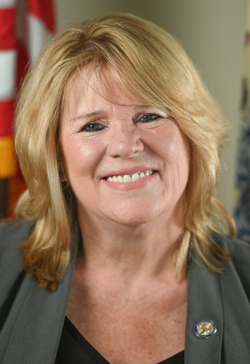
Asm. Carol Murphy
Sponsored bills
Maddy summaryThis bill establishes a pilot program to study whether consolidating certain grade 9-12 regional school districts with their K-8 constituent districts into a single K-12 regional district is feasible. It appropriates $150,000 to fund three pilot sites (one in each of New Jersey's northern, central, and southern regions) over a six-year process: a one-year planning phase (with up to $50,000 in grants for feasibility studies), a five-year implementation phase requiring voter approval in each community, and an independent evaluation. The program will assess impacts on student achievement, finances, and community satisfaction, with the state providing incentive aid to equalize costs during implementation. The bill does not mandate consolidation but creates a structured study to inform future decisions.
Maddy summaryThis bill amends New Jersey's existing pilot program for child care services in public schools. It requires public school facilities hosting these services to have a separate entrance/exit for child care areas (to prevent contact with school-age students) and a designated parent visit area. Community providers must meet all standard child care licensing requirements and be enforced under the same rules as non-school-based centers. The bill also specifies that tuition and facility rent must align with local market rates in the same municipality, and requires a detailed cost evaluation comparing provider expenses to traditional child care centers.
Maddy summaryThis bill establishes a 19-member Task Force on Institutional Discrimination in Health Care within New Jersey’s Department of Health. The task force will study why health outcomes differ by race and income, review existing research, and identify specific solutions like hospital evaluations and anti-racism training for medical staff. It must submit a report to the Governor and Legislature within six months of forming, after which the task force will expire. The bill directly affects New Jersey’s healthcare system and aims to address systemic disparities in patient care.
Maddy summaryNew Jersey Assembly Bill A3671 (sponsored by Assemblywoman Carol Murphy) allows cemeteries to permit the interment of cremated pet remains alongside human remains under specific conditions. The bill requires that pet remains be interred simultaneously with human remains and that the cemetery company provides written authorization to the lot owner. Cemeteries must list fees for this service, with payments deposited into the cemetery's Maintenance and Preservation Fund. The bill explicitly prohibits interment in columbariums or public mausoleums and does not require cemeteries to allow this practice.
Maddy summaryThis bill (A3618) requires New Jersey's Department of Environmental Protection (DEP) to conduct a public education campaign about hunting seasons, rules, and state land hunting locations, with special focus on residents near hunting areas. It also mandates that the DEP post orange flags at every entrance to state parks and forests on days when hunting is permitted. The campaign must include public service announcements and educational programs, informed by other states' approaches. These measures directly affect park visitors, nearby residents, and hunters by improving awareness of hunting activities on state lands.
Maddy summaryThis bill (A3632) requires all New Jersey State employees in career, executive, or unclassified service positions to complete training on disability law and etiquette. The training, developed by the State Treasurer with the Commissioner of Human Services, covers the Americans with Disabilities Act, reasonable accommodations, and proper interaction protocols with people with disabilities. Employers must implement the training within one year of the bill’s effective date, requiring existing employees to complete it within 180 days of implementation and new hires within 180 days of hire, with biennial refreshers. Employees must submit certification of completion, and employers must maintain records for the employee’s tenure.
Maddy summaryThis bill, the Dog Trainer Licensing Act, requires dog trainers who handle or train dogs for compensation (such as fees or salary) to obtain a state license. To qualify, applicants must be at least 18, have a high school diploma or GED, complete 300 hours of supervised training (with exceptions for existing practitioners), and pass an exam or provide proof of existing CCPDT certification. The law creates a Dog Trainer Board of Examiners within the Division of Consumer Affairs to manage licensing, set fees, and enforce standards, including requiring continuing education for license renewal every three years. It directly affects professional dog trainers operating in New Jersey for hire, aiming to establish baseline competency and oversight.
Maddy summaryThis bill exempts specialty heart hospitals from a 0.53% assessment on their total operating revenue if they certify to the Department of Health and the Department of Banking and Insurance that they do not bill patients directly for care. Specialty heart hospitals meeting this condition would no longer pay the assessment, while general hospitals remain subject to it. The assessment funds currently support programs like federally qualified health centers serving uninsured patients, infant mortality reduction, and primary care loan programs. The exemption applies only to specialty heart hospitals that waive direct patient billing, without altering other assessment requirements.
Maddy summaryThis bill directs New Jersey's Department of Labor and Workforce Development (DOLWD) to create a multimedia advertising campaign aimed at attracting individuals to health care careers. The campaign will promote health care professions as engaging and rewarding, highlight available financial support like scholarships and student loan programs, and use digital, TV, radio, and print media. It also requires targeted advertising to recruit more health care professionals from underrepresented racial groups and into high-demand fields identified by state health agencies. The state will fund the $1 million campaign using federal American Rescue Plan Act (ARP) funds.