

Maddy summaryNew Jersey's A3606 requires all public and nonpublic secondary schools (grades 9-12) to annually screen every student for substance use using the SBIRT program. Screenings must be conducted by trained school staff (like counselors or nurses) or licensed health professionals, with parents notified in advance and given the option to opt their child out. If a student screens positive, schools must provide brief counseling and assist with treatment referrals. All screening information is strictly confidential, protected from disclosure without consent except in emergencies. Schools may also opt out by submitting a detailed alternative program description to the Department of Education.
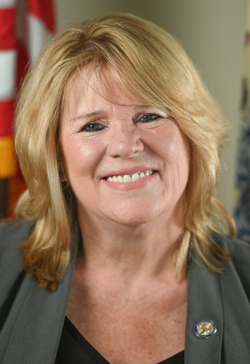
Asm. Carol Murphy
Sponsored bills
Maddy summaryThis bill (A3611) designates the blueberry muffin as New Jersey's State Muffin through a symbolic, non-binding resolution. It has no policy impact, implementation requirements, or direct effect on residents, businesses, or government operations. The bill references New Jersey's history as a top blueberry producer (ranking among the top-five nationally) and its designation of blueberries as the State Fruit in 2003. The designation is purely ceremonial, with no new laws, regulations, or funding changes. (Bill A3611, introduced February 12, 2024)
Maddy summaryAJR 134 is a ceremonial resolution designating January 18th as "Alexandra 'Alex' Scott Day" in New Jersey. It permanently honors Alex Scott, a child who raised funds for childhood cancer research through lemonade stands before her death at age eight, and commemorates her legacy. The resolution requests the Governor issue an annual proclamation encouraging public observance and directs copies to the Alex's Lemonade Stand Foundation. This designation raises awareness about childhood cancer and celebrates the foundation's mission, with no substantive policy changes or direct effects on legislation.
Maddy summaryThis bill requires employers to allow working parents or legal guardians of school-aged children (kindergarten through 12th grade) to work remotely during public health emergencies or state emergencies that cause school closures, unless the employer proves remote work would create an undue hardship for business operations. It establishes a rebuttable presumption that remote work is feasible if an employee has already worked remotely for two consecutive weeks. Employers violating this law face civil penalties of up to $10,000 per subsequent violation, collected by the Commissioner of Labor. The bill explicitly prohibits penalizing employees for requesting or working remotely under these conditions.
Maddy summaryThis bill amends New Jersey's student financial aid law to automatically disqualify students convicted of hazing or aggravated hazing under state law (P.L.1980, c.169) from receiving state financial aid. It directly affects New Jersey college students who receive a criminal conviction for hazing incidents. The key provision removes eligibility for state aid upon conviction, regardless of other qualifications like residency or citizenship. This changes existing rules by adding hazing convictions as a specific disqualifying factor for state-funded student financial assistance.
Maddy summaryThis bill allows up to five state employees per agency to take leave to work as census enumerators during the federal decennial census. Eligible employees can receive up to 10 paid workdays and 10 additional unpaid workdays during the census year, upon request and agency approval. It applies to employees in New Jersey's Executive Branch departments, divisions, boards, or independent agencies. The policy ensures state workers can participate in census outreach without losing pay for the first 10 days of their census duties.
Maddy summaryThis bill requires all New Jersey school boards of education to post specific financial summaries on their public websites. It mandates posting summarized payroll data, total accounts payable, and weekly accounts payable, plus a user-friendly overview of major spending categories and vendors selected through competitive bidding. The information must be placed prominently and in a format approved by the state education commissioner. This directly affects every public school district in New Jersey by increasing financial transparency for residents. The bill takes immediate effect upon enactment.
Maddy summaryThis bill allows cosmetology and hairstyling students who have completed at least 60 hours of course instruction to obtain a student permit specifically for shampooing and rinsing hair. Currently, students need 600 hours to qualify for any student permit, but this bill creates a new junior student permit for the limited service of hair washing. To qualify, students must prove they have 60+ hours of training and do not have contagious diseases that could spread during these services. The permit remains valid only while the student is enrolled in a licensed cosmetology program and expires after 90 days of absence.
Maddy summaryACR 111 is a New Jersey Assembly resolution urging Congress to reauthorize the Violence Against Women Act (VAWA), which expired in 2019. VAWA is a federal law that provides funding and resources to combat domestic violence, sexual assault, dating violence, and stalking, supporting victims through improved law enforcement responses, court protections, and victim services. The resolution references current reauthorization efforts (like H.R. 1620) that include expanded firearm restrictions for abusers, enhanced protections for Native American women, and increased legal assistance for victims. As a symbolic request - not a binding law - it directs copies to Congress, the Department of Justice, and New Jersey’s congressional delegation to encourage federal action.
Maddy summaryThis bill requires residential psychiatric and long-term care facilities in New Jersey to provide detailed quarterly financial statements to residents and designated individuals. The statements must include a record of all funds, property, and financial transactions, showing beginning and ending balances, deposits, withdrawals, and supporting receipts. Facilities affected include nursing homes, assisted living facilities, dementia care homes, inpatient psychiatric facilities, and continuing care communities. The bill expands current requirements by mandating these statements be provided to residents' next-of-kin and to individuals designated by residents who are wards of the State, aiming to prevent financial exploitation of vulnerable residents.