

Maddy summaryThis bill requires New Jersey's Department of Health (DOH) and Department of Education (DOE) to create and distribute annual guidelines for school districts and colleges. The guidelines must include research-backed materials on vaping's health risks (lung effects, mental health, comparison to smoking, dangers to pregnant people and children), age-appropriate anti-vaping campaigns, decision-making tools to resist peer pressure, and promotional materials for students from middle school through college. Schools and colleges must use these guidelines to implement campus anti-vaping programs. The DOH and DOE will update the guidelines yearly and post them online with additional resources.
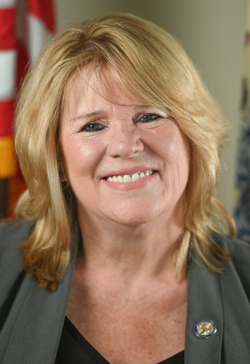
Asm. Carol Murphy
Sponsored bills
Maddy summaryBill A 2205 requires New Jersey's Commissioner of Health (working with the Attorney General) to create clear, easily understandable signs for emergency rooms. These signs must display VCCO services/benefits, contact details, and how to file a compensation claim. The bill mandates posting these signs in all general hospital emergency departments and satellite emergency departments, with electronic displays permitted. It aims to make VCCO information more accessible to individuals who may qualify for victim compensation after crimes. The bill takes effect four months after enactment.
Maddy summaryThis bill (A 947) requires New Jersey's Department of Health to create a public awareness campaign and develop policies for recognizing and treating perinatal anxiety - a condition affecting approximately 6% of pregnant women and 10% of postpartum women. It mandates that healthcare providers screen all pregnant and postpartum patients for perinatal anxiety during prenatal visits (at least once per trimester), before discharge after birth, and at early postnatal check-ups, using the Perinatal Anxiety Screening Scale (PASS) or an approved alternative. Providers must also give patients and their families clear information about symptoms, coping strategies, and treatment resources. The bill directly affects pregnant and postpartum women, their healthcare providers, and birthing facilities across New Jersey.
Maddy summaryThis bill grants patients with developmental disabilities in New Jersey hospitals the right to have a designated family member, guardian, direct support professional (DSP), or other caregiver accompany them throughout their entire hospital stay. Hospitals must provide an opportunity to make this designation at admission and document it in the medical record, with changes allowed upon 1-hour notice. The right does not apply during active surgery if the caregiver's presence would endanger the patient. It directly affects patients with developmental disabilities, their designated caregivers, and New Jersey hospitals. The bill takes effect immediately upon passage.
Maddy summaryThis bill requires New Jersey's Department of Health (DOH) to survey all antenatal and prenatal care clinics across the state - including those that have closed or reduced services in the past two years - to evaluate maternity care access and quality. The survey will collect data on clinic availability, service gaps (particularly for low- and moderate-income pregnant women), and demographic information about patients, while excluding personal health details. The DOH must analyze the data to identify disparities in care based on income or location and develop strategies to improve access and quality. Within 18 months, the DOH will publish findings online and submit a report to the legislature with recommendations for policy action.
Maddy summaryThis bill prohibits telecommunications, utility, and cable companies from charging customers' credit cards or bank accounts before the regular billing due date that would apply if the customer paid by cash, check, or money order. It directly affects customers who use automatic payment methods (credit card or direct debit) for their service bills. Companies may only charge early if the customer provides written consent or requests it via phone or another method approved by the Board of Public Utilities. The Board of Public Utilities will enforce these rules, ensuring customers have clear control over payment timing. The bill prevents unexpected early charges without explicit customer agreement.
Maddy summaryThis bill amends New Jersey's child endangerment law to specifically address AI technology that can simulate sexual conduct with children. It makes it a crime (a fourth-degree offense) for anyone who creates, uses, or promotes such AI tools if they cause or allow a child to be subjected to simulated sexual conduct, unless the AI was designed to avoid sexual interactions with children. The law applies to online distribution, sharing, or promotion of these technologies and includes clear definitions to cover digital contexts like file-sharing networks. It directly affects developers, distributors, and users of AI tools capable of generating inappropriate content for children, without criminalizing AI designed to protect children.
Maddy summaryThis bill creates the Support for Victims of Domestic Violence Program in New Jersey, which offers tax credits to businesses that provide goods and services to individuals who are recent victims of domestic violence, sexual assault, or stalking. The Division on Women in the Department of Children and Families will administer the program and work with an advisory council to establish at least three regional plans that identify local needs for items such as household essentials, technology security devices, communications tools, and housing. Businesses that agree to support eligible individuals through these regional plans can receive tax credits based on how well their contributions align with the identified priorities. The program applies to various business types including corporations, partnerships, and limited liability companies operating within the state, and regional plans will be reviewed and updated at least every three years.
Maddy summaryThis bill requires the New Jersey Higher Education Student Assistance Authority to evaluate the combined income of all cosigners when determining eligibility for the NJCLASS student loan program. Currently, applicants with multiple cosigners might be denied if each individual cosigner falls below the minimum income threshold, even if their total household income qualifies. The legislation amends state law to ensure that the authority considers the total income of all cosigners together rather than assessing each cosigner separately. This change directly affects students and their families applying for NJCLASS loans, particularly those with multiple parents or guardians providing financial support. The bill takes effect immediately upon passage.
Maddy summaryThis New Jersey concurrent resolution urges Congress to amend Section 230 of the Communications Decency Act of 1996 to allow state and local authorities to prosecute individuals who promote child sexual exploitation online. The bill seeks to modify federal law so that internet service providers and platforms cannot use Section 230 immunity as a shield against criminal charges related to child pornography and human trafficking. By requesting this change, the resolution aims to enable law enforcement to enforce existing state and federal criminal statutes without conflict with federal internet liability protections. The measure does not create new laws but instead asks Congress to adjust current federal protections to better align with efforts to combat online child exploitation.