

Maddy summaryThis bill imposes a 30% surtax on electric public utilities in New Jersey with taxable income exceeding 20% above their five-year average. It directly affects electric utilities that transmit and distribute electricity within the state, requiring them to pay this additional tax on their "windfall income" (the portion of income above the 20% threshold). The surtax is paid in addition to regular corporate taxes, with no credits allowed except for payment-related adjustments. All revenue collected, excluding funds for open space/farmland preservation, must be distributed proportionally to the utility’s ratepayers via the Board of Public Utilities.
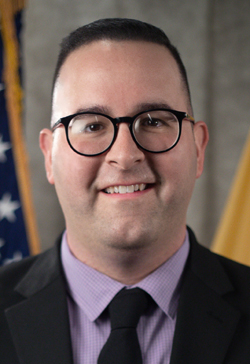
Asm. Cody Miller
Sponsored bills
Maddy summaryThis bill provides tax credits to New Jersey commercial farm operators who experience price losses on their products. It allows eligible farms to claim credits against corporation business tax or gross income tax based on a certification of price loss from the State Agriculture Secretary. Credits are limited to 50% of tax liability and can be carried forward for up to seven years if unused. The bill also permits taxpayers to transfer unused credits to other businesses, subject to specific rules.
Maddy summaryThis bill (A 1166) requires the New Jersey State Police Superintendent to create a recovery leave policy for troopers who provide proof of pregnancy. It mandates at least eight weeks of continuous paid leave after childbirth, with full pay and benefits (not counted as sick leave or deducted from sick leave balances), and prohibits residency restrictions or integrity checks during this period. The policy must be posted on the State Police intranet, including required forms, FAQs, and contact information for inquiries. The bill was enacted into law (P.L.2025, c.259) and took effect immediately upon passage.
Maddy summaryThis New Jersey bill (A 3388) creates a legal presumption that custody of children should be awarded to a domestic violence victim in appropriate cases, shifting the default in family court custody decisions when abuse is proven. It requires courts to order counseling for children in households affected by domestic violence and mandates that victims and abusers be informed about available counseling services immediately upon filing a complaint. Key mechanisms include waiving residency requirements for filing complaints, streamlining emergency protective orders (including firearm safety measures), and ensuring courts provide clear information about services. The bill directly affects domestic violence victims, their children, and family court proceedings handling custody disputes involving abuse.
Maddy summaryThis bill directs New Jersey's Department of Environmental Protection (DEP) to hire a consultant to conduct a statewide assessment of recycling, composting, and reuse conditions for packaging products. It establishes a "Statewide Recycling Needs Assessment Advisory Council" within the DEP and appropriates $500,000 for the assessment. The study will evaluate current packaging recycling rates, collection systems (including curbside and drop-off), waste disposal data, and infrastructure gaps across covered entities like schools, government facilities, and residential buildings. The findings will help identify needs and gaps in the state's packaging recycling system.
Maddy summaryThis bill creates the "Jersey Vines Program" within New Jersey's Department of Agriculture to promote wines made using ingredients (grapes, fruits, etc.) grown in the state. It directly affects licensed plenary wineries and farm wineries that produce wine from locally cultivated materials. Key provisions include running advertising campaigns, sharing information about local wineries and wine varieties, and establishing a "Jersey Vines" label similar to the existing "Jersey Fresh" program. The program aims to increase consumer awareness and sales of New Jersey-grown wine through marketing and labeling.
Maddy summaryThis bill extends property tax exemptions for veterans with 100% service-connected disabilities retroactively to the date they were officially declared disabled by the U.S. Department of Veterans Affairs. It requires the state to reimburse municipalities for property taxes paid by eligible veterans during the retroactive period. The exemption applies to veterans’ primary residences and covers specific disabilities like paralysis, blindness, or amputations. It directly affects veterans who previously paid taxes they should have been exempt from under existing law.
Maddy summaryThis bill directs New Jersey's Board of Public Utilities (BPU) to create a program enabling gas public utilities to invest in renewable natural gas (RNG) infrastructure and procure RNG. It directly affects gas utilities (like gas companies) and their ratepayers (customers who pay gas bills). Key provisions require the BPU to establish a ratemaking mechanism allowing utilities to recover all prudently incurred costs - such as capital investments in RNG infrastructure, operating expenses, and RNG procurement costs - from customers through regular rate adjustments. The BPU must approve both the program and cost recovery mechanism, ensuring rates reflect actual costs while protecting ratepayers.
Maddy summaryThis New Jersey bill (A1698) allows eligible voters to register to vote on election day or during early voting at their assigned polling place or early voting site, provided they meet specific requirements. It directly affects voters who missed the standard 21-day registration deadline before an election. Key provisions require voters to provide valid ID (like a utility bill or photo ID), complete a provisional ballot affirmation statement confirming they haven't voted already, and submit the registration in person. The bill updates existing law to make same-day registration at polling locations a standard option, ensuring provisional ballots from eligible voters are counted if all requirements are met.
Maddy summaryThis bill establishes a three-year "Comprehensive Geriatric Fall Prevention Pilot Program" within New Jersey's Department of Human Services, targeting at least 6,000 Medicaid recipients aged 60 or older (with a control group of 6,000) to reduce falls. It provides proven prevention services including individualized risk assessments, counseling, and rehabilitative care - tailored for high-risk seniors and Medicare-Medicaid dual eligibles - with funding from an $11.7 million appropriation. The program requires a review of Medicaid reimbursement policies and a cost-effectiveness evaluation within three years, aiming to lower healthcare costs by preventing falls, building on successful models from states like Pennsylvania and Florida.