

Maddy summaryThis New Jersey bill (A 2098) prohibits institutions of higher education and certain proprietary schools from withholding student transcripts due to unpaid debts of $2,000 or less for non-mandatory charges (like campus fees, not tuition or room/board). It specifically bans institutions from refusing transcripts, charging extra fees, or conditioning transcript access on debt payment for qualifying students. Exceptions apply for unpaid tuition/room/board debts, debts exceeding $2,000, or students needing transcripts for new student loans. The bill also requires institutions to post transcript policies online and clarifies that transcript access does not forgive debt or affect diploma issuance. Note: This bill was withdrawn as it was already enacted as P.L.2025, c.353.
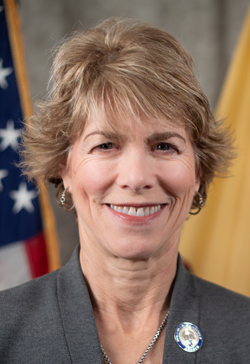
Asm. Lisa Swain
Sponsored bills
Maddy summaryThis bill requires New Jersey Medicaid to cover over-the-counter contraceptives and imposes certain requirements on insurers and the State Health Benefits Program regarding existing mandates on health benefits coverage for these products. The legislation directly affects Medicaid recipients, private health insurance plans, and state health programs by ensuring access to contraception without additional cost-sharing. Key provisions include expanding the list of authorized medical services under the Medicaid program and clarifying how contraceptive coverage must be provided within the state's health benefits framework. The bill amends existing statutory law to incorporate these coverage requirements while maintaining compliance with federal Social Security Act regulations.
Maddy summaryThis bill raises the minimum age to obtain a firearms purchaser identification card in New Jersey from 18 to 21 years. It directly affects individuals under 21 who wish to purchase rifles or shotguns (excluding antique models), as they would no longer be eligible for the required card. The key provision amends New Jersey Statute 2C:58-3(c)(4) to increase the age threshold for this specific permit. The change applies only to rifles and shotguns, not handguns (which already require a 21+ age for permits). The bill is currently pending in the Assembly Judiciary Committee.
Maddy summaryThis bill requires New Jersey's Administrative Office of the Courts (AOC) to share domestic violence registry records with specific licensed healthcare providers. It directly affects healthcare professionals (like doctors, nurses, and therapists) who have a legal duty to warn patients about potential violence under existing law. The key change expands current access rules to allow these providers to view the registry when they have a duty to protect a patient from domestic violence. Records remain confidential and can only be used for this specific safety purpose, with violations punishable as a fourth-degree crime.
Maddy summaryThis bill creates a public database managed by New Jersey's Business Action Center (within the Department of State) listing vacant commercial properties available for small businesses to lease or purchase. The database must include specific details like square footage, included equipment, and building systems (e.g., HVAC, security). Commercial property owners are required to report vacancies or occupancy changes to the center, which will update the database monthly using input from owners, realtors, and municipalities. The database will be accessible online and promoted to business associations and local chambers to help small businesses find suitable space more efficiently.
Maddy summaryThis law makes it a crime to sell or possess parts designed to convert standard firearms into machine guns (known as "machine gun conversion devices"). It directly affects sellers and owners of these specific firearm components. The bill establishes criminal penalties for violating this prohibition, adding to existing firearm regulations. The law was enacted after being approved in P.L.2025, c.363, and is now part of New Jersey state law.
Maddy summaryThis bill expands requirements for public awareness signage about human trafficking. It adds 10 new locations where businesses and facilities must display the Commission on Human Trafficking's sign, including gas stations, staffing agencies, law enforcement offices, nail salons, and New Jersey Motor Vehicle Commission offices. The sign must be 8.5x11 inches, in 16-point font, and bilingual (English/Spanish), containing the national trafficking hotline number. Businesses failing to display or replace defaced signs face $300 fines for first offenses and $1,000 for subsequent violations. The bill directly affects the listed establishments by mandating visible signage to aid trafficking victims.
Maddy summaryThis bill establishes mandatory standards for domestic violence counseling programs required by courts for offenders. It directly affects defendants ordered to attend such counseling in domestic violence cases, requiring programs to include four key components: risk assessments identifying escalating violence patterns, education on power/control tactics, verified attendance tracking with court reporting, and regular oversight by New Jersey's Department of Children and Families. The law aims to ensure counseling programs actively promote offender accountability rather than simply meeting attendance requirements. It implements a specific recommendation from a 2023 criminal justice report and takes effect three months after enactment.
Maddy summaryThis bill requires health insurers, the State Health Benefits Program (SHBP), and the State Employees Health Benefits Program (SEHBP) to cover specific mammogram screenings. It mandates one baseline mammogram for women aged 35 and annual screenings for women 35 and older, while also requiring coverage for women under 35 with breast cancer risk factors (like family history) as determined by their provider. Additional tests like ultrasounds or MRIs are covered if needed due to dense breast tissue, abnormal results, or other risk factors. The law applies to all health insurance plans in New Jersey, ensuring these screenings are covered without additional out-of-pocket costs for eligible individuals.
Maddy summaryThis bill (A 2694) appropriates $12 million from the New Jersey General Fund to the Village of Ridgewood for drinking water infrastructure improvements specifically addressing per- and poly-fluoroalkyl substance (PFAS) pollution. The funding directly affects Ridgewood Water, a public water system serving over 60,000 residents across Ridgewood, Midland Park, Glen Rock, and Wyckoff. The key mechanism is a supplemental state appropriation to cover costs that would otherwise require significant rate increases for residents. The bill aims to prevent these rate hikes by providing direct financial support for PFAS-related infrastructure upgrades.