

Maddy summaryThis bill amends New Jersey's affordable housing laws to include certain South Korean veterans who served as allies with U.S. forces during the Vietnam conflict. It defines "disabled veteran" and "veteran" to explicitly cover South Korean veterans who are New Jersey residents, served in Vietnam as U.S. allies, and have a service-connected disability recognized by South Korea's equivalent to the U.S. Veterans Administration. These veterans will now qualify for the same housing preference priority system as U.S. disabled veterans, placing them in the second priority tier (after homeless veterans). The change expands existing eligibility under current housing programs without creating new funding or altering income requirements.
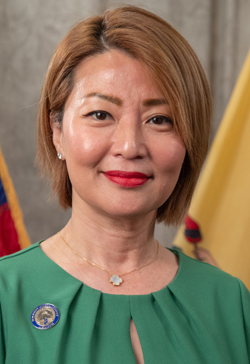
Asm. Ellen Park
Sponsored bills
Maddy summaryThis bill (A-2360) requires the New Jersey Motor Vehicle Commission (MVC) to operate a telephone call center within New Jersey. The call center must provide real-time assistance during weekday hours (8:30 a.m. to 4:30 p.m.) to help residents navigate the MVC's website and complete online transactions, with services offered in both English and Spanish. The MVC must also publish quarterly performance reports online detailing call volume, wait times, call purposes, and call durations. This directly affects New Jersey residents using MVC's online services by adding a dedicated support option.
Maddy summaryNew Jersey's Bill A1357 would amend state law to allow undocumented immigrants residing in New Jersey - who meet all other Medicaid eligibility criteria (like income and residency) - to receive comprehensive healthcare coverage through the state's Medicaid program. The bill requires the Commissioner of Human Services to implement systems for this coverage only after confirming federal funding approval, prioritizing federal financial participation before using state funds. It explicitly complies with federal law (Section 441(d) of the 1996 welfare act), which permits states to extend benefits to undocumented immigrants under certain conditions. The bill does not create new benefits but extends existing Medicaid access to this group, contingent on federal approval and system readiness.
Maddy summaryThis bill requires New Jersey's Board of Public Utilities (BPU) and Department of Environmental Protection to conduct a study on wave and tidal energy potential within 12 months of a pilot project. The study must evaluate environmental impacts, economic benefits, grid reliability, and potential incentive programs (like renewable energy credits) to support ocean energy development. It directs the BPU to establish goals for wave and tidal energy as part of the state's clean energy strategy, aiming to position New Jersey as a national leader. The findings will be reported to the Governor and Legislature within 15 months, with recommendations for future policy actions. This affects state energy planning and future development of ocean-based renewable energy infrastructure.
Maddy summaryThis bill requires New Jersey's Department of Treasury and Department of Human Services to annually identify unspent state funds available for NJ FamilyCare, evaluate care quality for beneficiaries, and create a prioritized list of the 12 most urgent improvements needed to address deficiencies. It directly affects low-income residents enrolled in NJ FamilyCare (which covers Medicaid and Children’s Health Insurance Program services) by mandating state agencies to report findings to the Governor and Legislature each year. The key mechanism involves compiling a list of specific policy changes or legislative actions requiring state funding to fix quality-of-care issues, alongside the estimated costs for each initiative. The report must include all available unallocated funds for the current fiscal year to support these improvements. This annual process aims to improve program oversight without changing eligibility or funding levels.
Maddy summaryThis bill creates a New Jersey state income tax credit for child care staff and registered family day care providers. Eligible workers must have worked continuously for six months in their current role and directly supervise children. The credit amount varies by income level (ranging from $500 to $1,500 annually) and depends on whether they care for infants/toddlers (under 30 months) or older children, with higher credits for infant care. To qualify for the full infant care credit, workers must spend at least 50% of their time providing direct child care services.
Maddy summaryThis bill authorizes New Jersey registrars to issue certified electronic copies of vital records - including birth, death, marriage, domestic partnership, and civil union certificates - alongside traditional paper copies. It specifies that authorized requesters (such as the record subject, family members, government agencies, or legal representatives) can receive these electronic copies upon request. The Commissioner of Health must establish security standards for electronic copies, including encryption, identity verification, data privacy protocols, and authentication features to prevent forgery. Registrars may charge fees for electronic copies but must ensure they meet the same legal standards as paper certified copies.
Maddy summaryThis bill requires New Jersey's Department of Corrections (DOC), working with the Department of Health, to study healthcare quality in state prisons. It mandates an evaluation of average response times for inmate health requests, frequency of medical staff visits for pain/illness care, and gaps in services across facilities. The study must identify specific shortcomings and their causes, with findings reported to the Governor and Legislature within one year. The bill directly affects incarcerated individuals by assessing the healthcare they receive, but does not change current services or funding. It is a procedural measure focused on gathering data to inform future policy decisions.
Maddy summaryThis bill requires New Jersey's Division of Developmental Disabilities (DDD) to create and maintain a publicly accessible list of all its programs and services for individuals with developmental disabilities. The list must include detailed descriptions of each program (like home-based supports, group homes, and self-directed services), eligibility requirements (including Medicaid needs and care level assessments), and information on transitional planning and guardianship. DDD must post this list on its website, provide it in print upon request, and update it regularly to reflect current offerings. It also mandates that DDD promote webinars or presentations to help people access these services.
Maddy summaryThis bill establishes a voluntary program for commercial farms in New Jersey to safely collect, transport, and dispose of unused pesticides, herbicides, and fertilizers, as well as recycle their containers. The program requires the Department of Environmental Protection to place collection sites across all three regions of the state, host at least two collection events annually per site, and contract with qualified waste handlers. It also mandates an annual public report detailing program participation, environmental benefits, and funding, while requiring the Department of Agriculture to run a public education campaign about collection locations and benefits. Participation is optional for farms, and the program must comply with existing pesticide disposal laws.