

Maddy summaryThis bill (A3955) requires New Jersey's Business Action Center to study vacant commercial real estate and its impact on small businesses. The study must examine how local governments track vacancies, assess existing programs aiding vacant space, survey business owners' experiences finding space, and recommend improvements. The report must be submitted to the Governor and Legislature within one year of the bill's effective date. This bill does not create new programs but mandates a review to inform future policy decisions. It directly affects small businesses seeking commercial space and local governments managing vacant properties.
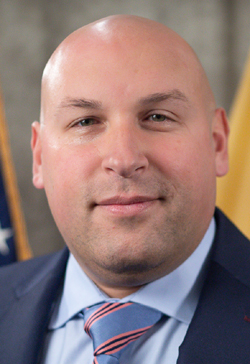
Asm. Mike Venezia
Sponsored bills
Maddy summaryThis bill requires New Jersey to create a public online registry listing out-of-state contractors awarded public construction contracts that require prevailing wages. It directly affects contractors whose main business is outside New Jersey, excluding satellite offices or temporary locations. The registry, maintained by the State Treasurer, will include project details, contractor trade names, and business addresses, and must be accessible on the Treasury Department’s website. The law takes effect immediately upon enactment.
Maddy summaryThis bill requires school bus drivers and personnel to call 911 in potential life-threatening emergencies involving students. It mandates that school buses transporting students with disabilities be equipped with specific safety features (though exact features aren't detailed in the text). The bill also requires annual safety training for all bus personnel, including emergency procedures and recognizing signs of life-threatening situations for students with disabilities. Funding for these requirements is included through an appropriation. The bill directly affects school bus operators, drivers, aides, and students with disabilities in New Jersey.
Maddy summaryThis bill authorizes all New Jersey state, county, and municipal law enforcement officers to access crime scenes and evidence under their agency's jurisdiction. It directly affects officers (who gain clear access rights) and anyone who obstructs them (including federal officers), making such obstruction a violation punishable under existing law. The key provision requires officers to access evidence only within their agency's responsibility, while prohibiting interference with this access. The Attorney General must issue implementation guidelines, and the law takes effect four months after enactment.
Maddy summaryThis bill imposes a 50% tax on gross receipts from contracts between private companies and public entities for operating carceral facilities in New Jersey (e.g., private jails or detention centers). It directly affects private businesses running such facilities, requiring them to pay the tax annually based on their prior year’s revenue from these contracts. All tax revenue must be deposited into a new "Immigrant Protection Fund," which the state will use exclusively to fund immigration-related services. The fund is non-lapsing, meaning money stays available for future appropriations without annual renewal.
Maddy summaryThis bill prohibits federal immigration enforcement agencies from using publicly owned or controlled lands (like parking lots, vacant lots, and garages) as staging areas, processing locations, or operations bases. It requires local governments to install clear signage on such properties and implement physical barriers where needed, while exempting properties under existing leases. The bill also extends this protection to eligible private properties (such as businesses, nonprofits, and faith institutions) by providing free signage, and appropriates funds from the General Fund for implementation. It explicitly states the law does not interfere with criminal warrants or other lawful uses of property.
Maddy summaryThis bill allocates $3 million annually from cannabis tax revenue (Social Equity Excise Fee) to fund Freedom Schools in New Jersey. The funds are directed to the Department of State for direct support of these schools, subject to budget approval. It specifically affects Freedom Schools - public or community-based educational programs - by providing dedicated state funding through an existing tax revenue stream, without altering eligibility or program requirements. The measure takes immediate effect upon enactment.
Maddy summaryThe Child Care Loan Fund Act creates a $10 million no-cost loan program administered by New Jersey's Economic Development Authority (EDA) to help licensed child care centers and registered family day care homes cover capital expenses. It specifically funds renovations, expansions, or new construction of facilities - **not operating costs** - to increase available child care slots statewide. Providers must apply with project details, and the EDA prioritizes applicants participating in the state's Grow NJ Kids quality program. Loans must be repaid within five years, with hardship exceptions, and require collateral like business assets or personal guarantees.
Maddy summaryThis bill requires drivers to stop at least 25 feet from school buses loading/unloading children or individuals with developmental disabilities on undivided highways, and to slow to 10 mph on divided highways. It establishes that violations captured by school bus monitoring systems (like cameras) will result in a $300 civil penalty instead of criminal charges or license points. The law directly affects drivers near school buses, school bus operators, and enforcement agencies. Key provisions include standardized stopping distances, speed limits for divided highways, and shifting penalties for monitored violations to a civil fine system. This changes enforcement by prioritizing evidence from monitoring systems to reduce penalties for documented violations.
Maddy summaryThis bill requires New Jersey's Department of Human Services to stop funding substance use disorder treatment and housing support services for General Assistance beneficiaries as soon as they leave those services. It mandates that funding automatically ceases on the date a beneficiary is discharged from a provider or no longer receives services. The commissioner can verify service end dates and demand repayment for any funds paid after services ended. This directly affects county welfare agencies, providers of these support services, and General Assistance recipients who receive housing or substance use treatment.