

Maddy summaryThis bill adds "Sikhism" to New Jersey's list of protected classes under the state's bias intimidation law (N.J.S.2C:16-1), explicitly including Sikhs in legal protections against hate crimes motivated by religious bias. It directly affects Sikh residents and community members who face discrimination or violence due to their religious identity, such as attacks targeting turbans, beards, or gurdwaras. The key mechanism amends the statute to cover offenses committed "because of their membership within a protected class," including Sikhism, and creates a legal presumption that bias was a motivating factor in such crimes. The bill also appropriates $100,000, likely for educational or support programs related to Sikh community awareness, though specific funding details aren't outlined in the text.
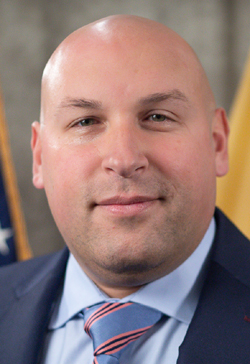
Asm. Mike Venezia
Sponsored bills
Maddy summaryThis bill establishes a Climate Change Mitigation and Resilience Financing Program within the New Jersey Infrastructure Bank. It would impose a per-kilowatt-hour charge on all electricity consumption in the state, added to utility bills for residential, commercial, and industrial consumers. The collected funds would finance projects like flood-resistant infrastructure, coastal protection, and other climate resilience initiatives. The program aims to address climate impacts through targeted infrastructure investments, funded directly by electricity users.
Maddy summaryThis bill (A 799) prohibits developers or deployers of artificial intelligence systems in New Jersey from advertising or representing to the public that their AI can act as a licensed mental health professional. It directly affects AI companies and developers marketing their systems in the state. The law defines "artificial intelligence" broadly and "licensed mental health professional" to include all state-licensed mental health practitioners. Violations would be treated as consumer fraud under state law, subjecting offenders to fines up to $20,000 per offense and potential penalties like cease-and-desist orders.
Maddy summaryThis bill creates a new "Emergency Services Part" within New Jersey's Public Employees' Retirement System (PERS) to provide enhanced retirement and death benefits for specific emergency workers. It directly affects emergency medical technicians, paramedics, 911 dispatchers, fire inspectors, and other certified emergency services employees who are currently in PERS or will be hired after the bill's effective date. Key provisions require current PERS members in these roles to be enrolled in the new part within 120 days (unless they waive it), and new hires must be enrolled as a condition of employment. The bill ensures service credit earned in standard PERS for these roles will count toward benefits in the new part, aligning with existing retirement structure while offering improved benefits.
Maddy summaryAJR 83 establishes the "New Jersey Diversity in Law Enforcement Task Force" to study ways to increase diversity within all state, local, and municipal law enforcement agencies across New Jersey. The 13-member task force includes legislators, law enforcement leaders, civil rights representatives, and community members from urban and non-urban areas, with specific requirements for balanced representation. It will examine current diversity data, identify effective recruitment and retention strategies, and develop recommendations to improve community representation within police departments. The task force must submit a final report to the Governor and Legislature within one year of its formation, with the resolution expiring 30 days after the report is issued.
Maddy summaryThis New Jersey bill replaces all references to "alien" and "illegal alien" in state laws with "foreign national" and "undocumented foreign national," respectively. It directly affects state statutes covering inheritance, estates, and lottery prize distributions, as seen in amended sections like N.J.S.3B:5-12 and the lottery assignment rules. The key mechanism is a simple terminology update across all state laws and a prohibition on executive branch agencies using the outdated terms. The bill makes no new policy changes - it only updates language to align with current terminology. It is currently pending in the Assembly State and Local Government Committee.
Maddy summaryThis bill creates new civil legal protections for minors and adults with disabilities who experience abuse, neglect, exploitation, or bullying. It extends the time to file lawsuits: minors with disabilities can sue up to 37 years after reaching adulthood or within 7 years of discovering the injury, while adults with disabilities have a 7-year window from discovery. The bill defines "bullying" broadly (including electronic communication causing fear) and clarifies that bullying of vulnerable adults may trigger investigations by adult protective services and law enforcement reports. It directly affects individuals with disabilities who face these harms, providing clearer legal pathways for accountability. The legislation amends New Jersey's statute of limitations and defines key terms in existing disability protection laws.
Maddy summaryThis bill requires youth camps, recreation departments, and youth sports organizations (like Little League, soccer leagues, and police athletic leagues) to have an automated external defibrillator (AED) available on-site at all youth athletic events and practices held on their home fields. Organizations can comply if a certified first responder with an AED is present. The bill also provides legal immunity for organizations and their staff (including volunteers and coaches) who acquire or use AEDs under this requirement. These rules take effect immediately upon passage.
Maddy summaryNew Jersey's A-3322, the "Homeless Bill of Rights," prohibits discrimination against homeless residents in public spaces, services, employment, healthcare, voting, and privacy. It guarantees homeless individuals the same rights as other residents, including free movement in public areas, equal treatment by government agencies, protection from employment discrimination due to lack of permanent address, access to emergency medical care, and confidentiality of shelter records. The bill allows individuals to sue for violations and seek court-ordered remedies, damages, and attorney fees. It directly affects all homeless residents in New Jersey by legally protecting their access to public life and services without housing status discrimination.
Maddy summaryThis bill establishes a $2 million grant program to provide mental health services to New Jersey veterans. It directs the state's Adjutant General to fund qualified veterans organizations (like 501(c)(3) groups or federally chartered veterans service organizations, including specific New Jersey groups) to contract with licensed mental health professionals. The program aims to expand access to mental health care for veterans through these designated community partners. The $2 million appropriation comes directly from the state General Fund and takes effect immediately.