

Maddy summaryBill A4163 requires health insurers in New Jersey to cover biomarker testing for diagnosis, treatment, management, or ongoing monitoring of diseases when supported by medical evidence such as FDA approvals, drug labels, or clinical guidelines. The bill applies to all health insurance plans including individual, group, Medicaid, and health maintenance organization contracts. Insurers must provide coverage without causing unnecessary disruption (like multiple biopsies) and must make prior authorization decisions within 24 hours for urgent requests or 72 hours for non-urgent requests. This ensures patients can access precision medical testing that's clinically supported without excessive administrative barriers.
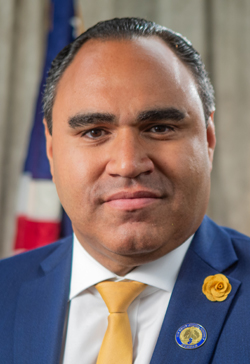
Asm. Gabe Rodriguez
Sponsored bills
Maddy summaryS 2236 exempts nursing mothers of children one year old or younger from jury duty in New Jersey. This change adds to existing hardship exemptions under N.J.S.2B:20-10(c)(3)(b), allowing mothers who are nursing or expressing milk to claim exemption without needing to prove additional financial or medical hardship. The policy directly affects nursing mothers summoned for jury service during their infant's first year. The law took effect immediately upon approval (P.L.2025, c.43) and applies to all jury summonses issued after that date.
Maddy summaryAJR 166 is a New Jersey legislative resolution urging the U.S. Congress to advance the creation of a National Museum of the American Latino. Introduced by Assembly members Rodriguez, Collazos-Gill, and Quijano, it calls for Congress to reinstate a 2008 commission and establish the museum as part of the Smithsonian Institution on the National Mall in Washington, D.C., while directing copies to federal leaders and New Jersey's congressional delegation.
Maddy summaryThis bill (A1992) would amend New Jersey's jury duty law to explicitly exempt nursing mothers from service. Specifically, it adds a new category allowing mothers of children under one year old who are nursing or expressing milk to claim an exemption without needing to prove broader hardship. Currently, such mothers might rely on general "care of a dependent" exemptions, but this bill clarifies and streamlines the process. The exemption applies during the first year of a child's life and aligns with state health initiatives supporting breastfeeding.
Maddy summaryThis bill makes New Jersey's property tax exemption for veterans with a 100% service-connected disability retroactive to the date the U.S. Department of Veterans Affairs determined their total disability. It directly affects veterans who qualify under the law (e.g., those with paraplegia, blindness, or amputations) by requiring municipalities to refund property taxes paid since that determination date. The state must reimburse municipalities 102% of the refunded taxes to cover the cost of returning payments to veterans.
Maddy summaryThe "Climate Superfund Act" would hold fossil fuel companies liable for climate change damages by requiring them to pay compensatory payments based on their historical greenhouse gas emissions. It targets companies that extracted or refined fossil fuels and are responsible for over one billion metric tons of emissions between 1995 and the bill's effective date. The bill establishes a program through New Jersey's Department of Environmental Protection to collect these payments and distribute funds for climate adaptation projects, such as flood protection, infrastructure upgrades, and health programs. Companies would pay their proportional share of damages over nine years, with options for installment payments, and the collected funds would specifically support projects that help communities prepare for climate impacts.
Maddy summaryThis bill amends New Jersey's extreme risk protective order law to clarify that when a complaint is filed against a law enforcement officer (e.g., for misconduct), the officer's agency must immediately transfer the complaint to the county prosecutor to initiate an internal affairs investigation. The primary focus of the bill, however, is on expanding access to temporary orders that restrict firearm access for individuals deemed an immediate danger to themselves or others. It requires courts to consider specific risk factors (like violent history or recent firearm purchases) and mandates county prosecutors to provide evidence to courts. The bill affects anyone seeking such an order, particularly family members reporting threats involving firearms, and applies to all law enforcement agencies, including those at higher education institutions.
Maddy summaryThis bill expands New Jersey's "Nosey's Law" to prohibit the use of rabbits, hares, rodents, and other wild or exotic animals in traveling animal acts - such as mobile circus performances or carnival shows. It removes current exemptions for domestic animals (like cattle, horses, and dogs) from the prohibited list and narrows exceptions to apply only to educational institutions conducting outreach programs. The law affects businesses operating mobile animal entertainment shows, making it illegal to transport or use these animals in performances requiring mobile housing facilities. Exceptions for educational or research purposes now apply solely to schools or affiliated institutions, not general venues.
Maddy summaryThis bill would extend New Jersey's early voting period for primary elections to begin 11 days before the election (up from 4 days for non-presidential primaries and 6 days for presidential primaries), ending on the second day before the election. It would require county boards of elections to designate public locations for early voting based on population size, with specific requirements for accessibility and security of ballots. The bill specifies that early voting would occur Monday through Saturday from 10 AM to 8 PM and Sunday from 10 AM to 6 PM at designated locations. The bill appropriates $6 million to support these changes, which would affect all registered voters participating in primary elections in New Jersey.
Maddy summaryThe bill would authorize certified medication aides to administer medications to residents in New Jersey's nursing homes, expanding their current scope of practice (which is limited to assisted living facilities and similar settings). To qualify, medication aides would need to be certified as nurse aides, homemaker-home health aides, or personal care assistants, complete a specialized medication administration training course, and pass a standardized exam. Certification would be valid for two years with a requirement for 10 hours of continuing education every two years, including specific training on medication administration for elderly residents. The bill also updates background check requirements to include medication aides and establishes a registry for certified medication aides.