

Maddy summaryThis bill re-appropriates $3 million in unspent funds from a previous fiscal year (FY2024) that had lapsed to the Property Tax Relief Fund. Originally allocated for the Town of West New York's overpass project, these funds are now redirected to support the construction of the Town's Recreation Center. The bill adds budget language to formally transfer the balance and authorizes the funds for the recreation center project in FY2025. It does not create new spending but restores previously allocated funding for a specific municipal facility.
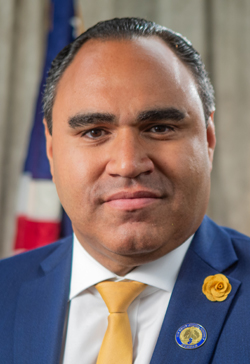
Asm. Gabe Rodriguez
Sponsored bills
Maddy summaryAJR 62 designates the first week of May each year as "Children's Mental Health Awareness Week" in New Jersey. The resolution requests the Governor issue an annual proclamation encouraging public officials and residents to observe the week with activities promoting awareness of children's mental health. It aims to reduce stigma and improve access to treatment for children with mental health disorders, as highlighted in the bill's rationale about their vulnerability to school suspensions, substance use, and justice system involvement. The resolution does not create new laws or funding but serves as a symbolic annual observance.
Maddy summaryThis bill requires new flooring installed in schools (K-12) and licensed childcare centers to be certified as mercury-free by the manufacturer before a construction permit can be issued. For renovations involving existing flooring, applicants must either provide certification that current flooring is mercury-free (pending health department rules) or confirm it will be removed before new flooring is installed. Manufacturers falsely claiming mercury-free flooring face civil penalties of $10,000 for a first offense and $25,000 for repeat violations. The bill directly affects construction projects in these facilities and establishes a process for health department certification of mercury-free flooring.
Maddy summaryThis bill increases the fee for filing an eviction action in New Jersey from $50 to $150. Landlords who initiate eviction cases will pay this new fee, and all revenue will fund the Office of Eviction Prevention. The office will use these funds to provide direct services like resource navigators who help tenants access rental assistance, homelessness prevention programs, legal support, and rapid rehousing options. The goal is to reduce evictions by addressing root causes and preventing long-term housing instability for tenants.
Maddy summaryThis bill establishes the Eviction and Homelessness Prevention Program to provide rental assistance to New Jersey tenants who can't pay rent due to pandemic-related circumstances. The program offers different assistance levels based on income: deep subsidies for very low-income households to limit rent to 40% of income, shallow subsidies up to $800 per month for low-income households, and $250 flat grants for moderate-income households paying more than 50% of income on rent. Eligible households can receive assistance for up to two years, with income reevaluations every six months to adjust support as needed. The program is funded by $300 million in CARES Act funds, with the goal of preventing evictions and homelessness while protecting public health.
Maddy summaryThis resolution permanently designates the last week in February as "Eating Disorders Awareness Week" in New Jersey. It requests the Governor to issue an annual proclamation for the week and encourages public officials and citizens to observe it with awareness activities. The resolution also directs that copies be sent to the National Eating Disorders Association (NEDA) to support their work. The goal is to raise public awareness about eating disorders and encourage affected individuals and families to seek treatment.
Maddy summaryThis bill replaces the current fixed interest rate (6% per annum) or "legal rate" used in eminent domain cases with a court-determined interest rate. Under the bill, courts would calculate interest after final compensation determination, considering factors like prevailing commercial rates, prime rates, and rates that fairly compensate property owners for loss of use of their property. The change would apply to all eminent domain cases where compensation is being determined. This makes interest calculations more flexible and potentially more reflective of current market conditions, directly affecting property owners and government entities involved in eminent domain proceedings.
Maddy summaryThis bill requires New Jersey financial institutions (like banks, credit unions, and mortgage servicers) to allow homeowners (mortgagors) to choose biweekly payments (every two weeks), bimonthly payments (twice monthly), or extra payments directly to their mortgage principal - without penalties. It mandates that any amount paid beyond the annual required total in biweekly plans must reduce the principal balance. The law applies to all new mortgage agreements signed six months after enactment and affects homeowners seeking more flexible repayment options to potentially pay off loans faster. It does not change existing mortgage terms but expands payment choices for future agreements.
Maddy summaryThis bill (A1825) establishes guidelines for health insurance plans regarding "step therapy" protocols, which require patients to try lower-cost medications before coverage is provided for a preferred medication selected by their doctor. It requires insurers to base these protocols on clinical guidelines developed by expert panels with conflict-of-interest safeguards, and creates a clear process for patients to request exceptions when step therapy would be harmful or ineffective. Insurers must grant or deny exception requests within 72 hours (24 hours in emergencies), and must report on exception requests and outcomes to the state insurance commissioner. This affects all health insurance carriers in New Jersey, including those offering SHBP, SEHBP, and Medicaid plans, as well as the patients and healthcare providers who use these plans.
Maddy summaryThis bill (A5464) prohibits New Jersey's Board of Public Utilities (BPU) from approving any electric utility rate increase without first conducting a full rate review. It directly affects electric utilities (like power companies) and their ratepayers (customers), requiring the BPU to complete a comprehensive review of a utility's rates before any increase can be approved. The key provision mandates that the BPU cannot approve rate hikes for electric services to end users without this full review process, as defined under state law. The bill takes immediate effect upon enactment.