

Maddy summaryThis bill proposes adding a $0.25 fee to the price of each alcoholic beverage sold in restaurants and bars located in New Jersey municipalities with 200 or more existing or inactive liquor licenses. The fee would be collected by license holders and deposited into the Alcohol Education, Rehabilitation and Enforcement Fund (AEREF), which currently supports alcohol-related programs. The AEREF uses funds from existing sources (like manufacturer taxes and drunk driver fees) to allocate 75% to rehabilitation, 15% to enforcement, and 10% to education across the state’s 21 counties. This bill would create a new revenue stream for the AEREF by requiring the fee on drinks sold in high-density license areas. The bill is currently in committee review and not yet law.
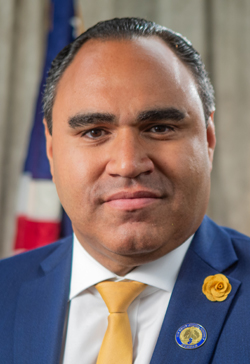
Asm. Gabe Rodriguez
Sponsored bills
Maddy summaryThis bill removes a restriction that previously required local governments (counties, municipalities, and other local units) to provide broadband services only through "wireless community networks." It allows local units to choose any method - wireless, wired, or other infrastructure - to build, operate, or contract for broadband telecommunications service. The change gives local governments greater flexibility in how they deliver high-speed internet access to residents and businesses within their jurisdictions. This is a direct policy change affecting all New Jersey local governments seeking to expand broadband infrastructure.
Maddy summaryThis bill reinstates automatic cost-of-living adjustments (COLAs) for retirement benefits of members in New Jersey's Police and Firemen's Retirement System (PFRS). It directly affects current and future retirees who are members of this system, restoring annual benefit increases tied to inflation. The key provision amends existing law to allow the retirement system's board of trustees to reinstate these automatic COLAs without requiring additional contributions from members, provided actuarial certification confirms the change won't harm the fund's long-term stability. The bill does not create new benefits but returns a previously reduced feature of the retirement system.
Maddy summaryThe New Jersey Works Act creates a tax credit for businesses that fund pre-employment training programs targeting low- and moderate-income individuals for jobs in high-demand occupations. These programs must provide at least 12 weeks of paid training at minimum wage, covering skills like communication, job readiness, and career-specific instruction. The bill appropriates $1 million to support the initiative and requires training programs to be approved by the state, partner with schools or nonprofits, and exclude construction businesses. It directly affects qualifying businesses, educational institutions, and job seekers in targeted regions seeking career advancement opportunities.
Maddy summaryThis bill provides tax credits for businesses purchasing hydrogen fuel cell vehicles for commercial use. Businesses can claim up to 25% of the vehicle cost (capped at $15,000) in 2023, decreasing to 8% ($5,000 cap) by 2025. To qualify, businesses must obtain certification from the Environmental Protection Commissioner confirming the vehicle meets specifications and is used exclusively for business operations. The credits apply against both New Jersey's corporation business tax and gross income tax.
Maddy summaryThis bill requires New Jersey's Department of Health (DOH) to create standardized protocols for hospitals and licensed birthing centers to collect and report detailed, de-identified data on maternity care. The data must cover specific metrics like maternal health conditions (e.g., hypertension, hemorrhage), delivery methods (e.g., induction timing, cesarean rates), and infant outcomes (e.g., birth weight, complications). The DOH will annually evaluate this data to set statewide benchmarks, identify quality improvement opportunities, and compare hospital performance. Results and recommendations must be reported to the Governor and Legislature yearly, aiming to enhance maternal and infant health outcomes through data-driven care.
Maddy summaryThis bill (A 1456) establishes a $200 million mortgage assistance program for low- and moderate-income homeowners in New Jersey who face imminent risk of homelessness due to qualifying economic hardships (like job loss, medical issues, or death of a family member). It provides zero-interest, forgivable loans in four tiers: "deep" subsidies for those missing three+ payments, "moderate" for any delinquency, "shallow" for imminent risk, and "single" for at-risk homeowners. Homeowners must use the home as their primary residence for three years and complete mandatory counseling on budgeting and home finance to qualify for loan forgiveness. The program targets homeowners with incomes at or below 80% of their local median household income.
Maddy summaryThis bill establishes a "Pretrial Partnership for Community Support and Services Pilot Program" to connect eligible pretrial defendants with community-based support services like substance abuse treatment, mental health care, and case management. It requires courts to consider these services as part of release conditions for defendants who qualify for pretrial release but need additional support to safely remain in the community. The program would be delivered through approved community providers and aims to reduce unnecessary detention while ensuring court appearance and public safety. The bill is pending in the Assembly Judiciary Committee after introduction on January 13, 2026.
Maddy summaryThis New Jersey bill (A-1363) requires the Department of Human Services to create a public awareness campaign explaining existing privacy laws that prevent health care enrollment information (from Medicaid or NJ FamilyCare) from being shared with immigration authorities. It directly affects immigrant populations in New Jersey who may avoid health care due to unfounded fears of deportation. The campaign must use linguistically and culturally sensitive materials in English and Spanish, distributed through health facilities, community centers, libraries, and other local organizations, and coordinate with existing Medicaid outreach efforts. The department must also create a dedicated, Spanish-accessible webpage on its website summarizing these privacy protections and linking to relevant federal resources.
Maddy summaryThis bill prohibits pet shops in New Jersey from selling cats, dogs, or rabbits, directly affecting pet shops, breeders, brokers, and animal shelters/rescues. It requires pet shops to collaborate with shelters for adoption showcases (without payment), bans shelters from paying breeders for animals, and fines violators $1,000 per violation - with license revocation for three or more offenses. The law aims to disrupt the "puppy-mill-to-pet-store pipeline" by prioritizing adoption over commercial breeding sales. It does not affect pet shop sales of other animals or pet supplies.