

Maddy summaryThis bill (A 439) changes how interest is calculated for property owners when their land is taken through eminent domain in New Jersey. It replaces a fixed interest rate with one based on the final just compensation award amount. This directly affects property owners whose land is acquired by government authorities (like municipalities or agencies) under eminent domain. The key provision requires compensation interest to align with the actual final settlement value, rather than using a predetermined rate. The bill amends existing law to implement this change in compensation calculations.
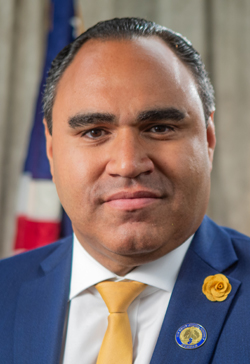
Asm. Gabe Rodriguez
Sponsored bills
Maddy summaryThis bill allows New Jersey voters to change their political party affiliation at the polling place on primary election day and vote in that party's primary. It also permits mail-in voters to complete a primary ballot for a different party than their current affiliation, which would then change their party membership to that new party. Unaffiliated voters who typically receive mail-in ballots for general elections will not get a primary ballot but will receive a form to declare a party and vote in person on election day. The bill amends existing law to remove the prior requirement that voters must have been affiliated with a party 55 days before the primary.
Maddy summaryThis bill establishes a two-year Sports Equipment Equity Pilot Program administered by New Jersey's Commissioner of Education. It provides grants to up to six school districts to purchase sports equipment and resources for student athletic programs, prioritizing districts from diverse geographic regions (southern, central, northern) and school types (urban, suburban, rural). School districts must apply with documentation of their equipment needs and current resources, and must submit post-program reports detailing student participation and program effectiveness. The program's success will determine whether it continues or expands statewide.
Maddy summaryThis bill requires New Jersey school districts hosting college or career fairs for high school students to notify all registered apprenticeship programs in their county about the event. The notification must include the fair's date, time, location, and instructions for apprenticeship programs to register for participation. It directly affects school districts and registered apprenticeship programs by creating a mandatory communication requirement. The bill takes immediate effect and does not establish new programs or funding, only ensuring existing apprenticeship programs receive timely information about school events.
Maddy summaryThis bill allows licensed social workers in New Jersey to earn up to four hours of required continuing education credit by volunteering as poll workers during state primary or general elections. Social workers receive two credits for each election they serve (primary, general, or both), with a maximum of four credits per license renewal period. To claim these credits, workers must provide proof of service, such as a county-issued assignment letter. The bill does not require social workers to volunteer - it simply offers this as an optional way to meet their continuing education requirements.
Maddy summaryThis resolution urges the U.S. Department of Veterans Affairs (VA) to stop using current transportation providers for disabled veterans traveling to New Jersey’s two VA medical centers (in East Orange and Lyons) and instead fund existing county paratransit services or nonprofit organizations like ARC of New Jersey. It directly affects approximately 53,000 disabled veterans in New Jersey who face inadequate transportation, including reports of veterans being stranded for hours or overnight. The key mechanism is redirecting VA funds to expand existing high-quality paratransit networks - already serving seniors and disabled residents - to cover VA medical appointments, rather than relying on underfunded or inconsistent VA-provided services. The resolution has no legal force but requests the VA reconsider its transportation partnerships.
Maddy summaryThis bill (A 2178) amends New Jersey's Commission on Human Trafficking to specifically require the commission to study human trafficking affecting women and children of color. The commission must identify risk factors making these groups vulnerable, develop prevention strategies, and recommend ways to improve support services for victims. The commission will continue its existing duties - like evaluating laws, reviewing victim programs, and promoting public awareness - but now with a focused mandate on racial disparities in trafficking. It will report annually to the Governor and Legislature on its findings and legislative recommendations related to this specific population.
Maddy summaryThis bill eliminates a $15 fee for special license plates designated for firefighters and first aid/rescue squad members in New Jersey. Currently, these emergency service members pay an additional $15 fee on top of standard vehicle registration costs to obtain the plates. The bill would allow eligible volunteer, part-time, and paid members of fire departments or first aid/rescue squads to receive these plates at no extra cost (only standard registration fees would apply). It requires annual renewal with proof of continued membership and was withdrawn after being approved as P.L.2025, c.354.
Maddy summaryThis bill (A-1331) requires New Jersey's Board of Public Utilities (BPU) to conduct a full rate review before approving any electric rate increase requested by an electric public utility. It directly affects electric utilities seeking rate hikes and the ratepayers who pay those rates. The key provision mandates that the BPU cannot approve any increase to an electric rate component without completing this comprehensive review process. The bill takes immediate effect upon enactment.
Maddy summaryThis bill extends New Jersey's protected tenancy law to provide senior citizens (62+ years) and disabled tenants with lifelong protection from eviction when landlords convert rental buildings to condos or cooperatives. It directly affects eligible tenants who meet income requirements and have lived in the property for at least one year, preventing forced moves due to ownership changes. The key change modifies the existing law to guarantee protected tenancy "for the full lifetime" of qualifying tenants, rather than a maximum 40-year period. This ensures these tenants can remain in their homes without rent hikes or lease changes solely because of a conversion, addressing concerns about displacement during economic hardship.