

Maddy summaryThis is a ceremonial resolution, not a policy bill. It formally expresses the New Jersey General Assembly's appreciation to all its staff members - including the Chief Clerk, committee staff, administrative personnel, and others - for their dedication and service during legislative sessions. The resolution commends their "outstanding dedication, cooperation, and excellent work" in supporting the Assembly's operations. It requires the Clerk to send copies of the resolution to every staff member. As a procedural measure, it has no legal effect or policy changes.
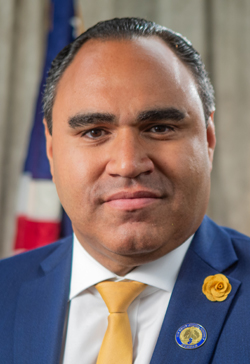
Asm. Gabe Rodriguez
Sponsored bills
Maddy summaryThis bill requires juveniles accused of delinquency to appear in court in the county where the alleged incident occurred, rather than their county of residence. It directly affects juveniles facing delinquency charges in New Jersey. The key provision changes the court venue requirement, mandating that hearings occur where the incident happened, while also requiring courts to provide reasonable transportation to ensure juvenile attendance. This update modifies existing court rules to align with the location of the alleged offense.
Maddy summaryThis bill prohibits home improvement contractors in New Jersey from requiring subcontractors to cover all costs through "full indemnification" clauses in contracts. It specifically limits any liability clause between contractors and subcontractors for defects or poor workmanship to a maximum of 50% indemnification. The law applies to all home improvement contracts over $500 and requires contractors to include a certification in written contracts stating they will not seek full indemnification from subcontractors. These changes aim to prevent contractors from shifting full financial responsibility to subcontractors for project issues.
Maddy summaryThis New Jersey bill (A482) requires transportation network companies (like Uber or Lyft) to share details about sexual misconduct investigations involving their drivers with other companies and to temporarily ban drivers during and after such investigations. It mandates that drivers disclose prior sexual misconduct allegations when applying, and companies must verify this history across all platforms. The law aims to enhance passenger safety by preventing drivers with substantiated misconduct histories from continuing to operate. It applies specifically to companies using digital platforms for prearranged rides, not traditional taxis or ride-sharing services. The bill does not specify penalties for noncompliance but establishes a process for information sharing between companies.
Maddy summaryThis bill makes it a crime for someone to falsely claim ownership or possession of a residential rental property they don’t legally own or control, with the intent to rent it out or gain a benefit. Violations are classified as fourth-degree crimes (up to 18 months in jail or $10,000 fine) and also violate New Jersey’s Consumer Fraud Act. It specifically targets "imposter landlords" who misuse online platforms like Craigslist to rent properties they don’t own, while exempting actual tenants, subtenants, and real estate professionals acting in good faith. The law does not apply to internet platforms or override existing civil/criminal liabilities for fraud or theft.
Maddy summaryThis bill requires New Jersey mail-in ballot application forms to include prepaid postage, paid by the state. It directly affects voters who request mail-in ballots by eliminating the need for them to purchase postage when returning the application. The key provision mandates that the Secretary of State's application form must include prepaid postage, ensuring voters can mail their requests without additional cost. The bill amends existing election law to implement this change, with the state covering the postage expense. This is a procedural adjustment to simplify the mail-in ballot request process for voters.
Maddy summaryThis New Jersey bill (A 966) requires the Commissioner of Health to create a public awareness campaign focused on improving maternal and child health outcomes, with a specific emphasis on equitable care across all racial and ethnic groups. The campaign will provide accessible information through a dedicated Department of Health website, including hospital data on cesarean births and breastfeeding rates to help women choose care providers, promote birth plan documentation in medical records, and share guidance on avoiding unnecessary interventions like early inductions. It also educates the public on maternal health services, breastfeeding rights, pregnancy discrimination protections, and Medicaid eligibility for pregnant women. The campaign directly affects pregnant individuals, new mothers, and healthcare providers in New Jersey by making key maternity care information more transparent and actionable.
Maddy summaryThis New Jersey bill (A487) requires municipal police chiefs to hold two annual community roundtables on police relations - once in spring and once in fall - with specific scheduling and notice rules to encourage public participation. It also mandates the State Police Superintendent to host one regional roundtable per year in each of the state's three regions, covering identical topics. Key discussion points include racial profiling, officer recruitment, body camera regulations, and use-of-force policies. The bill takes effect immediately upon enactment.
Maddy summaryThis bill requires construction permit applicants in New Jersey to disclose the anticipated funding sources and amounts for their projects. It applies to most construction projects but excludes single-family homes, routine renovations or repairs of dwelling units, and small-scale alterations (like individual units in buildings with fewer than three units). Applicants must provide this funding information when applying for a permit, and before receiving a certificate of occupancy, they must certify the accuracy of that information or submit updated details. The Commissioner of Community Affairs will develop specific rules within 180 days to implement these requirements.
Maddy summaryThis bill allows New Jersey local governments (like cities, towns, and counties) to purchase unused sick leave from public employees under strict limits. It prohibits paying more than $15,000 in supplemental compensation for unused sick leave upon retirement, caps annual purchases at 120 hours per employee, and requires payments to not exceed 60% of the leave's value based on pensionable salary. Employees must retain at least 800 hours of unused sick leave after any purchase, and local governments cannot use emergency funds to cover these purchases. The bill directly affects public employees in New Jersey political subdivisions who may sell unused sick leave before retirement.