

Maddy summaryThis bill requires New Jersey's Attorney General to establish and regularly update guidelines for investigating bias incidents - crimes motivated by prejudice against protected groups. It mandates that local law enforcement agencies report confirmed or suspected bias incidents to the Electronic Uniform Crime Reporting system within 24 hours and immediately notify the Attorney General and county prosecutors for serious cases (e.g., homicide, hate group involvement). The guidelines also set procedures for investigations, require victim referrals to the Division on Civil Rights for discrimination-related incidents, and include mandatory training for officers on detecting and reporting bias crimes. These standards directly affect county/municipal police departments, prosecutors, and victims of bias incidents.
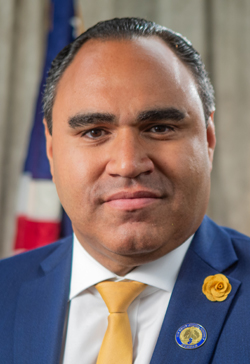
Asm. Gabe Rodriguez
Sponsored bills
Maddy summaryThis bill requires libraries in New Jersey municipalities or counties where 40%+ of residents live below 1.85x the federal poverty line to provide free menstrual hygiene products (tampons and sanitary napkins) in all women’s and all-gender restrooms. It also mandates that these libraries display educational pamphlets about menstrual health topics like toxic shock syndrome and proper disposal. The state, not the libraries, will cover all costs for purchasing and maintaining these products. The law applies to libraries funded partly by municipal or county taxes and aims to address period poverty by ensuring access to essential products and information.
Maddy summaryThis bill requires all New Jersey swimming pools to offer deep water swimming tests to children 12 and younger upon request by the child or their guardian. To pass the test, a child must swim 50 meters (two laps) and tread water for 30 seconds, demonstrating ability to enter water deeper than chest level. Until passing this test, unaccompanied children under 12 must be within arm’s length of an adult while swimming, with swim team members exempt. Pool inspections and the Department of Health's checklist must confirm this testing requirement is available.
Maddy summaryThis bill requires New Jersey counties to appoint a pretrial release coordinator for defendants charged with serious offenses (indictable or disorderly persons) who are released before trial. The coordinator evaluates each defendant's needs and voluntarily connects them to services like substance abuse treatment, food assistance (SNAP), Medicaid, housing aid, job training (Work First NJ), and insurance applications. Counties must track which defendants access these services, along with demographic data and any subsequent arrests, and submit annual reports to the Governor and Legislature. The bill directly affects defendants on pretrial release and aims to improve access to supportive services during their court process.
Maddy summaryThis New Jersey bill (A 2098) prohibits institutions of higher education and certain proprietary schools from withholding student transcripts due to unpaid debts of $2,000 or less for non-mandatory charges (like campus fees, not tuition or room/board). It specifically bans institutions from refusing transcripts, charging extra fees, or conditioning transcript access on debt payment for qualifying students. Exceptions apply for unpaid tuition/room/board debts, debts exceeding $2,000, or students needing transcripts for new student loans. The bill also requires institutions to post transcript policies online and clarifies that transcript access does not forgive debt or affect diploma issuance. Note: This bill was withdrawn as it was already enacted as P.L.2025, c.353.
Maddy summaryThis bill expands New Jersey's child care subsidy program to cover families with annual incomes up to 300% of the federal poverty level (currently $83,250 for a family of four), directly affecting working parents of children under age 13. It establishes four income tiers for eligibility and sliding-scale payments to licensed child care providers, ensuring subsidies don't drop below pandemic-era rates. The bill appropriates state funds for implementation and requires the state to seek federal matching funds. It replaces the previous 200% income cap, significantly broadening access to subsidized care for middle-income families.
Maddy summaryThis bill creates a public database managed by New Jersey's Business Action Center (within the Department of State) listing vacant commercial properties available for small businesses to lease or purchase. The database must include specific details like square footage, included equipment, and building systems (e.g., HVAC, security). Commercial property owners are required to report vacancies or occupancy changes to the center, which will update the database monthly using input from owners, realtors, and municipalities. The database will be accessible online and promoted to business associations and local chambers to help small businesses find suitable space more efficiently.
Maddy summaryThis bill expands requirements for public awareness signage about human trafficking. It adds 10 new locations where businesses and facilities must display the Commission on Human Trafficking's sign, including gas stations, staffing agencies, law enforcement offices, nail salons, and New Jersey Motor Vehicle Commission offices. The sign must be 8.5x11 inches, in 16-point font, and bilingual (English/Spanish), containing the national trafficking hotline number. Businesses failing to display or replace defaced signs face $300 fines for first offenses and $1,000 for subsequent violations. The bill directly affects the listed establishments by mandating visible signage to aid trafficking victims.
Maddy summaryThis bill requires Homelessness Prevention Program (HPP) agencies - nonprofit organizations managing homelessness services in New Jersey - to remain open during public health emergencies. It mandates the Department of Community Affairs to fund one agency per "populous county" (county with 350,000+ residents) to manage homelessness prevention services in those areas. If federal pandemic funding is insufficient, the agency head may request state funds from the General Fund to cover gaps. The law directly affects agencies in populous counties and the residents they serve, ensuring continuous access to homelessness prevention during emergencies.
Maddy summaryThis bill increases Medicaid reimbursement rates for certain mental health services to at least the Medicare rate. It directly affects Medicaid-eligible patients (adults and children) and providers like licensed substance abuse treatment centers or mental health professionals offering evidence-based outpatient counseling. The key provision requires that services must be proven effective (listed in federal registries or approved by state officials) and limited to individual/group therapy in outpatient settings. This policy change aims to improve payment for specific behavioral health treatments under New Jersey's Medicaid program.