

Maddy summaryThis bill would have New Jersey join the Social Work Licensure Compact, allowing social workers licensed in New Jersey to practice in other participating states without obtaining separate licenses. The compact establishes a system where social workers must meet specific requirements (including passing national exams, holding appropriate degrees, and completing supervised practice) to qualify for a multistate license. It creates a commission to manage the compact, handle data sharing among states, and address disciplinary actions. The compact aims to increase access to social work services, reduce duplicate licensing requirements, and support workforce mobility for social workers across member states. This would directly affect social workers seeking to practice in multiple states and the states' licensing authorities.
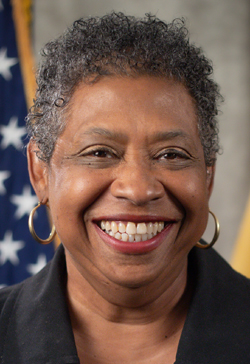
Asm. Garnet Hall
Sponsored bills
Maddy summaryThe "Packaging Product Stewardship Act" requires producers of packaging products in New Jersey to reduce waste through specific targets: a 25% reduction in single-use packaging by 2032 (with at least 10% coming from reusable alternatives or plastic elimination), all packaging must be compostable or recyclable by 2034, and a 65% recycling rate by 2036. Producers can join a Producer Responsibility Organization (PRO) to collectively meet these requirements or comply individually, with PROs required to develop detailed stewardship plans funded through fees proportional to packaging volume and environmental impact. Annual surcharges on producers will fund a "Packaging Reduction and Recycling Fund" (up to $120 million total) to improve recycling infrastructure. The bill establishes an Office of Plastics and Packaging Management within the Department of Environmental Protection to oversee implementation and enforcement.
Maddy summaryThis bill changes the title of New Jersey's "Chief Diversity Officer" to "Chief Equity Officer" and creates the "New Jersey Office of Supplier Diversity and Business Opportunities" within the Department of the Treasury. The new Office will support the Chief Equity Officer in monitoring state contracts awarded to "small and diverse business enterprises" (including minority-owned, women-owned, economically disadvantaged, socially disadvantaged, and disabled veterans' businesses), processing business certifications, and developing outreach programs. State agencies must submit annual procurement plans and data to the Office, which will analyze these plans and provide feedback to improve contracting with diverse businesses. The Chief Equity Officer will report directly to the State Treasurer and oversee all efforts to increase transparency and participation of diverse businesses in state procurement.
Maddy summaryThis bill establishes the "Minority and Women-Owned Businesses State Contractor Remedies Act" requiring New Jersey State agencies to set specific contract utilization goals for minority and women-owned businesses based on a 2024 disparity study. It sets detailed percentages for contracts across different categories, including 24.26% of construction contracts for women-owned businesses and 10.14% for Hispanic American-owned businesses. State agencies must develop annual plans to achieve these goals and make a "good faith effort" to meet them, with remedial actions required if they fail to do so. Prime contractors are also required to make good faith efforts to meet subcontractor goals for minority and women-owned businesses. The bill amends previous set-aside laws by removing goals for minority and women-owned businesses and shifting oversight to the Department of the Treasury's Office of Diversity and Inclusion.
Maddy summaryThis bill requires New Jersey's Board of Public Utilities (BPU) to create a program for building electrification and mandates electric public utilities to develop multi-year plans to replace fossil fuel systems with electric alternatives. The plans must meet specific greenhouse gas reduction targets and be cost-effective from a societal perspective, considering environmental benefits like reduced methane emissions. Key mechanisms include converting gas heating/water systems to electric heat pumps, replacing gas appliances with electric models (e.g., induction stoves), and funding contractor training programs. The bill directly affects electric utilities, building owners, and contractors by requiring systemic shifts toward electrified heating, cooking, and industrial processes.
Maddy summaryBill A4163 requires health insurers in New Jersey to cover biomarker testing for diagnosis, treatment, management, or ongoing monitoring of diseases when supported by medical evidence such as FDA approvals, drug labels, or clinical guidelines. The bill applies to all health insurance plans including individual, group, Medicaid, and health maintenance organization contracts. Insurers must provide coverage without causing unnecessary disruption (like multiple biopsies) and must make prior authorization decisions within 24 hours for urgent requests or 72 hours for non-urgent requests. This ensures patients can access precision medical testing that's clinically supported without excessive administrative barriers.
Maddy summaryNew Jersey's A3540 establishes criminal penalties for creating or sharing deceptive audio or visual media (commonly called "deepfakes") that falsely depict someone doing something they didn't actually do. It makes it a crime to produce such media for unlawful purposes (like harassment, theft, or privacy violations) or to share it without clearly labeling it as fake. Individuals harmed by these deepfakes can sue for $1,000 per violation plus damages, attorney fees, and other remedies. The law exempts news media from penalties unless they knowingly share unmarked fake content created in violation of the bill.
Maddy summaryAJR 217 is a commemorative resolution designating April 9 of each year as "Paul Robeson Day" in New Jersey. It honors Paul Robeson, a Rutgers University scholar, athlete, actor, singer, and civil rights activist born in Princeton, NJ, who broke racial barriers in the 1920s-1930s and advocated for global justice. The resolution requests the Governor issue an annual proclamation encouraging public observance of the day through activities and programs. As a procedural resolution, it does not create new laws or affect specific groups but formally commemorates Robeson's legacy.
Maddy summaryThis bill designates the State House Complex Welcome Center as the "Governor Richard J. Codey Welcome Center." The State Capitol Joint Management Commission must rename the facility and install appropriate signage, with authorization to accept public or private funding for the signage costs. It does not alter any policies or affect specific groups beyond honoring Governor Codey's legacy through a facility name change.
Maddy summaryThis bill imposes a 30% surtax on electric public utilities in New Jersey that earn "windfall income" - defined as taxable net income exceeding 20% above their five-year average. The surtax applies to the excess income amount, in addition to the utility’s regular corporate business tax. All revenue collected (excluding funds constitutionally reserved for open space/farmland) must be distributed proportionally to all ratepayers of the affected utility via the Board of Public Utilities. It targets utilities that see unusually high profits compared to their historical performance, directing the tax revenue back to consumers.