

Maddy summaryThis bill codifies New Jersey's Attorney General guidelines for investigating bias incidents into law. It requires all county and municipal law enforcement agencies to report suspected or confirmed bias incidents through the Electronic Uniform Crime Reporting system within 24 hours of initial response. The bill also mandates immediate notification to the Bias Crime Unit and county prosecutor in cases involving homicide, aggravated assault, hate group perpetrators, or potential large-scale public unrest. Additionally, it establishes specific criteria for confirming bias incidents and requires law enforcement agencies to develop written policies, provide officer training, and update investigation protocols for bias-related incidents.
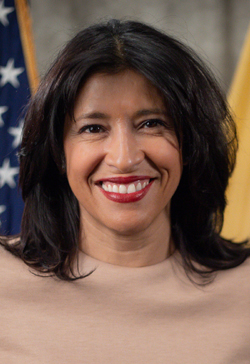
Asm. Rosy Bagolie
Sponsored bills
Maddy summaryS 2961 requires contractors working on New Jersey public works projects (funded by public money) to certify that each employee meets one of three minimum qualifications: a high school diploma or GED, enrollment in an equivalent apprenticeship program, or four years of documented trade work experience verified by tax filings. Contractors must submit this certification as part of their registration with the state, alongside other required documentation like business details and insurance proof. Non-compliance could lead to denial, suspension, or revocation of the contractor’s public works registration. The bill directly affects contractors bidding on public projects and the workers they employ on those projects.
Maddy summaryThis bill allows school counselors, psychologists, and other mental health professionals in New Jersey public schools to refer students to private licensed mental health providers (such as psychologists or social workers) for assessments and services. It prohibits referrals to a provider if the school staff or their immediate family has a significant financial interest in that provider. Parents or guardians must consent for students who cannot legally consent themselves, and neither the school district nor the referring staff bears the cost of these private services. The bill does not restrict schools from providing mental health services directly to students. It aims to expand access to mental health care through school-based referrals while maintaining safeguards.
Maddy summaryThis bill amends New Jersey's child abuse and neglect laws to include individuals aged 18-21 in certain settings under the definition of "child" for protection purposes. Specifically, it revises the definition of "child" to mean any person under 21 years old who is alleged to have been abused, neglected, or exploited by a teacher, employee, contractor, or volunteer of an institution regulated by the Department of Children and Families. The bill extends protections to individuals in institutions (including day schools) who are between 18 and 21 years old, currently falling under separate jurisdiction for individuals with developmental disabilities. This change transfers full investigative responsibility for these cases from the Department of Human Services to the Department of Children and Families for the population served in regulated facilities.
Maddy summaryThis bill (S 3772) changes how the value of employer-provided board and lodging is calculated for workers' compensation benefits in New Jersey. Currently, such benefits are valued at a flat $25 per week unless otherwise specified at hiring. The bill revises this to require valuation at "market value" unless a different amount was agreed upon during hiring. It also specifies that if a worker continues to receive board or lodging during total temporary disability, that value will not be included in calculating their compensation rate. This directly affects workers receiving workers' compensation who are provided housing or meals by their employer.
Maddy summaryThis bill allows adults, emancipated minors, and their authorized representatives (like parents or legal guardians) to create a formal written directive preventing healthcare providers from prescribing or administering opioids. The directive must be created using a form developed by the New Jersey Department of Health and entered into the patient's electronic health record. Healthcare providers are protected from liability or disciplinary action for following the directive in good faith, though opioids may still be prescribed if medically necessary. Individuals can revoke the directive at any time, either orally or in writing.
Maddy summaryThis bill requires water suppliers to immediately notify specific entities when drinking water quality standards are violated. Affected groups include municipalities, school districts, charter schools, and nonpublic schools within the affected area. Suppliers must provide detailed information via phone and email, including contaminant names, test dates, locations, exceedance levels, and suggested remedies. The law takes effect immediately upon passage.
Maddy summaryThis bill eliminates tiered retirement benefits in New Jersey's Public Employees' Retirement System (PERS), moving all current non-retired members to the "Tier 1" benefit level previously available to members who joined before July 1, 2007. It requires public employers to enroll eligible employees (earning above minimum salary but not meeting hour requirements) into PERS within 60 days, and automatically transfers service credit from the Defined Contribution Retirement Program (DCRP) to PERS for DCRP participants - without transferring their contributions - unless they opt out within six months. Disability recipients under long-term insurance become eligible for disability retirement benefits if they apply within two years. Changes apply only to retirement applications processed after the bill's effective date.
Maddy summaryThis bill (A5052) requires New Jersey health insurers, Medicaid (NJ FamilyCare), and state health benefit programs to cover screening, prevention, and treatment services for children's behavioral health issues without requiring a formal mental health diagnosis. It establishes "at-risk diagnosis" as a billing mechanism, allowing providers to use Social Determinants of Health Z-codes (instead of standard mental health codes) for preventive care based on factors like family circumstances. Coverage must be provided at the same level as other medical services for children under 18. The law applies to all health plans, Medicaid contracts, and state employee health programs effective 90 days after enactment.
Maddy summaryThis bill authorizes municipalities and school districts to install school bus monitoring systems with cameras to capture vehicles illegally passing school buses. If a violation is recorded by such a system, the violator would face a $250 civil penalty instead of criminal penalties, with collected funds going to the municipality or school district for safety programs. The monitoring systems must capture specific evidence including the bus's flashing lights, the violating vehicle's license plate, and the date/time/location of the violation. Recorded images are not public records and must be purged within 95 days of recording. The registered owner of the vehicle would be liable for the penalty unless they can prove the vehicle was used without consent or was stolen.