

Maddy summaryThis bill requires owners of solar energy systems (including rooftop panels and related infrastructure) to remove and recycle them when they are decommissioned, rather than disposing of them as waste. The New Jersey Department of Environmental Protection must establish rules for the recycling process, mandating secure storage of toxic solar panel components until safe recycling methods are approved. Violations could result in civil penalties of up to $1,000 per offense. The law applies directly to property owners, businesses, and entities operating solar installations across the state.
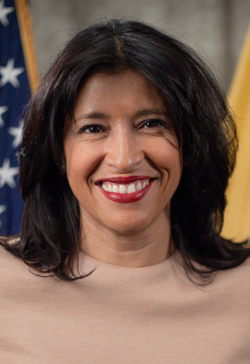
Asm. Alixon Collazos-Gill
Sponsored bills
Maddy summaryAJR 150 designates July of each year as "Cleft and Craniofacial Awareness and Prevention Month" in New Jersey. This symbolic resolution encourages community organizations, medical institutions, and advocacy groups to raise public awareness about cleft lip and palate birth defects - conditions affecting about 1 in 1,700 babies in the U.S. - and promote collaboration on outreach and research. It does not create new laws or funding but requests the Governor issue an annual proclamation to support this awareness effort. The resolution directly affects New Jersey residents and families impacted by these birth defects by fostering community engagement and education.
Maddy summaryThis bill designates May of each year as "Water Safety Month" in New Jersey to raise public awareness about preventing water-related accidents and drownings. It specifically encourages the New Jersey Department of Education (DOE), in consultation with the Department of Health, to provide resources to public schools for water safety education programs targeting students in kindergarten through fifth grade. Schools may partner with nonprofit organizations to hold presentations and activities during this month, focusing on age-appropriate safety practices. The bill cites CDC data showing drowning as a leading cause of death for young children to justify its purpose. It does not create new legal requirements but promotes educational outreach through existing state departments.
Maddy summaryThis bill requires contractors and subcontractors working on public projects to submit payroll records to New Jersey's Department of Labor and Workforce Development (DOLWD). It applies to any business performing work for public bodies (like state/local governments or projects funded by public money), including construction, maintenance, or repair work. The key mechanism mandates that these contractors must register with DOLWD and provide payroll details to verify compliance with prevailing wage laws and apprenticeship program requirements. This affects all employers engaged in public work contracts, ensuring transparency in worker compensation and program participation.
Maddy summaryThis bill requires all New Jersey public school districts to include instruction about the history and contributions of Latino and Hispanic Americans in Social Studies and English Language Arts curricula for students in kindergarten through 12th grade. It mandates that school boards integrate this content as part of their existing implementation of the New Jersey Student Learning Standards. The Commissioner of Education must provide sample lesson resources and activities to support schools, developed with input from the Commission on Latino and Hispanic Heritage. The law takes effect immediately for the first full school year after enactment.
Maddy summaryThis bill requires New Jersey's Department of Community Affairs (DCA) and Economic Development Authority (EDA) to give priority consideration to municipalities that meet their state-mandated affordable housing requirements when awarding competitive grants through programs like Main Street New Jersey and Neighborhood Preservation. It specifies that compliance is determined by factors such as past housing obligation fulfillment, settlement agreements, or builder's remedy use in the prior housing obligation round (for the first five years), shifting to current-round fulfillment after that. The priority does not apply to grants specifically intended to help municipalities meet their housing obligations. Exempt municipalities (those not subject to housing requirements) automatically qualify for priority consideration.
Maddy summaryThis Assembly Resolution (AR 200) expresses New Jersey's opposition to President Trump's tariff policies, specifically targeting 25% tariffs on steel/aluminum and cars/auto parts, plus a 10% universal import duty on all products. It directly affects New Jersey residents and businesses by highlighting how these tariffs raise consumer prices and operating costs, as noted in the resolution's economic rationale. The resolution does not change tariffs but formally opposes them and directs copies to the President, Vice President, and U.S. Trade Representative. As a symbolic measure, it does not alter federal tariff law but publicly states the state's position on the policy's economic impact.
Maddy summaryThis bill prohibits all New Jersey law enforcement officers (including federal, state, county, and municipal personnel) from wearing masks or disguises during public interactions while performing official duties. Exceptions include undercover operations, face shields protecting the face, medical masks with a physician's note, or masks worn during smoke emergencies. Violating this rule would result in a disorderly persons offense punishable by fines ($500-$1,000), up to six months in jail, or both. The law applies immediately upon enactment and defines "law enforcement officer" broadly to cover all personnel authorized to enforce state or federal laws.
Maddy summaryNew Jersey's A3558 bill establishes the state's official definition of antisemitism using the International Holocaust Remembrance Alliance (IHRA) standard, including specific examples of antisemitic conduct. State agencies and institutions must use this definition when reviewing, investigating, or deciding on cases involving discriminatory acts motivated by antisemitism. The bill appropriates $100,000 for a public awareness campaign by the Attorney General's office to educate residents on identifying and reporting bias crimes through community outreach and the existing bias crimes hotline. This campaign aims to improve reporting of antisemitic incidents without affecting First Amendment rights or conflicting with existing anti-discrimination laws.
Maddy summaryThis bill reorganizes New Jersey's State Health Benefits Program governance by expanding the State Health Benefits Commission to 11 members and eliminating the previous Plan Design Committee. It requires the program to offer exactly five health plans for employees and non-Medicare-eligible retirees, including a new "NJ Gold" plan that doesn't require salary-based employee contributions. The bill establishes an escalator system to adjust employee contribution rates based on premium cost trends, increasing rates if premiums rise significantly above inflation and decreasing them if premiums fall. Additionally, it mandates that local government employers must decide within one year whether to join the SHBP, with a two-year commitment if they choose to participate.