

Maddy summaryThis bill allows New Jersey municipalities to create programs where seniors aged 60+ who have lived in their home as a primary residence for at least 15 years can volunteer for non-paid municipal roles (like community events or park maintenance) in exchange for property tax credits. Volunteers earn credits based on the state minimum wage rate, capped at $1,000 per year, which must be applied directly to their municipal property taxes for that same year. The credits cannot be carried over to future years or used for taxes beyond the current tax period, and municipalities cannot replace paid staff with volunteers. It specifically targets seniors on fixed incomes, aiming to reduce their property tax burden through community service.
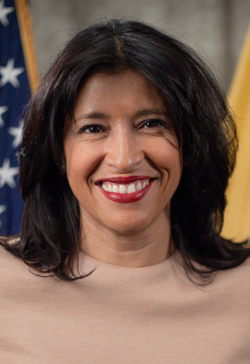
Asm. Alixon Collazos-Gill
Sponsored bills
Maddy summaryThis bill allows students receiving Educational Opportunity Fund (EOF) grants to use a portion of their award for summer courses that count toward graduation or their major. Students must notify the Higher Education Secretary before the academic year starts, which reduces their regular academic year disbursement by a specific amount. The Secretary must annually report how many students used the summer option and their graduation rates within standard timeframes. It directly affects EOF grant recipients at participating New Jersey institutions, implementing a 2016 commission recommendation to improve college affordability.
Maddy summaryThis bill repeals a 1995 law (P.L.1995, c.63) that prohibited public colleges from adding funds for legislative agents or organizations to student tuition bills. It directly affects students at New Jersey public colleges, removing a restriction that previously barred mandatory assessments for groups seeking to influence legislation. The repealed law had allowed optional student fees for nonpartisan legislative organizations only if approved by a student referendum, with specific disclosure requirements. This bill eliminates that requirement, allowing institutions to assess funds for legislative activities without those restrictions.
Maddy summaryThis bill restructures the governance of New Jersey's State Health Benefits Program (SHBP), which provides health coverage to state employees. It creates a new 11-member State Health Benefits Commission (replacing the previous structure) and a separate 12-member Plan Design Committee. The Commission includes the Treasurer, agency heads, and members appointed by labor unions representing state employees, while the Plan Design Committee focuses specifically on designing health plan benefits like medical, dental, and prescription coverage. These changes affect all state employees enrolled in the SHBP by altering who oversees their health plan offerings and administration. The bill does not change the actual benefits provided, only the decision-making bodies managing the program.
Maddy summaryThis bill requires all health insurance plans and Medicaid in New Jersey to cover medically necessary speech therapy for stuttering, including both habilitative (helping develop speech skills) and rehabilitative (helping regain lost skills) therapy. It applies to all health insurance policies sold in New Jersey, including individual, group, and hospital service contracts, and mandates coverage whether therapy is provided in-person or via telehealth. Insurers must cover these services at the same level as other medical treatments, without additional restrictions. The law directly affects residents with stuttering who rely on insurance for speech therapy, ensuring they receive consistent coverage for this specific treatment.
Maddy summaryThis bill, the New Jersey Immigrant Trust Act (A-1400), prohibits state and local government agencies - including law enforcement, schools, and hospitals - from cooperating with federal immigration authorities on immigration detainer requests that lack judicial warrants. It directly affects immigrants and their families by ensuring they can access public services like healthcare and education without fear of deportation. Key provisions ban agencies from holding individuals beyond their release date based on federal immigration detainers (like I-247 forms) and require them to prioritize local safety over federal immigration enforcement. The law aims to prevent unconstitutional detentions and maintain community trust in public services, as federal detainers have been found to violate constitutional rights in multiple courts.
Maddy summaryThis bill adds "Sikhism" to New Jersey's list of protected classes under the state's bias intimidation law (N.J.S.2C:16-1), explicitly including Sikhs in legal protections against hate crimes motivated by religious bias. It directly affects Sikh residents and community members who face discrimination or violence due to their religious identity, such as attacks targeting turbans, beards, or gurdwaras. The key mechanism amends the statute to cover offenses committed "because of their membership within a protected class," including Sikhism, and creates a legal presumption that bias was a motivating factor in such crimes. The bill also appropriates $100,000, likely for educational or support programs related to Sikh community awareness, though specific funding details aren't outlined in the text.
Maddy summaryThis bill prohibits New Jersey counties from using any school or schoolhouse as a polling place for any election. It amends election law to explicitly ban schools from being designated as voting locations, removing a previous allowance that permitted their use under certain conditions. County election boards must now select alternative sites, such as other public buildings or commercial spaces, while still ensuring polling places meet accessibility requirements for voters with disabilities and the elderly. The ban takes effect immediately upon enactment.
Maddy summaryThe "Disaster Victims Protection Act" (Bill A 3720) requires New Jersey's Governor to allocate federal and state disaster relief funds to municipalities based on the actual physical damage each municipality sustained, rather than distributing funds primarily by county. This applies to programs like federal Community Development Block Grant-Disaster Recovery (CDBG-DR) funds and state disaster aid, ensuring aid aligns with localized damage levels. It directly affects municipalities, residents, and businesses in disaster-impacted areas, particularly those that suffered severe damage but received less funding under previous county-based allocations. The bill mandates that when allocating funds, the Governor must prioritize distribution "in proportion to the relative amount of physical damage sustained within each municipality," as far as federal rules permit. This aims to address inequities where some heavily damaged municipalities received less aid than less-damaged ones within the same designated counties.
Maddy summaryThis bill adopts the International Holocaust Remembrance Alliance's (IHRA) working definition of antisemitism as an educational resource for New Jersey state agencies, schools, and law enforcement. It defines antisemitism as hatred toward Jews, including specific examples like Holocaust denial, harmful stereotypes (e.g., conspiracy theories about Jewish control), and double standards applied to Israel. The definition is explicitly non-binding and must be used while protecting constitutional rights like free speech. New Jersey lawmakers cite the state's high rate of antisemitic incidents - including ranking third nationally in 2023 - as the basis for this measure.