

Maddy summaryThis bill creates a dedicated special education unit within New Jersey's Office of Administrative Law (OAL), staffed by administrative law judges with specialized expertise in special education law. All contested special education cases referred to the OAL must now be assigned to this unit for resolution, ensuring cases are handled by judges with relevant experience. The bill requires the OAL to submit an annual report to the Governor and Legislature detailing case volumes, resolution times, staffing levels, and recommendations for adjusting judge assignments to meet federal and state deadlines. Additionally, it mandates a new system for tracking due process petitions, allowing families and advocates to monitor case status online.
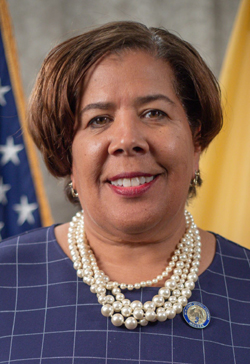
Asm. Linda Carter
Sponsored bills
Maddy summaryThis bill allows New Jersey mail-in voters to correct their ballot if they forget to include the required "Certificate of Mail-in Voter" on their ballot envelope. County election boards must send a "cure letter" with a simple form within 24 hours of rejecting a ballot for a missing certificate, giving voters up to 48 hours before election results are certified to fix the error. Voters can verify their identity using a New Jersey driver's license number, last four Social Security digits, or a utility bill - without needing to swear an affidavit or submit hard-copy ID. The bill ensures mail-in ballots won't be rejected solely for minor signature variations and requires county boards to process these corrections weekly before elections.
Maddy summaryThis bill changes New Jersey law to remove the automatic disqualification from jury service for individuals with prior convictions of serious crimes (indictable offenses), except for convictions of murder or aggravated sexual assault. It allows people who have completed their sentences for other serious crimes to be considered for jury duty, provided they meet standard qualifications like U.S. citizenship and county residency. The bill does not affect those currently incarcerated for serious crimes, who remain disqualified. This update expands the pool of potential jurors by including more people with past criminal records, while maintaining specific exclusions for the most severe offenses.
Maddy summaryThis bill requires New Jersey's Department of Human Services (DHS) and Department of Health (DOH) to apply for federal waivers to cover menstrual hygiene products (like tampons, pads, and cups) under NJ FamilyCare, SNAP (food stamps), and WIC programs. If the federal government denies the waiver, DHS must establish a state-funded benefit using $2 million from the General Fund, with eligibility determined through a household certification process for minors. The law mandates an educational campaign to inform program participants about the new benefit and applies to anyone enrolled in these specific public assistance programs who menstruates. The $2 million appropriation is contingent solely on federal denial of the waiver request.
Maddy summaryThis bill eliminates an exception in New Jersey's Smoke-Free Air Act that previously allowed smoking in casinos and simulcasting facilities. It would require these venues to become smoke-free, meaning no smoking would be permitted inside for employees, patrons, or visitors. The change directly affects casino operators, staff, and customers at all New Jersey casinos and simulcasting facilities (such as those with slot machines, table games, or dedicated seating for betting). This policy shift extends the existing indoor smoking ban to these locations, removing a long-standing exemption.
Maddy summaryNew Jersey's A925 would allow voters to register and vote on election day at polling places or during early voting by completing an affirmation statement and providing identification. Currently, voters must register at least 21 days before an election, but this bill would enable those who missed the deadline to register and cast a provisional ballot. Voters registering on election day would have 48 hours after the election to verify their identity through the Motor Vehicle Commission database or by providing acceptable identification, ensuring their ballot is counted if valid. This change would directly affect voters who meet eligibility requirements but missed the standard registration deadline.
Maddy summaryThis bill establishes the New Jersey Center for the Study and Prevention of Suicide at Rutgers School of Public Health, appropriating $500,000 to fund its operations. The center will research suicide causes, consequences, and prevention strategies - including individual, community, and societal factors - and develop evidence-based policies. It must collaborate with state agencies, train new researchers, and administer a competitive grant program for suicide research. The center will report annually to the Governor and Legislature on its work, funding, and research outcomes. The bill directly affects Rutgers School of Public Health and aims to improve statewide suicide prevention efforts through research.
Maddy summaryThis bill increases the minimum liability insurance requirement for commercial motor vehicles in New Jersey from $5,000 to $1.5 million. It directly affects owners and operators of commercial vehicles (such as trucks and delivery vans) registered or garaged in the state. The key provision amends existing law to mandate coverage of at least $1.5 million for bodily injury, death, or property damage arising from commercial vehicle operations. This change applies to all new or renewed insurance policies issued six months after the bill's enactment.
Maddy summaryThis bill prohibits New Jersey auto insurers from using an applicant's education level, occupation, or credit score to determine insurance rates or eligibility. It also bans insurers from asking about these factors during the application process. The law amends existing insurance regulations to explicitly forbid these rating practices and requires insurers to file their underwriting rules with the state commissioner. This directly affects all New Jersey drivers applying for or renewing auto insurance policies.
Maddy summaryNew Jersey A602 establishes the "New Jersey Reparations Task Force" within the Department of State to study and develop recommendations for addressing historical and ongoing racial disparities stemming from slavery and systemic discrimination. The 11-member task force, appointed with representation from the Governor, legislative leadership, and civil rights organizations, will examine New Jersey's role in slavery, its legacy of racial discrimination, and potential remedies over a 24-month period. The task force must hold at least six public meetings across the state and issue an interim report within 12 months and a final report with recommendations within 24 months. This legislation directly affects Black communities in New Jersey who face significant racial disparities in housing, wealth, education, and criminal justice. The task force's work will inform potential policy changes and reparative measures to address these systemic issues.