

Maddy summaryThis bill establishes a New Jersey state program requiring contracting agencies (like state departments and authorities) to set annual procurement goals for awarding contracts to certified socially and economically disadvantaged business enterprises (SEDBEs). It defines SEDBEs as businesses owned by individuals who meet specific criteria for both social disadvantage (e.g., racial minority status, disability, gender identity, or location in high-poverty areas) and economic disadvantage (e.g., limited capital/credit access and net worth below a set threshold). The program mandates agencies to develop annual plans to meet these goals, use certified SEDBEs for prime contracts or subcontracts where feasible, and submit reports tracking contract awards and outreach efforts. The goal is to increase SEDBE participation in state procurement for construction, professional services, goods, and IT, without altering existing set-aside programs.
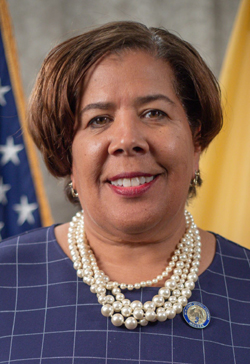
Asm. Linda Carter
Sponsored bills
Maddy summaryThis bill directs New Jersey's Department of Education to study the academic impact on high school students who serve as primary caregivers at home. The study must examine specific issues these students face, their absenteeism rates, and their high school graduation and college enrollment outcomes. Within one year, the Department must submit a report to the Governor and Legislature with findings and any recommendations for potential support programs. The bill does not create new programs but mandates this research to inform future policy decisions.
Maddy summaryThis bill requires New Jersey's Department of Children and Families (DCF) and Department of Education (DOE) to create policies for detecting, investigating, and preventing child abuse and neglect during public health emergencies that require social distancing (like the COVID-19 pandemic). Key provisions include enabling remote reporting and investigations via phone/video, developing public awareness campaigns about child safety during emergencies, and requiring schools to provide remote access to abuse prevention resources and behavioral health assessments for at-risk students. DCF must also collect and analyze child abuse report data from the pandemic, then submit a comparative report to the Governor and Legislature within one year, including recommendations for future emergencies. The bill mandates free online training for school staff on identifying abuse remotely and requires school districts to implement these protocols during emergencies.
Maddy summaryThis bill removes the time limit for filing civil lawsuits related to sexual assault or other sexual offenses committed against adults aged 18 or older. Currently, most personal injury claims must be filed within two years, but this bill allows such cases to be filed at any time, regardless of when the offense occurred. It applies retroactively, meaning it can revive cases previously dismissed solely due to the expired time limit (as long as they weren’t already finalized or dismissed for other reasons). The bill affects adult victims seeking civil remedies for sexual violence, ensuring they can pursue legal action without time constraints.
Maddy summaryThis bill (A2958) would require New Jersey's Commissioner of Human Services to request federal authorization allowing SNAP (food stamp) benefits to cover delivery fees for online grocery orders. Currently, SNAP funds cannot pay for delivery charges, even though New Jersey participates in a USDA pilot program enabling online grocery purchases through retailers like Amazon and 17 participating stores. The bill directly affects SNAP recipients who use online grocery delivery services, as it seeks to expand their benefit usage to include delivery fees. The request would be made to the USDA's Food and Nutrition Service, which administers the federal SNAP program.
Maddy summaryThis bill creates a School Connectivity Grant Program within New Jersey's Department of Education to help schools provide online learning tools for economically disadvantaged students. It requires grant recipients (school districts, charter schools, and renaissance schools) to purchase and maintain one connected device (like a laptop or tablet) and one Wi-Fi hotspot for every 12 enrolled students, with priority given to schools serving the most students without internet access. The program is funded by a $2 million state appropriation from the General Fund, covering equipment costs for remote learning access.
Maddy summaryThis bill creates the NJ FamilyCare Advantage program, allowing New Jersey residents who earn too much to qualify for Medicaid or standard NJ FamilyCare (income above 350% of the federal poverty level) to purchase health coverage. The program requires coverage to meet Affordable Care Act standards for essential health benefits and integrates with the federal HealthCare.gov marketplace to enable enrollees to use federal tax credits. Premiums for the NJ FamilyCare Advantage plan cannot exceed the amount NJ FamilyCare pays for similar coverage for lower-income residents. It directly affects working adults and families who fall into the "coverage gap" between Medicaid eligibility and affordable private insurance.
Maddy summaryThis bill would allow courts to retroactively change certain prison sentences by removing mandatory minimum periods of parole ineligibility for inmates convicted of specific nonviolent drug and property crimes, including drug distribution near schools, shoplifting, and certain drug manufacturing offenses. It applies to inmates sentenced before the bill's effective date who are currently in New Jersey's custody and were convicted of offenses listed in the bill. The Commissioner of Corrections would identify eligible inmates and provide a list to courts and prosecutors, who could object to sentence changes with the Attorney General's approval. If no objection is filed, courts could modify sentences without a hearing. Additionally, the bill requires the Department of Corrections to study and report on costs to upgrade its data systems for better tracking of criminal justice data.
Maddy summaryA1796 would allow licensed clinical social workers (LCSWs) to directly bill the NJ FamilyCare program for covered mental health services provided to program beneficiaries. To qualify, LCSWs must hold a valid license under New Jersey law, be approved as a provider by NJ FamilyCare, and offer services that are already covered under the program. The bill requires the state to seek federal approval for this change to maintain Medicaid funding. This policy update would streamline reimbursement for LCSWs who currently cannot bill NJ FamilyCare directly.
Maddy summaryThis bill (A1130) excludes veterans' benefits from income calculations when determining how much a veteran must pay for psychiatric care in New Jersey facilities. It directly affects veterans receiving treatment in state psychiatric hospitals, county psychiatric hospitals, or psychiatric units of county hospitals. The key mechanism modifies existing law to ensure veterans' benefits (like disability compensation) are not counted as income when applying the sliding scale fee for charity care. This change reduces the financial obligation for veterans by excluding these benefits from the income calculation used to determine payment amounts. The bill amends R.S.30:4-60, which governs financial responsibility for psychiatric facility care.