

Maddy summaryThis bill requires the New Jersey Department of Health (DOH) to inspect reports of mold infestation in health care facilities. Within six months of the law taking effect, the DOH must establish procedures for inspecting mold reports and create guidelines for preventing or removing mold in these facilities. The bill defines mold to include common types like Stachybotrys Chartarum, often found in water-damaged building materials. It applies specifically to health care facilities regulated under existing health laws, ensuring the DOH addresses mold risks that could impact patient safety.
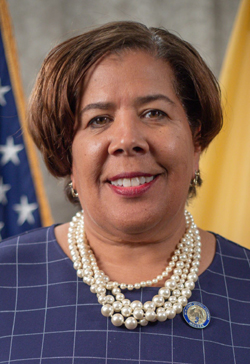
Asm. Linda Carter
Sponsored bills
Maddy summaryThis bill (A1895) modifies New Jersey's NJ STARS scholarship program to allow students more time to meet college readiness requirements after high school graduation. Currently, students who don't demonstrate readiness immediately upon graduation have only one year to complete remediation before losing eligibility. The bill removes this one-year deadline, meaning eligibility remains valid indefinitely as long as students meet program criteria when they begin college. This change directly affects New Jersey high school graduates who need remedial coursework to qualify for the tuition assistance program.
Maddy summaryThis bill permits New Jersey municipalities, sewerage authorities, and water utilities to reduce water, sewer, and stormwater fees for low-income residents. To qualify, households must have income at or below a percentage of federal poverty guidelines (capped at the threshold used for the Low Income Household Water Assistance Program), and residents must provide documentation about their income, household, and housing status. Local authorities must establish clear eligibility procedures, advertise the program to residents, and demonstrate through a rate study that the fee reductions won't cause unreasonable rate increases or compromise infrastructure maintenance. The bill appropriates $200,000 from the General Fund to cover costs for conducting the required rate studies. This program directly affects low-income households who pay for essential utility services in New Jersey communities.
Maddy summaryThis bill prohibits New Jersey local government agencies from hiring employees who are currently on paid leave from another local government agency in a different county or municipality. It directly affects local government employers and employees who might hold positions across multiple local governments. The law specifically bans full-time or part-time employment while an individual remains on paid leave from a comparable position elsewhere, aiming to prevent potential conflicts of interest under the Local Government Ethics Law.
Maddy summaryThis bill expands New Jersey's Family Leave Act and Temporary Disability Benefits Law to provide protected bereavement leave for employees experiencing the death of a child, miscarriage, stillbirth, unsuccessful adoption, or failed fertility treatments. It allows up to 21 days of leave for circumstances where employees wouldn't otherwise qualify for leave or benefits, or up to 7 days for circumstances where they would qualify for other leave. The leave is available to employees who are biological parents, adoptive parents, or parents through a gestational carrier agreement, as well as to their spouses, domestic partners, or civil union partners. Employers with 30 or more employees must provide this leave under the amended laws, which applies to all eligible employees in New Jersey.
Maddy summaryThis bill requires New Jersey employers with 10+ employees to publicly disclose salary ranges and benefits details in all job postings for promotions, new roles, and transfers. It also mandates that employers announce promotion opportunities internally to all current employees in the relevant department before making decisions, unless promotions are based solely on experience or performance. Employers who fail to comply face escalating fines: $1,000 for the first violation, $5,000 for the second, and $10,000 for each subsequent violation. Temporary staffing firms are exempt from posting pay details for future openings but must provide this information at the time of interview or hire.
Maddy summaryNew Jersey's S 2652 revises laws to better protect children from sexual exploitation. It creates a civil right for victims (or their guardians/advocacy groups) to sue perpetrators for three times the profits gained from distributing child sexual abuse material, holding both individuals and corporate employees personally liable. The bill also expands sex offender registration requirements to include anyone working with children in schools or jobs for over 14 consecutive days, clarifies which offenses trigger registration (like creating or sharing exploitative material), and adds a limited exception for juvenile-created nude photos under strict conditions. These changes directly affect victims of child exploitation, perpetrators, and institutions that facilitate such abuse. The law passed unanimously in 2024 (P.L.2024, c.92).
Maddy summaryThis bill increases penalties for assaulting law enforcement officers, making it a second-degree crime when bodily injury occurs (previously a third-degree crime). It expands protection to include firefighters and emergency medical personnel who are assaulted while performing their duties. The bill requires offenders to provide a blood or biological sample for testing for communicable diseases, with any positive results shared with the victim. It also prohibits plea bargains for assault on law enforcement officers and prevents convictions from merging with other offenses. The bill takes effect immediately.
Maddy summaryThis bill revises New Jersey's process for health insurance carriers to credential physicians seeking to join their provider networks. It requires carriers to notify applicants within 30 days if an application is incomplete (or deem it complete if no notice is given) and to review complete applications within 30 days. The bill mandates carriers to use a standardized universal application form, post clear process details online - including required documents and timelines - and reimburse physicians for services provided during the credentialing wait period if approved. It also prohibits carriers from requiring physicians to resubmit applications solely due to changing employers within the state, and gives the Department of Banking and Insurance authority to enforce these rules and handle complaints.
Maddy summaryThis bill appropriates $1,000,000 to the New Jersey Health Care Quality Institute to study pediatric mental health care access for children. It requires the Institute to form a stakeholder group (including providers, administrators, and experts from all regions) to map the family journey in accessing care, identify barriers, eligibility rules, funding structures, and disparities by race/ethnicity. Within 13 months, the group must produce two reports: a visual map of the care access process and a summary of system issues with policy recommendations. The Department of Children and Families will then submit these reports to the Governor and Legislature within 15 months of enactment, making them publicly available online.