

Maddy summaryThis bill designates September 14 each year as "Latino Business Day" in New Jersey to highlight the economic contributions of Latino-owned businesses. It requests the Governor issue an annual proclamation encouraging public officials and citizens to observe the day through activities that recognize these businesses' impact. The resolution emphasizes that Latino-owned businesses contribute significantly to job creation and economic growth in the state, noting their rapid expansion compared to other business sectors. As a ceremonial resolution, it does not create new laws or funding but aims to raise public awareness of this economic segment.
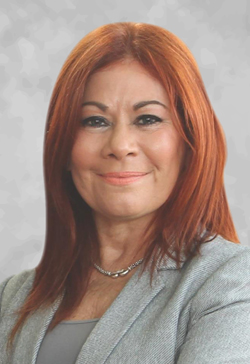
Asm. Yvonne Lopez
Sponsored bills
Maddy summaryThis bill (A3446) requires New Jersey's Governor, Senate President, Speaker of the General Assembly, or other authorized officials to prioritize racial and gender diversity when appointing members to state boards, commissions, or similar bodies established by law. It mandates that appointing authorities consider achieving a membership reflecting the state's racial and gender makeup as a "primary consideration" for all appointments made after the bill takes effect. The requirement applies unless it conflicts with specific circumstances of the appointment or the original law creating the body. The bill defines "gender" to include gender identity and "race" as major groupings based on physical characteristics or ancestry. The bill is currently pending in the Assembly Community Development and Women's Affairs Committee and has not yet become law.
Maddy summaryThis bill (A 3426) sets new requirements for members of New Jersey's Board of Public Utilities (BPU). It mandates that at least two members have at least three years of professional experience in areas like energy policy, utility regulation, or infrastructure, while at least one member must have experience in consumer advocacy or ratepayer representation. The bill also requires BPU members to reside in diverse geographic areas across the state (urban, suburban, rural) and complete 12 hours annually of training on topics including energy markets, grid modernization, and utility rate-setting. All training must be documented and submitted to the Governor and Legislature each year.
Maddy summaryThis bill creates two new full-time positions: a Director of Medical Services for the Office of Program Integrity and Accountability in the Department of Human Services (DHS) and a similar role for the Institutional Abuse Investigation Unit in the Department of Children and Families (DCF). These directors must be licensed physicians who will advise on complex medical aspects of abuse, neglect, and death investigations, provide expert testimony, and review medical practices at care facilities to improve outcomes. The bill appropriates $480,000 total ($240,000 per department) from the General Fund to hire these positions. It directly affects DHS and DCF operations and their oversight of investigations into abuse and neglect cases involving medical complexities.
Maddy summaryThis bill (A 1940) required manufacturers of menstrual products sold in New Jersey to list all non-confidential ingredients on product packaging and their websites, with ingredients ordered by quantity. It applied to all menstrual products - like tampons, pads, cups, and underwear - packaged for individual retail sale, giving manufacturers 18 months to comply after the law took effect. Manufacturers could exclude confidential business information but had to list it by common name. Non-compliant products faced civil penalties of up to $1,000 per package, based on 1% of annual in-state sales. The bill was withdrawn after being approved as P.L.2025, c.232 and enacted into law.
Maddy summaryThis New Jersey bill (A 3585) makes it a crime to knowingly share manipulated videos or audio that falsely depict a candidate or election issue within 90 days of an election, with penalties including up to a fourth-degree offense (or third-degree for repeat violations). It directly affects voters (by aiming to prevent deception), candidates (who can seek legal relief for false depictions), and content creators (who face criminal or civil liability). Key provisions require clear disclaimers for minor edits or news/satire content, and exempt social media platforms, traditional media, and news outlets under federal law. The law does not apply to accidental edits, news reporting, or content with prominent disclaimers identifying manipulation.
Maddy summaryThis bill requires all New Jersey state, county, and private correctional facilities - including juvenile facilities - to provide free voice calls, video calls, and email services to incarcerated adults and juveniles. It prohibits facilities from charging inmates or their families any fees (including per-minute charges, surcharges, or account fees), ensuring both parties to communications bear no cost. The law also mandates that facilities maintain current service access levels and transfer any remaining prepaid funds to inmates' commissary accounts. The bill appropriates state funds for implementation and takes effect six months after enactment.
Maddy summaryThis bill requires all New Jersey state and county correctional facilities to offer hepatitis B and C blood testing to every new inmate at the start of their sentence. Inmates cannot be forced to take the test, but facilities must provide the option. The Commissioner of Corrections must create implementing rules within six months of the bill's enactment. This directly affects all individuals entering state or county correctional facilities by expanding access to preventative health screenings during incarceration.
Maddy summaryThis bill would have established criminal penalties (fourth-degree crimes) for employers who knowingly falsify payroll records required under New Jersey's Prevailing Wage Act or make false statements on public works contractor registration forms. It directly affects employers working on public construction projects subject to prevailing wage requirements. Currently, such violations are punishable only as minor offenses (up to 90 days in jail), but this bill would have increased penalties to up to 18 months in jail or $10,000 fines. The bill was withdrawn on January 13, 2026, as it was approved as part of P.L.2025, c.356, meaning the changes are now law.
Maddy summaryThis bill (A 2066) establishes the "New Jersey STEM Scholars Grant Pilot Program" to provide competitive grants to public school districts, renaissance schools, and charter schools. The program funds three specific STEM education approaches: project-based learning, after-school STEM activities, and out-of-school STEM experiences. Schools applying must detail how funds will enhance existing programs or create new ones, recruit students, support educators, and ensure long-term sustainability. Grants must supplement, not replace, existing STEM funding and are subject to annual state appropriations. The program runs for four years, with funding sourced from state appropriations and private donations.