

Maddy summaryThis bill clarifies that teachers and professional support staff in New Jersey charter schools must meet the same New Jersey certification requirements as those in traditional public schools. It amends existing law to explicitly require identical certification standards for all classroom teachers and professional support staff, regardless of whether they work in a charter or district school. The change applies to all public schools, ensuring consistent qualifications for educators across the state. This policy standardizes certification without altering existing requirements for public school staff.
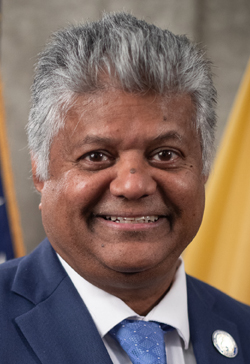
Asm. Sterley Stanley
Sponsored bills
Maddy summaryThis bill establishes a certification program for businesses owned and controlled by LGBTQ+ individuals in New Jersey. To qualify, a business must be at least 51% owned, operated, and controlled by LGBTQ+ persons (including real, substantial management authority), not just formally registered. The Division of Revenue will process applications and maintain a public listing in the SAVI database for state contracting agencies to identify certified businesses. This creates a standardized process for certification but does not require state agencies to prioritize these businesses in contracts.
Maddy summaryAJR 59 designates November each year as "Diabetes and Cardiovascular Disease Awareness Month" in New Jersey. The resolution requests the Governor issue a proclamation encouraging public education about the link between diabetes (affecting over 29 million Americans) and cardiovascular disease (the leading cause of death for people with type 2 diabetes). It aims to improve public understanding of this connection, particularly for communities disproportionately impacted like African American and Hispanic/Latino populations in New Jersey. This is a symbolic resolution with no new funding or policy changes.
Maddy summaryThis bill requires health insurance companies, hospitals, and healthcare providers in New Jersey to stop sharing an individual's identifying information (like address or phone number) with a policyholder or other person covered under the same health plan if that individual has a valid court protection order against them. It also lets individuals request alternative contact methods for billing information if sharing their details could endanger them. Healthcare providers must then use only the designated contact method for all claim-related communications. The law applies to all health insurance carriers and providers, including those serving minors (with parents/guardians acting on their behalf).
Maddy summaryThis bill requires New Jersey nursing homes to create detailed outbreak response plans within 180 days of the law taking effect. These plans must include protocols for isolating infected residents, notifying families and staff, monitoring for illness, reporting to health officials, and securing additional staff during outbreaks. Nursing homes must also establish an infection prevention committee with a dedicated infection preventionist (trained in infection control and qualified with five years' experience or certification). The Department of Health will verify compliance, enforce penalties for non-compliance, and require annual training exercises to test the plans.
Maddy summaryThis bill establishes New Jersey's Office of Clean Energy Equity within the Board of Public Utilities to ensure clean energy programs specifically benefit overburdened communities. It requires the board to implement solar programs reaching 250,000 low-income households (or 35% of all low-income households, whichever is larger) by 2030, aiming to reduce their energy costs to below 6% of household income. The bill also mandates 1,600 megawatt-hours of energy storage in overburdened communities by 2030, prioritizing community resilience hubs and job training. At least $50 million annually must be allocated to this office, with funding supplementing existing low-income energy programs and requiring public reporting on progress.
Maddy summaryThis bill abolishes New Jersey's Council on Affordable Housing (COAH) and replaces its system with a new municipal framework for meeting affordable housing obligations. Municipalities must now determine their own "fair share" of low- and moderate-income housing through binding resolutions, using state-published calculations, while allowing advocates to contest these determinations. The law appropriates $16 million for housing programs to support new construction and rehabilitation of substandard housing, particularly in urban areas. It directly affects all New Jersey municipalities and low-to-moderate-income residents seeking housing, ending regional contribution agreements and establishing clearer deadlines to prevent previous compliance gaps.
Maddy summaryThis bill allows affordable housing projects funded by New Jersey's State or municipal affordable housing trust funds to be exempt from property taxes. Instead of paying property taxes, housing sponsors would make payments to municipalities equal to up to 20% of the project's annual gross revenue. These agreements between housing sponsors and municipalities must be reviewed by the Commissioner of Community Affairs and expire when the eligible loan for the project is paid in full. The policy directly affects housing developers, municipalities, and low-to-moderate income households who benefit from subsidized housing projects.
Maddy summaryThis bill requires drivers in New Jersey to exercise caution when passing specific road users. It expands the definition of "pedestrian" to include workers, emergency responders, and people using mobility devices (like wheelchairs or scooters), and defines "personal conveyance" to cover devices such as electric scooters, skateboards, and mobility aids. Drivers must either change lanes, maintain at least four feet of distance, or reduce speed to 25 mph when passing these individuals. Violations result in fines of $100 (no points) or $500 (with points) if bodily injury occurs.
Maddy summaryThis bill would establish a certification program for businesses owned by LGBTQ+ individuals in New Jersey. To qualify, a business must be at least 51% owned, operated, and controlled by LGBTQ+ persons, with specific documentation required to verify eligibility. Certified businesses would be listed in the SAVI database, making them eligible for state contracting opportunities and public recognition. The program formalizes an existing executive order (E.O. 295) that created this certification process, making it permanent rather than temporary. Businesses seeking certification would apply through the Division of Revenue and Enterprise Services, with appeal processes available for denials or revocations.