

Maddy summaryThis bill (A3495) strengthens protections for hotel, motel, and similar hospitality franchisees in New Jersey by amending the Franchise Practices Act. It prohibits franchisors from: keeping rebates from vendors without sharing them with franchisees, forcing exclusive purchases from franchisor-designated suppliers when comparable options exist, opening competing outlets in franchisees' protected territories without consent, unilaterally changing key contract terms (except for health/safety), imposing undisclosed fees, charging for low guest enrollment in loyalty programs, or selling loyalty points without compensating franchisees for lost revenue. The law applies only to franchises requiring a physical location in New Jersey and ensures franchisees cannot be terminated for violating these new rules. It directly affects franchisees operating hospitality businesses under agreements requiring in-state operations.
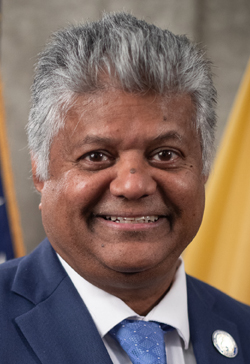
Asm. Sterley Stanley
Sponsored bills
Maddy summaryThis bill requires New Jersey's Director of the Division of Purchase and Property to review all state purchasing for menstrual products and develop a centralized contract to reduce costs for state agencies. It mandates that the director award a single contract for menstrual products (including pads, tampons, and cups) upon request by any state department, making it available to all executive branch entities and cooperative purchasing groups. Non-profit organizations may also purchase under this contract with director approval, subject to reporting requirements on expenditures. The bill directly affects state departments, agencies, and eligible non-profits using state procurement systems.
Maddy summaryThis bill would adopt New Jersey into the Dentist and Dental Hygienist Compact, an interstate agreement that allows dentists and dental hygienists licensed in one participating state to practice in other participating states without obtaining separate licenses in each state. To practice in another participating state, licensees would need to meet requirements like passing national board exams and having graduated from accredited programs, and would apply for a "compact privilege" to practice there. The compact would establish a commission to oversee the agreement and a data system to share licensure and disciplinary information among participating states, with adverse actions in one state affecting a professional's ability to practice in all participating states.
Maddy summaryThis bill changes venue rules for juveniles charged with specific vehicle-related offenses. It creates a presumption that cases involving juveniles with prior adjudications for theft, unlawful taking, carjacking, or burglary of motor vehicles must be heard in the county where the complaint was filed, rather than the juvenile's home county. This directly affects juveniles facing these charges who have a prior record for similar offenses, streamlining where their cases are processed under New Jersey law.
Maddy summaryThis bill (A2165) allows spouses and dependent children of active-duty military service members to maintain New Jersey in-state tuition rates at public colleges and universities if the service member is transferred to another state. It specifically applies to those who were already enrolled in a New Jersey public institution before the transfer and maintain continuous enrollment. The bill also extends this benefit to military dependents who attended New Jersey high school for at least three years, regardless of where they live when enrolling. These changes amend existing law (P.L.1985, c.231) to ensure military-connected students avoid sudden tuition increases due to relocation.
Maddy summaryThis bill allows public high school students in grades 10-12 who participate in school-sponsored sports to replace their physical education class with a study hall during their sport's athletic season. Students must get written parental approval and have their coach confirm their participation, and their athletic involvement will count toward their graduation physical education credit requirement. The bill does not affect students not in sports, younger grades, or the existing requirement for health and safety education courses. It applies starting the 2024-2025 school year.
Maddy summaryThis bill requires drivers in New Jersey to safely pass pedestrians, cyclists, and users of mobility devices like wheelchairs, scooters, and skateboards. Drivers must either change lanes (if safe), maintain at least four feet of distance, or slow to 25 mph when passing these road users. It specifically defines "personal conveyance" to include devices such as electric scooters, manual wheelchairs, and skateboards, and expands "pedestrian" to cover workers and emergency responders on roadways. Violating these rules results in fines of $100 (without injury) or $500 (with injury), plus penalty points for serious violations. The law, now effective as P.L.2024, c.11, aims to improve safety for vulnerable road users.
Maddy summaryThis bill exempts licensed New Jersey master plumbers from needing an electrical contractor business permit to install, replace, or maintain specific appliances: electric water heaters (under 240 volts) and air conditioning condensing units. It directly affects licensed master plumbers who perform these common residential and commercial tasks. The law amends existing electrical regulations to clarify that plumbers with appropriate master licenses can handle these installations without also holding an electrical contractor permit, removing a redundant requirement. This change allows plumbers to offer these services directly, potentially increasing competition and reducing costs for homeowners and businesses.
Maddy summaryThis Assembly Resolution (AR 130) urges New Jersey's Governor and Legislature to create programs supporting social work education. It specifically addresses the high student debt burden faced by social work students (average $26,500 for bachelor's degrees and $48,000 for master's degrees) and low median salaries ($50,390), which deter individuals from entering the field. The resolution proposes initiatives like scholarships and loan redemption programs to incentivize social work careers and strengthen the state's workforce. It directly affects prospective and current social workers pursuing degrees in New Jersey. The resolution is non-binding and serves as a formal request for action.
Maddy summaryThis bill expands the ability of pediatricians and advanced practice nurses (who don't specialize in behavioral/developmental care) to provide services for children with mild behavioral or developmental issues, such as anxiety or stress. It allows these providers to offer such care after state boards (Medical Examiners and Nursing) determine the conditions qualify as "low-acuity." Key requirements include working under physician collaboration protocols, completing six additional hours of pharmacology training on controlled substances, and maintaining regular record reviews with physicians. The change applies specifically to non-specialist providers treating children with low-severity conditions, not complex cases.