

Maddy summaryAJR 55 designates August each year as "Black Business Month" in New Jersey to promote the success of Black-owned businesses. The resolution requests the Governor issue an annual proclamation encouraging schools, cultural institutions, and community organizations to observe the month with supportive activities. It highlights that Black-owned businesses are essential to New Jersey's economy, face disproportionate challenges (like higher pandemic closures), and represent a growing sector with potential to improve economic equity. The bill does not create new funding or regulations but formally recognizes and encourages statewide attention to Black business owners.
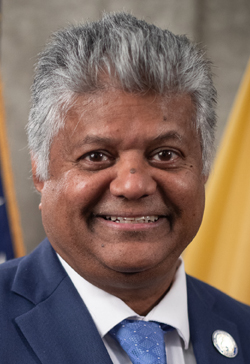
Asm. Sterley Stanley
Sponsored bills
Maddy summaryThis bill creates the "New Jersey Reparations Task Force" to research and develop proposals addressing generational harms from New Jersey's role in slavery and systemic racial discrimination. The task force will examine historical and current disparities affecting Black communities, including voter disenfranchisement, youth incarceration rates, housing discrimination, wealth gaps, and school segregation. It will produce a report with policy recommendations for state-based reparations based on documented harms. The bill directly affects Black residents of New Jersey who face these systemic inequities, as outlined in the legislative findings.
Maddy summaryThis bill establishes a two-year Statewide Animal Advocate Program within New Jersey's Administrative Office of the Courts (AOC). It allows courts to appoint a special advocate in criminal cases involving animal welfare (such as cruelty or dog fighting charges) to represent the animal's best interests, rather than the owner or state. The advocate monitors cases, reviews records from vets and officers, shares information with attorneys, and recommends animal placement to the court. The program expires after two years, requiring a report on implementation and recommendations for continuation.
Maddy summaryThis bill allocates $750,000 from the General Fund to the Victims of Crime Compensation Office (VCCO) for a public awareness campaign. The campaign will inform crime victims about their rights under the Crime Victim’s Bill of Rights and available VCCO services, including compensation assistance. The funds are a supplemental appropriation added to the existing 2023 budget for the Department of Law and Public Safety. (Procedural bill; no new laws enacted.)
Maddy summaryThis bill provides financial adjustments for New Jersey state contractors who faced unexpected material cost increases exceeding 5% after awarding construction contracts. It directly affects contractors with pre-April 2020 bids for projects where materials were purchased after March 2020. The key mechanism allows contract price adjustments based on U.S. Department of Labor economic indices, requiring written applications with evidence and State Treasurer approval, while mandating downward adjustments if material costs later decrease. The relief applies only to contracts meeting these specific timing and cost thresholds and expires June 30, 2023.
Maddy summaryThis bill requires motor vehicle lease agreements in New Jersey to include specific, clear disclosures to protect lessees. It mandates that leases must detail all fees, payment schedules, mileage limits, purchase options (including price or calculation method), total costs, vehicle condition (like odometer reading and prior use), and other key terms in 14-point bold text. Dealers must also provide a one-page summary of critical terms like down payments, monthly payments, and mileage limits. The bill directly affects all lessees (people leasing vehicles) and dealers by standardizing lease transparency and reducing hidden costs or confusing terms.
Maddy summaryThis bill allows eligible New Jersey educators (K-12 teachers, counselors, principals) and paraprofessionals (school aides) to deduct up to $250 of unreimbursed classroom supply expenses from their gross income tax. It covers costs like books, computers, software, and classroom materials, but excludes nonathletic supplies for health or physical education classes. To qualify, individuals must work at least 900 hours annually in a New Jersey public or private elementary/secondary school. The deduction applies to taxable years starting after the bill's enactment date.
Maddy summaryThis New Jersey bill (A 946), now law as P.L.2025, c.177, requires mental health services to be provided in the communication method preferred by each deaf or hard of hearing individual - such as sign language or oral communication - based on their assessment. It mandates that mental health professionals be fluent in that method, trained in cultural needs, and able to collaborate with interpreters. The law also requires a state resource guide listing specialized mental health services and ensures individuals can help shape their own care plans. It directly affects all deaf or hard of hearing residents seeking mental health support in New Jersey, addressing long-standing barriers in access and care quality.
Maddy summaryThis New Jersey bill requires producers of firefighting gear containing intentionally added PFAS (perfluoroalkyl and polyfluoroalkyl substances) to provide written notice to purchasers one year after the law takes effect. The notice must specify which PFAS chemicals are present, why they were added, and their chemical names. Beginning two years after the law takes effect, the bill prohibits selling, manufacturing, or distributing such firefighting gear in New Jersey, with exceptions for non-clothing items like breathing apparatuses until 2032. The law directly affects firefighting equipment manufacturers, sellers, and fire departments purchasing this gear, with violations subject to fines up to $20,000.
Maddy summaryThis bill (A 3359) requires New Jersey nursing homes to have specific pharmacy staffing and oversight structures to improve medication management. It mandates each facility to employ a consultant pharmacist (not affiliated with the facility's pharmacy staff), a provider pharmacist or in-house pharmacy director, and an interdisciplinary pharmacy committee that meets quarterly to review medication use. The committee must include the facility administrator, nursing staff representative, and consultant pharmacist, with records maintained of all meetings. The bill also adds a conflict-of-interest requirement, requiring consultant pharmacists to attest they have no ties to the facility’s pharmacy leadership. *Note: The bill was withdrawn on January 13, 2026, as it was already codified in P.L.2025, c.294.*