

Maddy summaryThis bill establishes New Jersey's Office of Clean Energy Equity within the Board of Public Utilities to ensure clean energy programs specifically benefit overburdened communities. It requires the board to implement solar programs reaching 250,000 low-income households (or 35% of all low-income households, whichever is larger) by 2030, aiming to reduce their energy costs to below 6% of household income. The bill also mandates 1,600 megawatt-hours of energy storage in overburdened communities by 2030, prioritizing community resilience hubs and job training. At least $50 million annually must be allocated to this office, with funding supplementing existing low-income energy programs and requiring public reporting on progress.
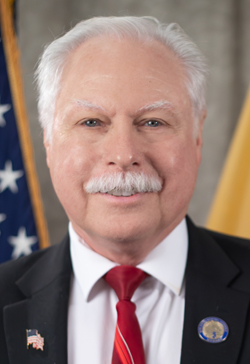
Asm. Robert Karabinchak
Sponsored bills
Maddy summaryThis bill exempts sales of materials, supplies, and services used in building or improving affordable housing projects from New Jersey's sales and use tax. It specifically applies to projects where all housing units are intended for moderate, low, or very low-income residents, as defined by state law. The exemption covers transactions with contractors or repairmen for these projects, reducing development costs for housing sponsors. This expands existing tax exemptions to include a new category of affordable housing developments.
Maddy summaryThis bill requires drivers in New Jersey to exercise caution when passing specific road users. It expands the definition of "pedestrian" to include workers, emergency responders, and people using mobility devices (like wheelchairs or scooters), and defines "personal conveyance" to cover devices such as electric scooters, skateboards, and mobility aids. Drivers must either change lanes, maintain at least four feet of distance, or reduce speed to 25 mph when passing these individuals. Violations result in fines of $100 (no points) or $500 (with points) if bodily injury occurs.
Maddy summaryThis symbolic Assembly Resolution (AR 122) condemns the Alabama Supreme Court ruling in *LePage v. Mobile Infirmary Clinic* (which treats embryos as "extrauterine children") and federal bill H.R. 431 (which would extend constitutional personhood to embryos from fertilization). It reaffirms New Jersey’s existing protections for reproductive health care access, including in vitro fertilization (IVF), which the state already supports through laws requiring insurance coverage for fertility services. The resolution does not create new legal requirements but publicly opposes actions that threaten IVF access and reproductive freedom. New Jersey has previously enacted measures to shield patients and providers from out-of-state prosecution for legally accessed reproductive care.
Maddy summaryThis bill increases the New Jersey Earned Income Tax Credit (NJ EITC) by gradually raising the state match rate from 40% to 45% over five years, resulting in larger tax refunds for eligible low-income residents. It expands eligibility to include taxpayers with Individual Taxpayer Identification Numbers (ITINs) who qualify for the federal credit but lack Social Security numbers, and exempts married victims of domestic abuse from the joint filing requirement if they meet specific criteria (living apart from their spouse, experiencing abuse within three years, and filing separately). These changes directly affect New Jersey workers and families earning low wages, particularly those previously ineligible due to documentation barriers or domestic violence circumstances. The bill ensures more residents can access this refundable tax credit without requiring joint federal filing in cases of abuse.
Maddy summaryThis bill expands the scope of practice for optometrists in New Jersey by allowing them to prescribe more pharmaceutical agents (including some controlled substances), administer certain immunizations (for coronaviruses, influenza, and varicella-zoster virus), and perform simple ophthalmologic procedures like non-invasive laser treatments. It clarifies that optometrists must complete specific training and credentialing to provide these expanded services, including evidence of competence through accredited education programs. The bill directly affects licensed optometrists in New Jersey and their patients, who will have access to a broader range of eye care services from optometrists. The legislation updates the legal definition of optometry practice to better align with optometrists' doctoral education and clinical training.
Maddy summaryThis bill, "The Voter Convenience Act," allows New Jersey voters to cast ballots at any polling place within their municipality on election day, rather than being restricted to their assigned polling location. It requires the Secretary of State and county election officials to develop uniform guidelines enabling electronic poll books to verify voter eligibility and provide the correct ballot for their election district at any municipal polling site. The law amends election statutes to update sample ballots with all available polling place locations and adjusts district board staffing rules to support this system. It directly affects all registered voters in New Jersey municipalities that choose to implement the policy, streamlining the voting process without changing voter eligibility or ballot content.
Maddy summaryThis bill creates a 15-member task force to study the feasibility of transitioning New Jersey's Executive Branch to a paperless government system. The task force will examine cybersecurity needs, technology options, cost-benefit analyses, legal changes required, and specific processes like electronic permits and records retention. It must issue an interim report within six months and a final report within one year, after which the task force will expire six months later. The study aims to inform potential future legislation but does not mandate any immediate changes to government operations.
Maddy summaryThis bill expands New Jersey's Volunteer Tuition Credit Program to cover volunteers (active members of fire/rescue squads) and their eligible dependents (children or spouses) enrolled in four-year public colleges, previously limited to county colleges and vocational schools. It increases the annual tuition credit from $600 to $1,000, raising the maximum total credit over four years from $2,400 to $4,000. To qualify, volunteers must agree to serve for four years and maintain a "C" grade average. The program remains limited to students with available classroom space and those meeting minimum enrollment requirements.
Maddy summaryThis bill amends New Jersey law to allow certain large food waste generators (businesses producing 52+ tons annually) to continue sending food waste to sanitary landfills that capture landfill gas for Class I renewable energy, instead of requiring recycling. It applies only if the generator was already disposing of waste at such a landfill as of April 14, 2020 (the effective date of prior law). The exemption remains valid only while the generator maintains this disposal method. This provision modifies the existing requirement for source separation and recycling, creating a specific alternative pathway for eligible businesses already using landfill gas-to-energy facilities.