

Maddy summaryThis bill transfers ownership of the Holland Tunnel Service Garage in Jersey City (Block 7203, Lot 2) from the State of New Jersey to the Port Authority of New York and New Jersey (PANYNJ). The State Treasurer is authorized to sell the property for $11, formalizing a long-standing arrangement where PANYNJ has maintained and controlled the garage since 1931 without formal title. The property was declared surplus to the state's needs, and the sale resolves historical ambiguity about ownership. This transfer affects the state (relinquishing title) and PANYNJ (gaining legal ownership of a facility it has managed for over 90 years).
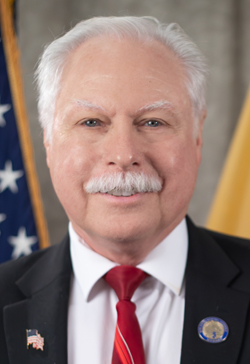
Asm. Robert Karabinchak
Sponsored bills
Maddy summaryThis bill would allow New Jersey school districts without a board of school estimate to request additional funding for the next school year through a special election, rather than only at the annual school election. Currently, districts can only request additional funds for the current budget year at the annual election. Under this bill, districts could propose raising taxes for the following year at special elections held in January, March, September, or December, with proposals needing to specify how funds would be used and whether approval would create a permanent tax increase. Districts could only submit one such proposal per school year, and this would not prevent them from also voting on capital projects at the same election.
Maddy summaryS 2822 increases the maximum contingency attorney fee cap in New Jersey workers' compensation cases from 20% to 25% of the settlement or award amount. This directly affects attorneys representing injured workers who typically work on a contingency basis (paid only if they win the case). The bill amends R.S. 34:15-64 to adjust this fee limit, which has not been updated since its original establishment. The change applies to all pending and future workers' compensation claims after enactment.
Maddy summaryNew Jersey's "Design Professional Self-Certification Act" (A4360, now law as P.L.2024, c.58) creates a program allowing licensed architects and professional engineers to self-certify that certain construction projects comply with building codes. It directly affects qualified design professionals who can now submit construction permit applications with self-certification forms for eligible projects (like renovations under specific size limits for residential or commercial buildings), bypassing full code reviews by local agencies. Local building departments must then conduct a simple "supervisory check" to confirm all required documents are present and issue permits - same as before - within 1-5 days. This applies only to projects not excluded (e.g., structural alterations requiring special inspections, new kitchens, or electrical upgrades over 400 amps), with the Department of Community Affairs setting qualification rules.
Maddy summaryThis bill allows members of New Jersey's Police and Firemen's Retirement System (PFRS) to purchase retirement credit for prior service as a class two special law enforcement officer with a public employer in the state. To qualify, the member must have worked in that role and then started a PFRS-covered position within 120 days of ending that service. Members can purchase up to 10 years of credit by paying the cost, calculated based on their salary and an actuarial factor, with current members having one year from the bill's effective date to apply. This change aligns the process for purchasing such credit with existing rules for federal or military service.
Maddy summaryThis bill designates the interchange between State Highway Route 42 and Interstate Route 295 as the "Ensign John R. Elliott Memorial Interchange" to honor Ensign John R. Elliott, a U.S. Naval Academy graduate killed in a 2000 drunk driving accident. The bill requires that private funding - not public funds - be used for producing, erecting, and maintaining signs bearing this designation, with the New Jersey Department of Transportation authorized to accept gifts or grants from private entities for this purpose.
Maddy summaryThis bill creates an independent "Office of the Learning Loss Czar" within New Jersey's Department of Education to address pandemic-related learning gaps. The office will identify effective educational strategies (especially for students of color, low-income students, and students with disabilities), build a public resource bank of these tools, and provide school districts with technical assistance, grant support, and partnerships to implement solutions. It does not create new funding but coordinates existing resources and research. The Learning Loss Czar, appointed by the Governor, will lead this effort while operating independently from the Department of Education. The bill directly affects all New Jersey public school districts and students impacted by pandemic learning disruptions.
Maddy summaryS 3432 establishes the "Next New Jersey Program Act," creating tax credits for businesses investing in artificial intelligence (AI) data centers within New Jersey. The program directly affects eligible businesses (including corporations, LLCs, and cooperatives) that build or upgrade facilities specifically for AI workloads, such as machine learning and data processing. Key mechanisms include tax credits based on qualifying capital investments (like construction and equipment) and requirements for hiring full-time employees earning at least 120% of the county median salary with health benefits. Businesses must meet these criteria during a five-year eligibility period to claim credits, with the program administered by the New Jersey Economic Development Authority. The bill passed both legislative chambers in June 2024 and was signed into law as P.L.2024, c.49.
Maddy summaryThe "Louisa Carman Medical Debt Relief Act" prevents credit reporting agencies from including paid medical debt or medical debt under $500 in credit reports, regardless of when the debt was incurred. It prohibits medical creditors and debt collectors from reporting medical debt to credit agencies for services provided after the law takes effect. The bill requires a 180-day waiting period before collection actions can begin and mandates a 30-day notice with a clear payment deadline before starting collections. Additionally, it protects patients by prohibiting debt collection during pending insurance appeals and requiring credit bureaus to remove debt information if an appeal is pending or the debt is paid.
Maddy summaryThe bill authorizes the New Jersey Infrastructure Bank to provide up to $53,883,706 in low-interest loans for 14 specific transportation infrastructure projects in Fiscal Year 2025. These projects include bridge replacements, road improvements, and pedestrian safety initiatives in cities and counties across New Jersey, such as Bayonne's E. 25th Street Pedestrian Bridge Replacement and Atlantic County's Rte. 629 Pedestrian & Traffic Signal Improvement Project. The loans will be provided to local government units (municipalities and counties) and can be repaid over up to 31 years, with interest rates tied to the bank's bond rates. The program expires on July 1, 2025, and is limited to the specific projects outlined in the legislation.