

Maddy summaryThis bill requires New Jersey's Department of Transportation (DOT) and Division of Law Enforcement (DLPS) to establish a weigh-in-motion monitoring program for commercial vehicles. It directly affects commercial drivers and operators transporting goods on state roads by allowing vehicles to be weighed while moving, without stopping, using certified scales. Key provisions include authorizing the DOT/DLPS to operate approved weighing locations and creating a defense for drivers with valid dispatch papers showing they're traveling between pickup points and scales. The program aims to streamline weight enforcement while maintaining safety standards under existing vehicle weight limits. The bill is pending before the Assembly Transportation Committee as of its January 2026 introduction.
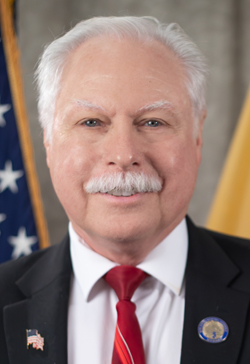
Asm. Robert Karabinchak
Sponsored bills
Maddy summaryThis bill (NJ A3888) increases paid leave for New Jersey public employees who serve in the U.S. military Reserves. It directly affects state, county, school district, and municipal employees who are members of the Army, Navy, Air Force, Marine Corps Reserves, or affiliated National Guard units. The key change amends state law to provide **90 paid work days per year** for federal active duty (up from 30 days), with any leave beyond 90 days provided without pay but without loss of time. The policy change applies to permanent, full-time temporary, and certain other public employees serving in reserve components.
Maddy summaryThis bill amends New Jersey's Public Employees' Retirement System (PERS) rules to allow temporary state employees at psychiatric hospitals or correctional facilities to qualify for accidental disability benefits. It specifically covers injuries sustained after January 2003 while working temporarily at these facilities (before becoming a PERS member), making such injuries eligible for PERS benefits once the employee gains membership. The key change deems these pre-membership injuries as occurring "during membership" if the employee joins PERS without interruption in the same job. This expands eligibility beyond current rules, which only provided workers' compensation for such injuries before PERS membership.
Maddy summaryThis bill requires New Jersey's Board of Public Utilities (BPU) to create a rebate program for residents purchasing new low-speed electric bicycles meeting specific safety standards (ANSI/CAN/UL 2849). Rebates cover up to $2,000 or 50% of the bike's price (minimum $1,000 purchase), but only for in-person purchases made by New Jersey residents. The program, funded by $1 million from an existing societal benefits charge, aims to reduce vehicle emissions by encouraging e-bike use for short trips. The BPU will determine eligible bike types, application processes, and additional program requirements.
Maddy summaryThis bill removes the 5-megawatt capacity limit for individual community solar energy projects in New Jersey's existing pilot program. It directly affects solar project developers and utility customers who participate in community solar programs by allowing projects of any size to join the program. The key change eliminates a previous restriction while maintaining other program requirements, such as minimum customer participation, low-income access standards, and credit calculation rules. The bill does not alter the program's core structure but enables larger-scale solar projects to qualify. This change applies to all community solar projects registered after the bill's enactment.
Maddy summaryThis bill changes the civil service classification of State Investigators working in New Jersey's Division of Criminal Justice (part of the Department of Law and Public Safety). Currently classified as unclassified employees, they lack full civil service protections like job security and standardized hiring. The bill moves them to classified service, granting them those protections under state civil service rules. The bill was withdrawn after being approved as P.L.2025, c.351.
Maddy summaryThis bill establishes a four-year pilot program for up to 15 New Jersey school districts to create confidential mental health assistance programs for students in grades K-12. The programs will identify students facing mental health challenges (including those related to family, school, or personal issues), provide voluntary counseling and support services, and connect students with community resources - all while maintaining strict confidentiality. Districts must apply with funding plans, and participating schools will track student participation and outcomes. After the pilot, the state will evaluate the program’s effectiveness and recommend whether to expand it statewide.
Maddy summaryThis bill establishes New Jersey's Second Chance Program within the Department of Labor and Workforce Development. The program provides career opportunities for formerly incarcerated individuals by partnering with labor organizations to identify and create employment pathways in local trades. It directly affects people recently released from prison who face significant barriers to stable work. The key mechanism requires labor organizations - defined as per federal law - to collaborate with the state in developing job placement plans, aiming to reduce recidivism through meaningful employment. The bill takes effect immediately upon enactment.
Maddy summaryThis bill amends New Jersey's Safe Dam Act to require the Department of Environmental Protection (DEP) to consider potential impacts to natural resources - such as wildlife, fish, aquatic life, habitats, plants, and historic sites - when classifying dams by hazard potential. Currently, classifications only consider loss of life and property damage; this change expands the criteria to include environmental impacts. The DEP must update its classification system to incorporate these factors, affecting how dams are assessed for safety. Dam owners and the DEP will be directly impacted by this new requirement in the hazard classification process.
Maddy summaryThis bill creates a refund program for businesses that pay application fees for state permits, licenses, or certifications when processing exceeds set time limits. State agencies must submit detailed catalogs of their permit types, fees, and current processing times to the Governor, who then sets recommended processing deadlines. If an agency fails to meet the recommended deadline after receiving a complete application, it must refund the fee (without affecting the permit's approval status). The program applies to all state departments, boards, or authorities issuing such permits.