

Maddy summaryThis bill exempts disabled veterans and Purple Heart recipients from paying municipal parking meter fees when traveling in a vehicle displaying their special license plate or placard issued by New Jersey's Motor Vehicle Commission (MVC). It applies only when the veteran or recipient is driving or riding as a passenger, and does not cover vehicles parked longer than 24 hours in one location. The exemption specifically covers parking meter fees, not other parking costs, and requires the MVC to issue the necessary placards. The bill directly affects eligible veterans and Purple Heart recipients using municipal parking.
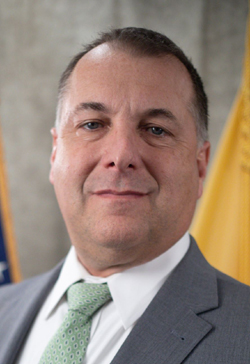
Asm. Joe Danielsen
Sponsored bills
Maddy summaryThis bill (A 1151) would allow New Jersey state legislators to enroll in the State Health Benefits Program (SHBP), which provides health coverage to state employees. It directly affects current and future members of the New Jersey Legislature by expanding the definition of "employee" under existing law to include them. The key mechanism is amending Section 2 of P.L.1961, c.49 to explicitly state that "employee" includes legislators after the bill's effective date. The bill is currently pending (introduced January 13, 2026, referred to committee) and would change eligibility rules without altering existing SHBP benefits or costs.
Maddy summaryThis bill (A2418) requires New Jersey hospitals to establish nurse staffing committees composed of at least 55% registered nurses providing direct patient care. The committees must develop annual staffing plans based on patient needs, unit types, and evidence-based factors like patient acuity and facility layout, setting minimum nurse-to-patient ratios for each shift. Hospitals must submit these plans to the state health department annually and implement them, with exemptions only during declared emergencies. The law directly affects all licensed New Jersey hospitals and aims to improve patient safety and nurse retention through collaborative staffing decisions.
Maddy summaryThis bill would have established criminal penalties (fourth-degree crimes) for employers who knowingly falsify payroll records required under New Jersey's Prevailing Wage Act or make false statements on public works contractor registration forms. It directly affects employers working on public construction projects subject to prevailing wage requirements. Currently, such violations are punishable only as minor offenses (up to 90 days in jail), but this bill would have increased penalties to up to 18 months in jail or $10,000 fines. The bill was withdrawn on January 13, 2026, as it was approved as part of P.L.2025, c.356, meaning the changes are now law.
Maddy summaryBill A1124 requires applicants for New Jersey's homestead property tax reimbursement to submit their application as part of their annual New Jersey gross income tax return, rather than as a separate filing. This change directly affects eligible claimants - seniors (65+), disabled individuals, or homeowners/renters meeting income limits ($92,969 or less gross income for 2022+ tax years) - who own or rent a primary residence in New Jersey. The bill amends existing law to integrate the reimbursement application process with the state income tax filing system. It does not alter eligibility criteria, benefit amounts, or income thresholds, only the submission method. This simplifies the process for applicants but does not change who qualifies for the reimbursement.
Maddy summaryThis New Jersey bill (A1150) creates a proportional property tax exemption for veterans with service-connected disabilities. It directly affects honorably discharged veterans whose disabilities (such as paralysis, blindness, or amputations) are certified by the VA as 25% to 100% service-connected. The exemption equals the veteran's disability percentage (e.g., 50% disability = 50% tax exemption) but caps partial exemptions at $15,000. To offset costs for local governments, the state must reimburse municipalities 102% of the tax revenue lost from these exemptions.
Maddy summaryThis bill removes an exemption in New Jersey's Smoke-Free Air Act that previously allowed smoking in casinos and casino simulcasting facilities. Currently, these venues could permit smoking in areas used for gambling (like slot machine rooms or table games), but the bill would eliminate that exception. After passage, all indoor areas of casinos and simulcasting facilities open to the public for gambling would be required to be smoke-free. This change aligns these venues with the state's general indoor smoking ban, which applies to most public workplaces and spaces.
Maddy summaryThis bill requires every New Jersey public school district to employ a certified school nurse at each individual school building within the district. It directly affects all public school districts and their staffing requirements. The key provision amends existing law to mandate that every school building must have a certified school nurse present, rather than allowing districts to provide nursing services across multiple buildings with a single nurse. Districts may still supplement with non-certified nurses, but only if those nurses are assigned to the same building or school complex as the certified nurse. This changes current practice by requiring certified nursing presence at every building level.
Maddy summaryNew Jersey's Assembly Resolution AR 52 urges Congress and the President to restore net neutrality rules by reversing the 2017 FCC decision that removed regulations preventing internet service providers (ISPs) from slowing speeds, blocking content, or creating paid "fast lanes." It specifically calls for reinstating the 2015 framework where all internet traffic must be treated equally, ensuring no discrimination against websites or applications. As a non-binding resolution, it does not create new law but formally requests federal action to enforce these principles. The resolution directly addresses the federal government, not New Jersey residents or ISPs.
Maddy summaryThis bill requires New Jersey's Division of Consumer Affairs to create and annually update a plain-language notice about fraud and identity theft risks specifically for senior citizens (60+). The notice must explain common scams targeting seniors and provide prevention tips. The Commissioner of Human Services must then distribute this notice annually to all seniors upon request and to state-funded organizations serving seniors (like senior centers or care facilities) for them to share with clients. It also mandates posting the updated notice on the Human Services website each year. The bill directly affects senior citizens by providing them with accessible, current fraud prevention information.