

Maddy summaryThis bill (A 976) creates a temporary license for nonresident military spouses who move to New Jersey due to a military spouse’s assignment. It allows these spouses to practice certain licensed professions (like nursing or social work) without full New Jersey licensure, provided they hold a current license in another state with equivalent requirements and meet other criteria like recent experience and a clean disciplinary record. Most temporary licenses are valid for one year (extendable once), but licenses for six specific professions (including nursing and social work) are valid for two years. The bill directly affects military spouses relocating with active-duty service members, enabling them to work in their licensed professions while adjusting to their new home state.
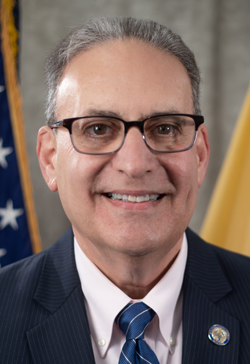
Asm. Roy Freiman
Sponsored bills
Maddy summaryThis bill waives initial application and issuance fees for professional and occupational licenses in New Jersey for veterans and their spouses, domestic partners, or civil union partners who already hold a current, equivalent license in another state. It applies when the applicant resides in New Jersey and the out-of-state license meets the board's equivalent or substantially equivalent requirements. The exemption covers all licenses issued by professional boards under the Division of Consumer Affairs. The bill does not affect renewal fees or licenses obtained through other pathways.
Maddy summaryThis bill regulates pharmacy benefits managers (PBMs) and insurance carriers to increase transparency and fairness in prescription drug coverage. It requires carriers and PBMs to establish pharmacy and therapeutics committees with strict conflict-of-interest rules, prohibits commission-based PBM compensation (mandating flat fees instead), and mandates detailed reporting of PBM fees for insurance filings. The law directly affects insurers, PBMs, and pharmacies by changing how drug formularies (approved drug lists) are managed and how PBM costs are calculated and disclosed. Key provisions include banning preferential formulary placement for higher-cost drugs over lower-cost generics/biosimilars and requiring actuarial documentation for PBM compensation. The bill aims to reduce patient cost-sharing and ensure PBM compensation aligns with administrative costs.
Maddy summaryNew Jersey bill A 3108 requires the Department of Agriculture to promote community supported agriculture (CSA) programs. Within 180 days of enactment, the Department must create a public website listing all CSA farms and enabling online subscriptions, run statewide advertising campaigns highlighting CSA benefits, and develop promotional labels for CSA-marketed products (using "Jersey Fresh" branding where appropriate). The bill also establishes an annual "Community Supported Agriculture Week" in February to showcase local farm-to-table connections through events in schools, markets, and community venues. This directly affects New Jersey farms participating in CSAs and consumers seeking locally sourced seasonal food through subscription programs.
Maddy summaryThis bill requires New Jersey's Governor to include a detailed annual report in the budget message about revenues and spending from the "societal benefits charge" on utility bills. The report must show, for each of the past five fiscal years and the current year, how much was collected from electricity and gas customers, and how those funds were spent - specifically for energy efficiency programs, low-income energy assistance, plug-in electric vehicle incentives, and other approved initiatives. It also mandates itemized breakdowns of funds allocated by each utility company. The goal is to increase transparency about how this charge, embedded in customer bills, finances state energy and assistance programs.
Maddy summaryThis bill requires social media platforms with at least five million global users to cooperate with designated nonprofit organizations (like StopNCII.org and the National Center for Missing and Exploited Children’s Take It Down initiative) to remove nonconsensual intimate images or videos. It mandates that platforms establish procedures for nonprofits to flag and request removal of such content - including AI-generated deceptive media - and requires immediate takedown of flagged material pending review. The law defines "nonconsensual" broadly, covering cases where victims didn’t consent, minors were involved, or deceptive media misrepresented individuals. Social media companies violating the law face fines up to $20,000 per offense. The bill directly affects platforms serving New Jersey users and protects individuals targeted by nonconsensual sharing of intimate content.
Maddy summaryThis bill exempts the sale of land to nonprofit organizations from New Jersey's realty transfer fee when the land is purchased for permanent preservation for recreation and conservation purposes. The exemption applies specifically to transactions conducted under the "Preserve New Jersey Act," allowing these groups to acquire property without paying the standard transfer charge. By removing this financial barrier, the legislation aims to support land conservation efforts while maintaining the fee for other property transfers. The change takes effect immediately upon enactment.
Maddy summaryThis bill (A-1950) requires all general and special hospitals in New Jersey to adopt evidence-based protocols for early sepsis recognition and treatment. The protocols must include distinct guidelines for adult and pediatric patients, covering screening, treatment goals, infection source identification, and antibiotic timing, while specifying cases where treatment isn’t appropriate (e.g., palliative care). Hospitals must train relevant staff, submit protocols to the Department of Health for approval within 120 days of enactment, and annually report data to track adherence and mortality rates. These protocols aim to improve outcomes for sepsis patients, a condition that causes over 28% of deaths in New Jersey and is the eighth-leading cause of death in the state.
Maddy summaryThis bill expands the definition of Health Care Service Firms in New Jersey to include any agency that refers individuals to provide companion, health care, or personal care services in the homes of people with disabilities or those aged 60 and older. Under the new rules, these firms must register with the Division of Consumer Affairs and obtain accreditation from a recognized body within 12 months of registration. Additionally, the legislation requires larger firms to submit annual financial statements and periodic audits or third-party reports based on their revenue and Medicaid funding levels. These changes aim to increase oversight and transparency for a broader range of organizations serving elderly and disabled residents.
Maddy summaryThis New Jersey bill prohibits the use of Green Acres funds to purchase, install, or replace artificial turf fields at schools, municipalities, and state agencies. The legislation restricts these specific expenditures by directing that money instead be used for natural grass playing fields, citing concerns over harmful chemicals and environmental impacts associated with synthetic turf. By banning the use of these state funds for artificial surfaces, the bill aims to prevent the purchase of fields containing rubberized pellets and microplastics while promoting organic maintenance practices for natural grass.