

Maddy summaryThis New Jersey bill (A 1793) creates a "Recovery Tax Credit Program" that provides tax incentives to employers who hire and retain individuals recovering from substance use disorders. Employers must become "certified" by meeting requirements like partnering with recovery providers and offering qualifying health insurance. Certified employers can claim tax credits up to $2,000 per eligible employee (based on hours worked, minimum 500 hours), with a total annual budget cap of $2 million. The program directly affects employers in New Jersey and individuals in recovery who meet the defined eligibility criteria.
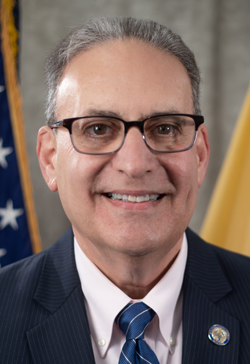
Asm. Roy Freiman
Sponsored bills
Maddy summaryThis New Jersey bill provides temporary mortgage relief to homeowners directly impacted by Hurricane Ida's 2021 flooding. It requires mortgage servicers to grant a one-year payment pause (forbearance) to eligible homeowners who received federal disaster aid for storm-damaged primary residences, meet income limits (under 150% of median income), and have limited savings. During this period, servicers cannot charge fees, penalties, or report negative credit information, and must halt foreclosure actions. The relief applies only to those who obtained FEMA or similar federal assistance for damage sustained to their homes.
Maddy summaryThis bill requires private contractors operating New Jersey's motor vehicle inspection facilities to offer full-time employment to eligible employees of the New Jersey Motor Vehicle Commission who lose their jobs due to contract outsourcing. The number of job offers must be proportional to the contractor's share of inspection lanes (e.g., a contractor operating 30% of lanes must offer jobs to 30% of affected employees). It also mandates that collective bargaining agreements covering these employees remain binding under the new contract. This policy directly affects state employees working in motor vehicle inspection facilities when operations transition to private contractors.
Maddy summaryThis bill requires New Jersey county clerks to provide accessible mail-in ballots to voters with disabilities who request them. It mandates that these ballots include specific accessibility features, such as electronic delivery, audio prompts for blind voters, compatibility with braille displays, and the ability to mark selections electronically. Voters who qualify as "electronic return eligible" (due to blindness, visual impairment, or physical disability preventing ballot handling) may return completed ballots electronically. The bill ensures voters can independently complete, verify, and submit their ballots, with printed materials provided unless electronic return is used, and sets uniform guidelines for election officials.
Maddy summaryThis bill suspends fines for small businesses on first-time paperwork violations related to state agency requirements, defined as businesses with 50 or fewer full-time employees meeting federal small business standards. It requires businesses to correct violations within six months to qualify for the suspension, unless the violation involves tax collection, poses serious public harm, or interferes with criminal investigations. For violations deemed a public safety danger, agencies may still suspend fines if the business corrects the issue within 24 hours of notification. The bill does not apply to repeat violations or certain tax-related offenses.
Maddy summaryThis bill eliminates a 1% tax on purchasers buying controlling interests in Class 4A commercial properties (income-producing real estate like offices or retail space, excluding residential, farm, or industrial properties) when the transfer value exceeds $1 million. It directly affects commercial real estate buyers and sellers involved in large transactions of qualifying properties. The bill repeals the specific tax provision (previously called the "controlling interest transfer tax") but does not affect existing tax liabilities or audits for transactions that occurred before the repeal. This change simplifies the tax code for high-value commercial property transfers without altering other property tax rules.
Maddy summaryThis bill provides a temporary tax credit for New Jersey residents who are either first-time homebuyers (purchasing a home in 2019, 2020, or 2021) or seniors aged 65+ during the tax year. Eligible taxpayers receive a credit equal to 25% of their property taxes paid on their primary home, capped at $2,500 per year. The credit reduces income tax liability, and any unused portion is refunded directly to the taxpayer. The credit applies only for tax years 2019 through 2021, offering short-term relief for qualifying homeowners.
Maddy summaryThis bill creates the "New Jersey Anti-Semitism Task Force" within the Department of State, establishing a permanent 18-member group to address anti-Semitism. The task force includes legislative leaders, representatives from Jewish organizations (like Hadassah and the Anti-Defamation League), law enforcement (State Police and Bias Crimes Unit), and public members appointed by officials. Its core duty is to research anti-Semitic incidents and develop recommendations to protect Jewish communities, synagogues, and institutions. The bill cites rising anti-Semitic incidents in New Jersey (including 200 reported in 2018) as the basis for this action.
Maddy summaryThis bill allows businesses registered with New Jersey's Division of Revenue to opt into receiving official business notices (like new rules or economic incentives) via email instead of paper mail. It applies to most business entities (corporations, nonprofits, etc.) that file registration documents, excluding government agencies. Businesses must still maintain physical mailing addresses for legal notices, and paper mail remains required where state law specifically mandates it. The Division of Revenue will collect email addresses and share them with relevant agencies (like Taxation and Economic Development) to enable electronic notifications.
Maddy summaryThis bill modernizes the New Jersey Council of County Colleges' role in state funding and strategic planning. It requires the Council to submit an annual unified budget request to the Governor and Legislature, establish a performance-based funding formula (capping state operational support at 43% of colleges' base-year costs), and develop a strategic plan aligned with state priorities. The Council must also advise state agencies on higher education policy, promote equitable funding, and enhance data sharing for student success initiatives. Note: The bill was withdrawn on January 13, 2026, as it was superseded by P.L.2025, c.371.