

Maddy summaryThis bill makes permanent an annual $500,000 allocation from the Clean Communities Program Fund for public outreach about New Jersey's single-use plastics reduction program. The fund is financed by fees from businesses that produce litter-generating products, penalties, and voluntary donations. The funds will continue to support public education campaigns and the distribution of reusable bags, as established under current law. This change removes the temporary three-year limit that previously applied to this specific allocation.
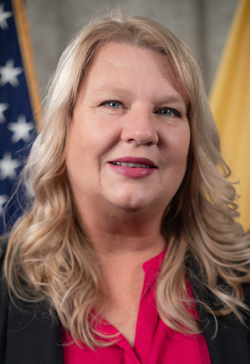
Asm. Mitchelle Drulis
Sponsored bills
Maddy summaryThis bill requires secondhand dealers (like pawn shops or phone buyback stores) to verify the identity and ownership of sellers when purchasing used cell phones or wireless devices. Dealers must document device identifiers (such as serial numbers), collect two forms of ID (including photo ID), and confirm sellers are legally authorized owners. They must maintain records for one year, make them available to law enforcement, and cannot alter device markings. Violations carry civil penalties up to $1,000 per offense. The law directly affects secondhand dealers and sellers of used wireless devices in New Jersey.
Maddy summaryThe bill appropriates state and federal funds to the New Jersey Department of Environmental Protection for environmental infrastructure projects in fiscal year 2026. It authorizes the DEP to provide zero-interest and principal-forgiveness loans to local governments and public water utilities for clean water and drinking water projects, including 151 clean water projects totaling $1.7 billion and 59 drinking water projects totaling $651.7 million. The bill specifies different funding mechanisms, including full principal forgiveness for qualifying projects and blended interest rates for larger projects, with all funding expiring on July 1, 2026.
Maddy summaryThis bill, A5623, authorizes the New Jersey Infrastructure Bank to provide up to $53.45 million in low-interest loans for 17 specific transportation infrastructure projects across New Jersey municipalities in Fiscal Year 2026. The bill lists exact projects including bridge replacements, road improvements, and street redesigns in locations like Bayonne, Hoboken, Essex County, and Princeton. It includes a principal-forgiveness provision allowing up to $100,000 of a loan (per borrower) to be forgiven for planning and design costs on projects that complete construction with at least $250,000 in financing. The bill specifies how the bank can use loan repayments, bond proceeds, and other funds to support the program's operations while maintaining clear eligibility requirements for participating local governments.
Maddy summaryAJR 216 is a joint resolution directing New Jersey's Board of Public Utilities (BPU) to investigate whether PJM Interconnection's Reliability Pricing Model (capacity market) effectively provides reliable electricity at the lowest cost. The bill requires the BPU to report its findings within 12 months and directs the state to collaborate with neighboring PJM states to promote affordable energy practices, prioritize carbon-free sources, and urge PJM to implement market reforms. It specifically addresses rising capacity costs in PJM's auctions - contributing to higher electricity bills - and delays in approving new generation projects that prevent lower-cost resources from entering the market. The resolution aims to protect ratepayers, particularly low-income households, from price increases while supporting grid reliability.
Maddy summaryThis bill appropriates $107,999,000 from constitutionally dedicated corporation business tax revenues and Green Acres funds to the New Jersey Department of Environmental Protection for local government open space and park projects. The funds will support $22.4 million for land acquisition, $80.3 million for park development (including inclusive playgrounds), and $3 million for a new planning grant program. It prioritizes projects in densely populated areas (defined as municipalities with at least 5,000 people per square mile or 35,000 people total) and requires Joint Budget Oversight Committee approval for fund distribution. The bill specifies eligible projects across 30+ municipalities and counties for recreation, conservation, and park improvements. Local governments will use these funds to develop recreational spaces, conserve natural areas, and enhance existing parks.
Maddy summaryThis bill increases tax credits for investors who fund New Jersey emerging technology businesses by raising the credit rate from 20% to 60% of qualified investments (with an additional 5% available for investments in opportunity zones, low-income communities, or diverse entrepreneurs, making it 65% total). It lowers the employee threshold for qualifying businesses from 225 to 150 employees, expanding eligibility to more small technology companies. The bill also revises definitions of qualifying businesses and investments under the "New Jersey Angel Investor Tax Credit Act" while repealing the "New Jersey Ignite Act." These changes directly affect investors, emerging technology businesses, and qualified venture funds seeking tax benefits.
Maddy summaryThis is a ceremonial resolution, not a policy bill. It honors the late Congressman William J. Pascrell, Jr. (who served in Congress from 1997 until his death in 2024), specifically recognizing his founding role in the Congressional Brain Injury Task Force. The resolution urges New Jersey's current and future U.S. Congress members to join and support this bipartisan task force, which focuses on advancing brain injury awareness, research, and policy. It has no effect on laws or funding - it is purely a commemorative statement.
Maddy summaryThis bill requires contractors bidding on New Jersey public works projects (funded by public funds) to certify that each employee meets one of three minimum qualifications: a high school or GED diploma, enrollment in an equivalent apprenticeship program, or four years of verifiable work experience as a tradesperson. Contractors must provide documentation to verify these qualifications during electronic registration with the state. The law directly affects construction and labor contractors working on public projects, ensuring workers meet basic education or experience standards. It amends existing registration requirements under P.L.1999, c.238, with enforcement tied to contractor registration status.
Maddy summaryThis bill eliminates a $25 application fee for patients or healthcare providers appealing health insurance denials, reductions, or terminations of benefits. It directly affects New Jersey residents covered by health insurance plans who dispute carrier decisions after completing their insurer's internal appeals process. The key provision removes the fee requirement from the existing Independent Health Care Appeals Program, making the process more accessible without altering the program's structure. The change applies to all appeals reviewed under this state program, streamlining access to independent review. (3 sentences)