

Maddy summaryThis bill requires New Jersey's Division of Travel and Tourism to create and maintain a public website listing all state historic sites, districts, and roadside markers. The website must include searchable maps, driving directions (from all compass points), photos, tour details, contact information for site owners, and links to local historical programs. It will be updated whenever new sites are added by state agencies like the Department of Environmental Protection or Department of Transportation. This directly benefits tourists, historians, and local communities by centralizing access to historic resource information in one accessible online platform.
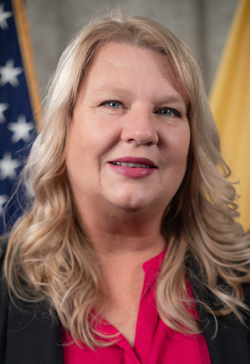
Asm. Mitchelle Drulis
Sponsored bills
Maddy summaryThis bill imposes three new fees on private prison operators in New Jersey to fund social support programs. It charges an 8% fee on the value of public contracts (section 2), a $15 daily fee per inmate (section 3), and a 3% surtax on taxable income (section 4). All revenue flows into two dedicated funds: one for legal services supporting detained individuals and another for community programs like job training and housing (sections 2e and 3e). The bill directly affects private prison companies operating under state contracts, with fees applying during active contracts or inmate stays.
Maddy summaryThis bill exempts small portable solar devices (under 1,200 watts) from standard utility requirements. It directly affects homeowners using these devices, which connect via standard 120V outlets and meet electrical safety standards. Key provisions remove the need for interconnection agreements, net metering program rules, utility approval, or fees. Utilities cannot charge for these devices or require additional equipment beyond what’s built-in. The bill also shields utilities from liability for customer use of these devices.
Maddy summaryThis bill requires social media platforms with significant user activity in New Jersey to display prominent warning labels about mental health risks during account sign-up and when users access certain features. It specifically targets platforms that allow social interaction (like profile creation and content sharing) and directly affects minors under 18, as defined by the bill. The warnings must highlight risks identified by the U.S. Surgeon General, including links between heavy social media use and increased depression, anxiety, and sleep disruption in youth. Platforms must comply with these labeling requirements to inform users and families about potential harms. The bill does not impose additional restrictions beyond the warning labels.
Maddy summaryThis bill restructures the governance of New Jersey's State Health Benefits Program by creating a new State Health Benefits Commission with 13 members. The commission will include existing state officials, representatives from local and higher education employers, and members appointed by various public employee unions, including specific seats for police and firefighters. A key provision is the addition of a non-voting expert member selected by the other commissioners to provide independent advice on health care plan design. The bill also establishes a new committee to assist with plan design and outlines how members will be appointed, serve terms, and manage conflicts of interest. Ultimately, the legislation aims to broaden representation and oversight in how the state manages health benefits for its employees.
Maddy summaryThis bill prohibits health insurance carriers from denying coverage for nonopioid pain medications in favor of opioids or requiring patients to try opioids first. It requires insurers to treat FDA-approved nonopioid drugs equally to opioids in formularies, meaning coverage restrictions, prior authorization, and cost-sharing tiers must be no more restrictive for nonopioid drugs. The law applies to state health benefit plans, school employee health programs, and Medicaid for acute pain treatment. It takes effect January 1, 2026, directly affecting insurers and patients covered by these plans.
Maddy summaryThis bill requires private contractors performing construction work in New Jersey (excluding public projects or home improvements) to register with the Department of Labor. To register, contractors must submit business details, proof of required licenses, worker's compensation insurance, and disclose compliance with state and federal labor laws (like wage laws and safety regulations). Contractors must also disclose past labor law violations or criminal offenses related to their work. Exemptions apply to contractors already registered under New Jersey’s public works registration system.
Maddy summaryThis bill creates a statewide online tracking system for state-issued permits, licenses, certifications, and form applications. The Office of Information Technology must develop a centralized system that assigns unique tracking numbers, allows real-time status updates by state departments, and stores specific details like application dates, processing departments, and expected completion times. State agencies (including departments, commissions, and boards) must determine which permits/licenses to include based on annual volume and processing time, then input data into the system. The system becomes the official state record, replacing fragmented tracking methods and improving transparency for agencies managing these applications.
Maddy summaryThis bill expands New Jersey's existing requirement for health insurance plans to cover prostate cancer screenings without any out-of-pocket costs. It specifically requires coverage for annual screenings - including digital rectal exams and PSA tests - for men aged 50 and older (asymptomatic) and men aged 40 and older with a family history of prostate cancer or other risk factors. The law applies to most health insurance plans, including high-deductible plans where permitted by federal law, and mandates coverage "to the same extent as for any other medical condition." It does not alter existing coverage for other preventive services but ensures no cost-sharing (like deductibles or copays) applies to these specific screenings.
Maddy summaryThis bill requires all New Jersey public schools to prominently display a direct link to the subsidized school meals application on their official websites. It directly affects public schools by adding this website posting requirement to existing rules about meal applications. The key provision mandates that schools place the link in a visible location on their internet sites, making it easier for families to access the application. This change aims to improve accessibility to school meal programs without altering eligibility rules or funding.