

Maddy summaryThis bill adopts the International Holocaust Remembrance Alliance's (IHRA) working definition of antisemitism as an educational resource for New Jersey state agencies, schools, and law enforcement. It defines antisemitism as hatred toward Jews, including specific examples like Holocaust denial, harmful stereotypes (e.g., conspiracy theories about Jewish control), and double standards applied to Israel. The definition is explicitly non-binding and must be used while protecting constitutional rights like free speech. New Jersey lawmakers cite the state's high rate of antisemitic incidents - including ranking third nationally in 2023 - as the basis for this measure.
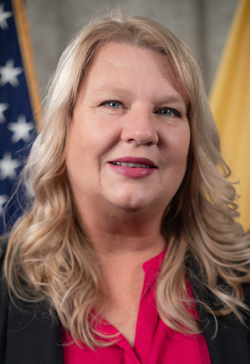
Asm. Mitchelle Drulis
Sponsored bills
Maddy summaryNew Jersey's A1203 "CJ's Law" would make it illegal to manufacture or distribute substances containing kratom under specific circumstances by amending the state's controlled substances laws. The bill defines "controlled dangerous substances" broadly to include substances that metabolize into controlled drugs, directly targeting kratom products. This would affect businesses and individuals involved in producing or selling kratom-based products, shifting them from current legal status to criminalized activity under new penalties. The bill is currently pending in the Assembly Judiciary Committee after introduction on January 13, 2026.
Maddy summaryThis bill requires New Jersey to appoint a State Dementia Services Coordinator within the Department of Human Services. The coordinator will develop a master plan to address dementia care, coordinate existing state services (like the Alzheimer's Advisory Commission), prevent service duplication, identify gaps in care, and improve access to quality treatment for people with dementia. State agencies must cooperate with the coordinator by providing data and assistance upon request. The bill appropriates $150,000 from the General Fund to fund this position and its operations.
Maddy summaryThis bill requires New Jersey state employees (including those at Rutgers and public universities) to be granted one additional paid leave day per year for observing Eid al-Fitr and Eid al-Adha, beyond their standard administrative leave. It also mandates that public school districts record absences for these holidays as excused, ensuring students aren’t penalized for missing class due to religious observance. The policy prevents such absences from appearing on transcripts or affecting eligibility for awards, tests, or graduation requirements when a parent’s written excuse is provided. It explicitly adds Eid al-Fitr and Eid al-Adha to the list of religious holidays for which student absences must be excused. The bill takes effect immediately upon enactment.
Maddy summaryThis bill (A1685) reinstates automatic annual cost-of-living adjustments (COLA) for retirement benefits paid to members of New Jersey's state-administered retirement systems, including teachers' pensions. It directly affects current and future retirees in these systems by ensuring their benefits automatically increase each year to match inflation, rather than requiring separate legislative action for each adjustment. The key mechanism is amending existing law to restore the automatic COLA provision that was previously removed, linking benefit increases directly to the Consumer Price Index. This change simplifies the process and provides predictable income growth for retirees without requiring new votes for each adjustment. The bill is sponsored by Assemblywomen Reynolds-Jackson and Speight and co-sponsored by multiple legislators.
Maddy summaryThis bill gives consumers the right to cancel certain home improvement contracts (over $500) within 3 business days, or up to 5 days if aged 60+ or with an intellectual disability. For consumer goods contracts over $500, seniors and individuals with intellectual disabilities may cancel within 3 business days. Contractors must include a clear cancellation notice in contracts and refund all payments within 30 days of cancellation. The law applies to home remodeling and similar goods but excludes real estate transactions.
Maddy summaryThis bill authorizes the State Treasurer to sell two parcels of surplus state-owned property at the Mountainview Youth Correctional Facility in Clinton Township, Hunterdon County. Site A (about 10 acres) will be sold to Waste Management of New Jersey for $3.4 million "as is," with the buyer assuming all environmental responsibilities. Site B (about 17.8 acres plus an access easement) will be sold to Hunterdon County for $1, with the county solely responsible for environmental compliance. The sales require no further legislative approval.
Maddy summaryThis bill (A6292) authorizes the State Treasurer to sell two parcels of surplus state-owned property at the Mountainview Youth Correctional Facility in Clinton Township, Hunterdon County. Site A (about 10 acres) will be sold to Waste Management of New Jersey, Inc. for $3.4 million "as is," with the buyer assuming all environmental responsibilities. Site B (about 17.8 acres plus an access easement) will be sold to Hunterdon County for $1, with the county responsible for environmental compliance. The sale requires no additional legislative approval and formally transfers ownership and environmental obligations to the buyers.
Maddy summaryBill A5258 allows plenary winery license holders, out-of-state winery license holders, and farm winery license holders to sell wine by the glass for on-premises consumption in their licensed salesrooms. The bill defines "by the glass" as selling individual portions of wine (or wine mixed with nonalcoholic beverages) in open containers. This change expands the sales options available to these wineries, permitting them to serve wine by the glass in their salesrooms without requiring customers to purchase full bottles. The bill modifies existing licensing provisions without changing the fees or other requirements for these winery licenses. The sponsor states this will provide additional purchase options for consumers and increase revenue for winery license holders.
Maddy summaryThis bill requires New Jersey's Department of Children and Families (DCF) to expand the existing NJ Statewide Student Support Services program to include eating disorder awareness, prevention, and counseling services for students in grades K-12. It directs the 15 regional service hubs contracted with DCF to first assess community needs for these services and then develop policies to provide them through a three-tiered system: universal workshops for all students (Tier 1), targeted group programs (Tier 2), and individual clinical support for those in need (Tier 3). The program would integrate these services into current school-based mental health support structures without creating new entities. The bill applies directly to K-12 students and their families across New Jersey through existing school support networks.