

Maddy summaryThis bill requires new residential substance use disorder treatment facilities in New Jersey to undergo stricter licensing checks before opening. It mandates that applicants submit independent financial audits and complete criminal background checks for all owners and principals (those with 5%+ ownership), with licenses potentially denied for financial irregularities or certain convictions. The Department of Health must also conduct unannounced facility inspections and establish additional licensing standards. The bill applies directly to facilities seeking or holding licenses for residential substance use treatment services. It is currently pending in the Assembly Health Infrastructure Committee.
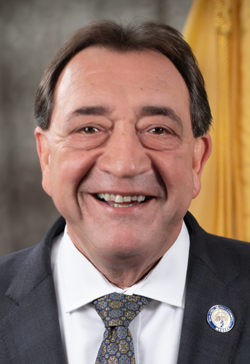
Asm. Anthony Verrelli
Sponsored bills
Maddy summaryThis bill (A4054) transfers specific school district employees from the Defined Contribution Retirement Program (DCRP) to the Public Employees’ Retirement System (PERS). It applies to school employees hired between November 2, 2008, and May 21, 2010, who work over 20 hours weekly but were previously ineligible for PERS due to work-hour rules. The bill requires their enrollment in PERS within 180 days of enactment, granting service credit for benefits eligibility (like health coverage) but not for calculating pension amounts. The state will cover the one-time cost of transferring funds via IRS-compliant trustee-to-trustee transfers, with unfunded liability amortized over 20 years.
Maddy summaryThis bill establishes a certification system for peer recovery specialists in New Jersey, who provide support to individuals with substance use or mental health challenges based on their personal lived experience. To practice, individuals must meet standards set by the Division of Consumer Affairs, including passing a background check, and cannot represent themselves as certified without approval. The law exempts existing support groups (like Alcoholics Anonymous), clergy, students in training, and licensed professionals (such as therapists) who don’t claim certification. It also prohibits conflicts of interest, like exploiting peer relationships for personal gain. The bill takes effect 13 months after enactment.
Maddy summaryThis bill (A 1751) establishes the "New Jersey Invasive Species Task Force" within the Department of Agriculture. The task force, composed of state agency leaders (Agriculture, Environmental Protection, Health, Forestry, and Rutgers) plus four public members appointed by the Governor and legislative leaders, will study invasive species control, develop prevention and restoration plans, and maintain a public list of invasive species updated every three years. It must hold quarterly public meetings statewide and submit annual reports to the Governor and Legislature detailing species impacts, spread patterns, and policy recommendations. The task force aims to coordinate state efforts to protect native ecosystems from harmful non-native plants, animals, and microorganisms.
Maddy summaryThis bill creates a property tax exemption for New Jersey veterans with service-connected disabilities. It provides a proportional exemption based on disability percentage (up to 100%), covering veterans with conditions like paralysis, amputations, or total blindness, and caps partial exemptions at $10,000. Surviving spouses of eligible veterans or those who died in service also qualify for similar exemptions. Crucially, the state will reimburse municipalities 102% of the lost tax revenue from these exemptions to offset costs. The law amends existing veteran property tax protections under P.L.1948, c.259.
Maddy summaryThis bill establishes minimum nurse-to-patient staffing ratios for hospitals, ambulatory surgery centers, and state developmental/psychiatric hospitals in New Jersey. It requires specific ratios, such as 1 nurse per 4 patients on medical/surgical units and 1 nurse per 2 patients in critical care, along with unlicensed staff ratios (1 per 7 patients during day shifts). Hospitals must implement an acuity-based staffing system approved by the health department to adjust staffing based on patient needs and unit conditions. The law aims to ensure safe staffing levels without reducing existing standards, directly affecting healthcare facilities and patient safety.
Maddy summaryThis non-binding resolution urges New Jersey's Department of Health to create public education materials about xylazine, a veterinary tranquilizer increasingly misused as a street drug. It highlights xylazine's dangers - including respiratory depression, skin ulcers, and its inability to be reversed by naloxone (unlike opioids) - and notes its frequent combination with fentanyl and other drugs in overdoses. The resolution specifically requests the health department provide accessible resources to inform residents about these risks. It does not create new laws but calls for public awareness efforts to address this emerging public health concern.
Maddy summaryThis bill creates the "New Jersey Reparations Task Force" to research and develop proposals addressing generational harms from New Jersey's role in slavery and systemic racial discrimination. The task force will examine historical and current disparities affecting Black communities, including voter disenfranchisement, youth incarceration rates, housing discrimination, wealth gaps, and school segregation. It will produce a report with policy recommendations for state-based reparations based on documented harms. The bill directly affects Black residents of New Jersey who face these systemic inequities, as outlined in the legislative findings.
Maddy summaryThis bill establishes a separate fringe benefit rate specifically for New Jersey public colleges and universities, effective starting in fiscal year 2025. Currently, these institutions use the same general state-wide fringe benefit rate as other state employees, but many university staff are enrolled in less expensive retirement plans (like the Alternative Benefit Plan) or have different benefit structures, causing a mismatch between actual costs and payments. The bill requires the Division of Budget and Accounting to calculate a rate reflecting the actual retirement costs for these employees. This change will apply to all federal, dedicated, and non-State funded programs at public colleges and universities.
Maddy summaryThis bill establishes a $6 million pilot program to study psilocybin therapy for behavioral health conditions like depression and anxiety through New Jersey hospitals. It directs the Department of Health to select participating hospitals across three regions (Central, Northern, Southern) to conduct FDA- and DEA-compliant research, with oversight from a new advisory board. The program aims to evaluate whether a future statewide system for safe, legal psilocybin therapy could be developed, focusing on treatment-resistant depression and other conditions. The bill was withdrawn after being approved as part of P.L.2025, c.296, meaning it is now law but no longer pending.