

Maddy summaryThis bill requires the New Jersey Department of Environmental Protection (DEP) and the New Jersey Infrastructure Bank to prioritize principal forgiveness for environmental infrastructure loans to municipalities in coastal areas. It specifically targets wastewater and drinking water projects in regions defined as "coastal areas" under existing law. The legislation amends current law to ensure coastal municipalities receive preferential treatment for loan forgiveness when accessing financing through the state's Water Bank program. This change would make it easier for coastal communities to secure funding for critical infrastructure improvements without full repayment of the loan principal.
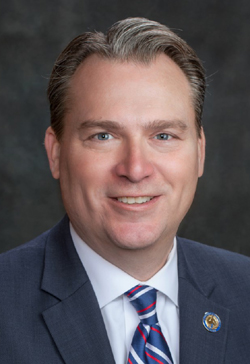
Asm. Rob Clifton
Sponsored bills
Maddy summaryThis bill prohibits New Jersey electric utilities from raising rates specifically to cover smart meter installation costs. It requires utilities to publicly disclose rate increase details - including amount, reasons, and expected bill impact - 30 days before and after any increase, with fines up to $10,000 for noncompliance. For rate hikes causing a 5% or greater average bill increase, utilities must report to the federal Department of Energy 60 days in advance and cannot disconnect service or charge late fees for six months afterward. The bill directly affects electric utilities and ratepayers (homeowners and businesses paying electricity bills) by restricting certain rate increases and enhancing transparency.
Maddy summaryThis bill allows property owners to request notification before a quitclaim deed is recorded on their property. If requested, county recording offices must notify the owner within 10-12 business days of a deed submission and delay recording for that period. Owners can provide preferred contact details (mail/email) and will pay a fee to cover administrative costs. The law directly affects property owners seeking to prevent fraudulent transfers and county recording offices handling deed records. It amends existing laws to require this notification process for quitclaim deeds, which often lack title guarantees.
Maddy summaryThis concurrent resolution (ACR 153) states that the New Jersey Department of Environmental Protection's (DEP) 2021 rules implementing the "Advanced Clean Trucks" program are inconsistent with legislative intent. The rules require truck manufacturers to sell increasing percentages of zero-emission vehicles (e.g., 55% of certain trucks by 2035), but the DEP adopted them without following a 2003 law requiring notice to environmental committees before implementing new California program phases. The resolution cites that the 2003 law only authorized the DEP to adopt rules for California's *second phase* of low-emission vehicles, not the newer "Advanced Clean Trucks" program. It directs the DEP to amend or withdraw the rules within 30 days or risk further legislative action to invalidate them.
Maddy summaryThis bill prohibits New Jersey state employees in career, senior executive, and unclassified positions from working remotely. It amends state law to require that the Civil Service Commission's rules for work hours and overtime pay must not permit remote work, ending the existing 2022 telework pilot program that allowed up to two remote days weekly. The prohibition takes immediate effect upon enactment and applies specifically to employees in those service categories. The bill does not change overtime or holiday pay rules but removes remote work as an option for affected employees.
Maddy summaryThis bill modifies the list of transportation infrastructure projects eligible to receive loans from New Jersey's Infrastructure Bank for Fiscal Year 2025. It adjusts which projects qualify, changes their priority order, and modifies the allowable loan amounts for specific projects. The bill authorizes the bank to expend up to $61.4 million (an increase from $53.8 million) for these projects, which include bridge repairs, road improvements, pedestrian bridges, and trail projects across various municipalities. Local government units, including cities, counties, and townships, would be directly affected as they apply for these loans to finance transportation infrastructure projects.
Maddy summaryThis New Jersey bill (A5216) prohibits health insurance companies and other covered entities (like HMOs) from limiting coverage based on how long anesthesia services are used before, during, or after medical or surgical procedures. It directly affects patients requiring anesthesia and insurers authorized to sell health plans in New Jersey. The law defines "anesthesia services" using standard medical coding from the American Medical Association, ensuring coverage isn't restricted by time limits. The bill takes effect 90 days after enactment for new or renewed insurance policies.
Maddy summaryThis bill requires the New Jersey Economic Development Authority (NJEDA) to create a loan program helping beginning farmers purchase essential farming capital like land, farm buildings, and equipment. Beginning farmers are defined as New Jersey residents with low or moderate net worth who are actively farming or planning to start farming. To qualify, applicants must meet specific criteria including New Jersey residency, property location within the state, relevant farming experience, and plans for active farm operation. Loans would be issued by NJEDA with terms and interest rates set by the agency, and borrowers may need to provide financial statements to ensure business viability.
Maddy summaryACR 138 is a ceremonial resolution honoring the 40th anniversary of New Jersey's Jersey Fresh program, a state-sponsored initiative established in 1984 to promote locally grown produce. The resolution recognizes the program's role in supporting New Jersey farms, increasing consumer awareness of seasonal produce, and serving as a national model for agricultural branding. It does not create new laws or policies but formally commends the program's success in connecting consumers with locally harvested fruits and vegetables across all 21 counties. The resolution directs copies to the New Jersey Department of Agriculture and the State Board of Agriculture for their records.
Maddy summaryThis bill lowers the cost threshold for reimbursing extraordinary special education costs from $40,000 to $35,000 for students in integrated public school programs, while maintaining 75% reimbursement for separate public and private school placements. It also phases in full state funding for these extraordinary costs over five years, increasing from 80% to 100% annually. Additionally, the bill requires the state to cover the full cost of nonpublic school student transportation for eligible districts - those with over 5,000 students requiring transportation where at least 25% are nonpublic school students. These changes directly affect school districts serving students with special needs and those providing transportation to nonpublic school students.