

Maddy summaryNew Jersey Assembly Bill 5424 requires school district superintendents to annually verify that their local anti-bullying policies include a method for anonymous reporting and submit a statement of assurance to the state Department of Education confirming this compliance. The bill targets school administrators by authorizing the State Board of Examiners to revoke a superintendent's certificate if they intentionally falsify the annual verification or attempt to dissuade individuals from reporting harassment, intimidation, or bullying. This legislation directly affects superintendents and their designees in every New Jersey school district by adding specific accountability measures and potential career consequences for non-compliance with existing anti-bullying laws.
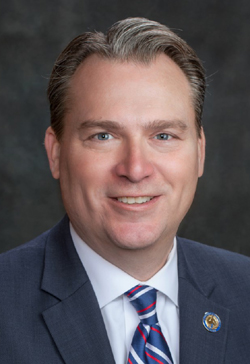
Asm. Rob Clifton
Sponsored bills
Maddy summaryNew Jersey Assembly Bill 5430 establishes mandatory maximum class sizes for public school districts, specifically capping preschool classes at 15 children and setting limits between 21 and 25 students for grades kindergarten through 12 depending on the district's poverty level. High-poverty districts, defined as those with at least 40 percent of students classified as at-risk, face stricter caps in lower grades compared to other districts, which are generally limited to 25 students per class. The bill allows specific exceptions for physical education, performing arts, and certain multi-grade academy programs, while also permitting districts to slightly exceed the 25-student limit if they have unassigned students. To support these changes, the state would cover 100 percent of the costs incurred by school districts to reduce their class sizes to the new maximums.
Maddy summaryNew Jersey Assembly Bill A5428 requires the Commissioner of Health to establish a dedicated hotline for individuals to report complaints about nonemergency medical transportation services. The bill defines these services as supervised transport for patients whose conditions are not severe enough for an ambulance but who face significant health risks if they use standard public or private vehicles. Hotline operators, who must be trained by the Department of Health and knowledgeable in relevant regulations, will identify callers needing immediate transport and refer them to appropriate providers. To encourage reporting, the law allows callers to request that their identity and the details of their complaint remain confidential. Additionally, the Department of Health is tasked with investigating valid complaints for regulatory violations and adopting new rules to ensure patient safety and consumer protection.
Maddy summaryNew Jersey Assembly Bill 5392 elevates aggravated assault against law enforcement officers, firefighters, emergency medical providers, and correctional personnel to a first-degree crime if the attack occurs during a civil disturbance and causes serious bodily injury. This change imposes a mandatory prison sentence of at least ten years with a ten-year period of parole ineligibility for such offenses. The bill also removes the legal presumption that defendants charged with this specific type of aggravated assault are eligible for pretrial release, requiring courts to justify any decision to free them before trial.
Maddy summaryNew Jersey Assembly Bill 5427 allows residents aged 65 and older to designate a trusted third party to receive notifications if they fall behind on mortgage payments or quarterly property taxes. Financial institutions holding mortgages must send these delinquency notices by email or regular mail, while municipal tax collectors may charge a one-time fee of up to $10 for similar services. The bill requires the designation process to be completed in writing with signatures from both the senior citizen and the third party, witnessed by a notary for mortgages or the tax collector for property taxes. These notices include specific financial details such as days delinquent and accrued interest, but they do not grant the third party any authority over the senior's accounts.
Maddy summaryNew Jersey Assembly Resolution 149 formally expresses support for all law enforcement officers and encourages every county and municipality in the state to adopt similar resolutions recognizing their work. The text highlights the expanding duties of police, including responding to mental health crises and community outreach, while criticizing trends such as defunding initiatives and sanctuary city policies that it argues undermine public safety. It also condemns inflammatory rhetoric from political leaders and media figures that it claims incites violence against officers. Copies of the resolution are directed to be sent to state police leadership, law enforcement unions, and local government bodies.