

Maddy summaryThis bill revises New Jersey's agricultural trespass law by removing the requirement that trespassers must knowingly or recklessly enter farm lands. It now prohibits any entry (on foot, vehicle, or equipment) without written permission and expands protected property to include fences, equipment, crops, and trees. The bill adds new land types to coverage, such as adjacent wooded areas used with farms (for Christmas trees) and land for storing agricultural equipment. Civil penalties increase to $1,000 (plus attorney fees) for violations involving vehicles/equipment, versus $100 for basic trespass.
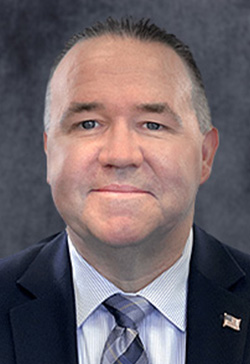
Asm. Alex Sauickie
Sponsored bills
Maddy summaryThis bill increases New Jersey's monthly personal needs allowance (PNA) from $50 to $100 for low-income residents of nursing homes, state/county psychiatric hospitals, and state developmental centers who qualify for Medicaid or Supplemental Security Income (SSI). It directly affects eligible residents in these facilities by doubling their monthly allowance, which they may use for personal expenses like phone calls, meals, clothing, or hobbies. The allowance is separate from care costs, meaning any income above $100 is applied toward facility expenses. This change aligns New Jersey with states offering higher PNAs and ensures SSI recipients receive a total allowance matching Medicaid recipients' current level.
Maddy summaryThis bill establishes a $1 million pilot program through New Jersey's Office of Planning Advocacy to reimburse municipalities for specific costs related to warehouse development planning. It directly affects local governments that update zoning ordinances or conduct mitigation studies for warehouse projects, requiring them to adopt warehouse-specific zoning consistent with state guidelines. Municipalities can apply for reimbursement for expenses like reexamining master plans or studying impacts of pending warehouse sites, with priority given to those needing financial assistance most. The program expires after the Office submits a report on its effectiveness, detailing how the funds were used and whether it should become permanent.
Maddy summaryACR 119 proposes a constitutional amendment to establish a fundamental right for all New Jersey residents to a clean and healthy environment, including pure water, clean air, and protected natural habitats. It would require the state to act as a trustee for public natural resources - such as water, air, forests, and public lands - ensuring these are preserved for both current and future generations. The amendment specifies these environmental rights are "self-executing," meaning they would take effect immediately without needing additional laws, and would exist alongside existing legal protections. If approved by voters, this would become part of New Jersey's Constitution, directly affecting all residents and imposing a duty on the state to protect these resources.
Maddy summaryThis bill (A3589) changes who pays for a State monitor appointed under New Jersey's School District Fiscal Accountability Act. Currently, school districts cover the costs of the monitor and staff when the Commissioner of Education appoints them due to fiscal issues like audit failures, deficits, or unaddressed financial weaknesses. The bill requires the State to pay all salaries and expenses for these monitors and staff, removing this financial burden from struggling school districts. This directly affects school districts receiving a State monitor under the existing accountability law, shifting the cost responsibility from local budgets to the State.
Maddy summaryThis bill (A3493) amends New Jersey's Food Security Advocate law to require the advocate to meet quarterly - either in person or virtually - with representatives from every food bank and food distribution center in the state. The change expands the advocate’s existing duty to coordinate with food banks by adding a mandatory meeting schedule, replacing the current non-specific coordination requirement. It directly affects the Food Security Advocate’s office and all statewide food banks, ensuring regular communication channels. The amendment takes effect immediately without creating new funding or programs.
Maddy summaryThis bill creates a state program where New Jersey acts as the "purchaser of last resort" for unsold farm produce. The Department of Agriculture must establish a program to buy unsold produce from farmers at a reasonable market price (determined by the department) and distribute it to food banks, homeless shelters, senior centers, adult day care centers, veterans organizations, and other nonprofits providing meals. Farmers must be unable to sell produce to other buyers in a timely manner to qualify. The program requires coordination with the Department of Health, a dedicated budget request, and rules for participation by both farmers and recipient organizations.
Maddy summaryThis bill amends New Jersey law to increase penalties for false public alarms targeting places of worship. It defines a "place of worship" as a building seating over 50 people used permanently for religious services by a registered 501(c)(3) organization. Violations involving such locations become a second-degree crime (previously third-degree) and trigger a minimum $5,000 civil penalty - double the standard $2,000 penalty - plus reimbursement for emergency response costs. The law also requires annual reports from law enforcement on these offenses to the state's Office of Emergency Management.
Maddy summaryThis bill provides $500,000 in additional funding for the Agricultural Experiment Station to conduct a Farm Viability Study. The study will examine factors critical to New Jersey farms' long-term success, including sustainable production, climate resilience, business management, and marketing strategies. It directly affects the Agricultural Experiment Station (part of Rutgers University) and supports New Jersey's 9,900 farms that produce major crops like cranberries, blueberries, and peppers across 750,000 acres. The funding is supplemental to the state's 2024 budget and aims to analyze how farms can maintain economic strength and adapt to challenges.
Maddy summaryThis bill establishes a three-year "Farm to Food Bank Pilot Program" in New Jersey, connecting farmers with food banks to distribute fresh produce and agricultural products. It requires the Department of Agriculture to provide grants covering part of farmers' production costs (up to market price) and set guidelines for participation. Farmers and food banks negotiate their own contracts for product types and transportation, while the program must comply with health and safety regulations. The Department must submit a final report to the Governor and Legislature after three years, detailing participant contracts, grant amounts, and program effectiveness.