

Maddy summaryThis bill increases penalties for false alarms targeting places of worship in New Jersey. It amends the state's false alarm law to make such incidents a second-degree crime (carrying 5-10 years in prison or fines up to $150,000), while raising the minimum civil penalty from $2,000 to $5,000 (or actual response costs, whichever is higher). The law specifically defines "place of worship" as a building seating over 50 people used permanently for religious services by a recognized 501(c)(3) organization. It directly affects individuals who falsely report emergencies at churches, synagogues, or temples, and requires law enforcement to report such incidents annually. The bill aims to deter false alarms that disrupt religious gatherings and strain emergency resources.
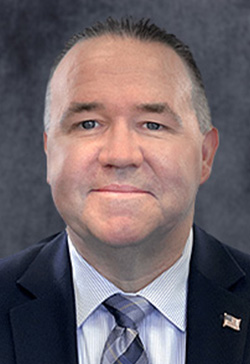
Asm. Alex Sauickie
Sponsored bills
Maddy summaryThis bill prohibits New Jersey health insurance companies and other covered health plans from limiting coverage based on the duration of anesthesia services before, during, or after medical or surgical procedures. It directly affects insurance carriers (including health maintenance organizations and hospital service corporations) by requiring them to cover anesthesia services without time-based restrictions. The law uses standard medical coding (from the American Medical Association) to define anesthesia services, ensuring coverage applies to all procedures where anesthesia is used. It takes effect 90 days after enactment for new or renewed insurance policies.
Maddy summaryThis bill requires New Jersey's Board of Public Utilities (BPU) to prioritize energy security, diversity, and affordability when creating the state's Energy Master Plan. It mandates the BPU to limit variable energy sources (like solar and wind) to no more than 50% of the state's energy portfolio and conduct detailed economic and ratepayer impact analyses for all major energy projects and the Master Plan itself. These analyses must break down costs, include public comment periods, and be published online for 10 years. The bill directly affects the BPU, energy companies seeking project approvals, and ratepayers through these new transparency and analysis requirements.
Maddy summaryThis bill provides supplemental funding from New Jersey's Property Tax Relief Fund to the Department of Education to ensure certain school districts receive at least the same total state aid in the 2021-2022 school year as they did in 2017-2018. It directly affects five named districts (Old Bridge, Freehold, Manalapan-Englishtown, Millstone) plus any district with below-average property valuation per pupil or income per pupil compared to the state average. The key mechanism is a supplemental appropriation to offset potential aid reductions, targeting districts that historically received lower state support. Over 100 districts may qualify under the eligibility criteria, including examples like New Hanover and Roosevelt. The funding is contingent on the 2022 budget being enacted.
Maddy summaryThis bill requires monthly health and fire safety inspections for mobile food establishments (like food trucks, carts, and trailers) operating in New Jersey. It standardizes the inspection process by mandating one health and one fire safety inspection per month at the vendor's base location, replacing the previous system where vendors often faced multiple inspections in a single day across different jurisdictions. Municipalities may charge inspection fees up to the cost of the inspection or the standard fee for non-mobile vendors, and failed inspections must be reported publicly online. The law applies to all mobile retail food operations and aims to create a consistent, efficient regulatory system based on a successful South Jersey model.
Maddy summaryAJR 102 designates March 15 of each year as "Jewish War Veterans Day" in New Jersey. The bill directs the Governor to issue an annual proclamation encouraging public observance of this day to recognize Jewish American military service. It does not create new laws or funding, but formally honors the legacy of Jewish War Veterans of the USA, an organization founded on March 15, 1896, and its ongoing advocacy for veterans' issues.
Maddy summaryThis resolution urges the U.S. Department of Veterans Affairs (VA) to stop using current transportation providers for disabled veterans traveling to New Jersey’s two VA medical centers (in East Orange and Lyons) and instead fund existing county paratransit services or nonprofit organizations like ARC of New Jersey. It directly affects approximately 53,000 disabled veterans in New Jersey who face inadequate transportation, including reports of veterans being stranded for hours or overnight. The key mechanism is redirecting VA funds to expand existing high-quality paratransit networks - already serving seniors and disabled residents - to cover VA medical appointments, rather than relying on underfunded or inconsistent VA-provided services. The resolution has no legal force but requests the VA reconsider its transportation partnerships.
Maddy summaryThis bill (A 1497) requires New Jersey's State Treasurer to develop and implement a zero-based budgeting process for the Governor's annual budget. It directly affects all state spending agencies (like departments and commissions) by mandating they justify every funding request from scratch - not based on prior year spending - starting with the 2020 fiscal year. Key provisions require agencies to submit detailed justifications including goals, cost estimates for current and minimum service levels, stakeholder impacts, and comparisons with similar programs. The process must be fully integrated into the budget preparation by July 1, 2020, as outlined in the bill's requirements for agency submissions. The bill is pending before the Assembly Budget Committee.
Maddy summaryNew Jersey bill A 2890 requires the Commissioner of Community Affairs to add a specific module on warehouse development and high-density development to an existing mandatory training course for local government officials. The course, required for members and alternates of planning boards, zoning boards, and combined boards, must include this new module to address challenges from large warehouse facilities. New members must complete the training within 18 months of joining (6 months for supplemental zoning boards), while current members have 18 months from the course's launch date. The bill aims to better equip local officials to evaluate warehouse projects and their regional impacts, as highlighted in a 2022 state planning document.
Maddy summaryThis bill increases annual payments from New Jersey's Energy Tax Receipts Property Tax Relief Fund to municipalities by $15 million (from $740 million to $755 million) over two years. It directly affects most municipalities (excluding those with a municipal purposes tax rate of $0.10 or less per $100) by requiring them to subtract this additional aid from their property tax levies. The bill also prohibits municipalities from anticipating certain revenue when creating annual budgets. These changes aim to provide more direct property tax relief to local governments through the existing fund, which receives energy-related tax revenues.