

Maddy summaryThis is a symbolic resolution (AR 64) introduced by the New Jersey Assembly. It condemns Hamas's October 7, 2023, terrorist attacks against Israel and reaffirms New Jersey's support for Israel and the Jewish people. The resolution states it will be sent to Israel's U.S. ambassador and New Jersey's congressional representatives. It does not create new laws or policies, but expresses legislative support following the attacks.
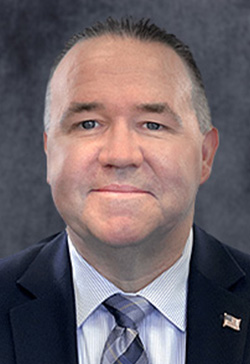
Asm. Alex Sauickie
Sponsored bills
Maddy summaryThis bill creates a "Local Farm Roadway Improvement Fund" to help counties and municipalities fund road projects that address traffic disruptions caused by farm equipment. It allows local governments to apply for grants or loans from this fund to improve roads where slow-moving farm vehicles (like tractors) frequently disrupt traffic flow, such as by adding wider shoulders or designated passing areas. The fund is financed using 7% of existing state highway funds allocated annually, as specified in amended transportation law. The bill directly affects rural communities with agricultural activity and aims to improve safety and traffic efficiency for farm operations.
Maddy summaryThis bill requires the New Jersey Commissioner of Education to appoint a State monitor for school districts receiving 70% or more of their total revenue from state aid, based on the Department of Education's Taxpayers' Guide to Education Spending. The monitor will oversee the district's business operations and personnel matters, with authority matching existing State monitors under the School District Fiscal Accountability Act. It applies to districts like Trenton, Newark, and Camden City, which reported over 70% state funding in the 2022-2023 school year (e.g., Trenton at 86.3%). The law takes effect immediately upon passage.
Maddy summaryThis bill amends New Jersey's brewery licensing laws to permit certain licensed breweries to sell alcoholic beverages by the glass for on-premises consumption in designated salesrooms. Specifically, it expands the "Limited brewery license" (Section 1b) to allow license holders to sell up to 15.5 fluid gallons per person for off-premises consumption and to offer samples, while maintaining existing restrictions on food sales. The provision directly affects licensed breweries seeking to sell directly to consumers in tasting rooms or sales facilities. Note: The bill's title incorrectly references "wineries," but the text applies only to breweries producing malt alcoholic beverages, not wine producers. This bill was withdrawn after being enacted as P.L.2025, c.376.
Maddy summaryThis bill creates a new criminal offense for financial exploitation of elderly individuals in New Jersey. It amends existing criminal statutes to define the offense, specifically targeting situations where someone in a position of trust - like a fiduciary, caregiver, or agent - illegally takes or controls an elderly person's property through deception or coercion. The law establishes clear definitions for terms like "deprive" and "fiduciary" to ensure consistent prosecution. This change directly affects vulnerable seniors and those who exploit them, providing law enforcement with a targeted legal tool to address financial abuse.
Maddy summaryThis bill (A 3502) requires New Jersey's Division of Developmental Disabilities to distribute the National Core Indicators State of the Workforce Survey (or a similar survey) to all eligible service providers for people with developmental disabilities. Service providers that fail to complete the survey face an annual $5,000 fine, collected by the Commissioner of Human Services. The law aims to gather workforce data from these providers to inform state planning and support. It directly affects organizations providing developmental disability services across New Jersey.
Maddy summaryThis bill extends an existing property tax exemption for veterans with 100% service-connected disabilities (such as paraplegia, amputation, or total blindness) and their eligible surviving spouses to include those who pay "payments in lieu of property taxes" in urban renewal areas. It also clarifies that tenant shareholders in cooperative housing can claim the exemption for their proportionate share of taxes, provided the veteran or surviving spouse is the sole beneficiary. The exemption applies to the primary residence and is in addition to other existing property tax benefits, without replacing other available exemptions.
Maddy summaryBill A 2937 establishes the Power Generation Training Center within New Jersey's Department of Labor and Workforce Development to train workers for jobs in nuclear and non-nuclear power generation. The center will develop industry-aligned curricula, offer apprenticeships, and support workforce pipelines for underserved communities and displaced workers through a public-private partnership involving labor unions, utilities, and educational institutions. Key mechanisms include a nine-member governing board (appointed by the Governor and legislative leaders), mandatory annual reporting to the Legislature, and funding from state environmental funds and grants. This bill directly affects workers seeking careers in New Jersey's energy sector and training providers collaborating with the center.
Maddy summaryThis bill limits the duration of emergency orders, rules, or regulations issued by New Jersey's Governor under the Civil Defense Act to 14 days (expiring on the 15th day), unless the Legislature passes a concurrent resolution extending the period. It prohibits the Governor from issuing identical or similar orders for the same emergency after one expires. Exceptions include orders rescinding prior emergency actions, federal compliance requirements, internal government operations, military orders under the Governor's command, or orders under other laws allowing longer terms. The bill applies directly to the Governor's emergency authority and takes immediate effect.
Maddy summaryThis bill provides $500,000 in additional state funding from the General Fund to the Department of Environmental Protection (DEP) for the Township of Fairfield in Essex County to dredge and restore a section of the Passaic River. The funds will cover specific river cleanup activities like dredging, restoration, cleaning, and removing debris, as outlined in a plan the township must submit to the DEP. The DEP must waive permit fees for any work consistent with the approved plan and the Statewide general permit for river restoration. This directly affects Fairfield Township’s river management efforts and requires specific project planning before funds are allocated.