

Maddy summaryThis bill (A 2942) prohibits electric and gas public utilities in New Jersey from charging residential customers a fixed "customer charge" that isn’t based on usage. Such charges cover administrative costs like meter reading, billing, and service line maintenance. The bill directly affects residential utility customers by banning these fixed fees, requiring utilities to base charges only on actual electricity or gas consumption. It takes immediate effect upon enactment.
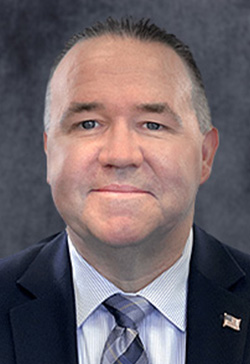
Asm. Alex Sauickie
Sponsored bills
Maddy summaryThis bill creates a loan program administered by New Jersey's Economic Development Authority (NJEDA) to help beginning farmers purchase essential assets. It directly affects new or limited-experience farmers (defined as those with ≤10 years of farming in NJ, low/moderate net worth, or first-time farmers under federal rules) who need capital for agricultural land, farm buildings, or equipment. The program requires applicants to prove farming experience, residency, and plan to use loans solely for farming activities, with NJEDA setting interest rates and eligibility criteria. Loans must finance purchases within New Jersey, and NJEDA may require financial reviews to ensure borrower viability.
Maddy summaryThis New Jersey bill (A2939) provides a $5,000 annual property tax deduction for honorably discharged veterans with a service-connected disability rating below 100%, as certified by the U.S. Department of Veterans Affairs. It directly affects qualifying veterans (and their surviving spouses under specific conditions) who own real property in New Jersey. The deduction reduces their property tax bill by up to $5,000 annually, and if their tax bill is less than $5,000, it is fully canceled. The bill amends existing property tax laws to add this deduction for veterans with disabilities not rated at 100% permanent disability.
Maddy summaryThis bill forgives up to $10 million in outstanding state loans or advances owed by eligible public school districts. It applies to districts that borrowed funds since 2018 to supplement general budgets, including loans under P.L.2018, c.67, or advances under P.L.2006, c.15. The Commissioner of Education and State Treasurer will forgive the debt for qualifying districts, including those with approved applications before the bill's enactment. It directly affects school districts facing budget shortfalls due to state aid reductions, providing immediate financial relief without requiring new spending. The forgiveness covers the principal amount but not interest or fees associated with the borrowed funds.
Maddy summaryThis bill prohibits foreign governments and certain foreign persons from acquiring or owning land within 10 miles of military facilities in New Jersey. Existing foreign owners of such "protected land" must sell or transfer ownership to a U.S. entity within five years of the law's effective date. Limited exceptions allow temporary ownership for debt-related acquisitions (requiring sale within two years) or inheritance, but not for new purchases. The law does not apply to foreign entities covered by U.S. treaties.
Maddy summaryThis bill creates a new exclusion from New Jersey's gross income tax and corporation business tax for certain small business income. It directly affects qualifying small businesses by allowing them to exclude specific income from their taxable base under these two tax codes. The key mechanism establishes a defined exclusion for small business income while revising statutory definitions related to tax calculations, such as "net worth" and "taxpayer." The bill does not specify exact income thresholds but provides the framework for excluding qualifying small business revenue from state taxation.
Maddy summaryThis New Jersey bill (A 946), now law as P.L.2025, c.177, requires mental health services to be provided in the communication method preferred by each deaf or hard of hearing individual - such as sign language or oral communication - based on their assessment. It mandates that mental health professionals be fluent in that method, trained in cultural needs, and able to collaborate with interpreters. The law also requires a state resource guide listing specialized mental health services and ensures individuals can help shape their own care plans. It directly affects all deaf or hard of hearing residents seeking mental health support in New Jersey, addressing long-standing barriers in access and care quality.
Maddy summaryThis bill (A 901, "Max's Law") requires New Jersey public school districts to include age-appropriate instruction on the dangers of fentanyl and xylazine in health education for students in grades 6-12. Key provisions mandate teaching specific topics like abuse prevention, poisoning symptoms, emergency response, and legal protections for seeking help, using resources from federal agencies like the CDC and DEA. The bill also requires the state education department to provide resources, maintain online materials for schools and parents, and submit annual reports on the curriculum's effectiveness. The bill was withdrawn after being approved as P.L.2025, c.278.
Maddy summaryThis bill creates a three-year pilot program offering tax credits to New Jersey commercial farms that donate edible fruits and vegetables to local charities. Farm operators can claim a 50% credit (up to $5,000 per donation period) against their corporation business tax or gross income tax for the wholesale value of donated produce. To qualify, farms must obtain written verification from charities detailing the donation’s variety, grade, quantity, and value, with the Secretary of Agriculture setting monthly wholesale value rates. The program caps total annual credits at $100,000 and requires donations to be documented through a standardized form. It directly affects commercial farms and qualifying charities, aiming to incentivize food donations while reducing tax liability.
Maddy summaryThis bill creates a New Jersey program to help reproductive health care professionals reduce student loan debt. It appropriates $5 million to redeem up to $200,000 in qualifying student loans for eligible providers who work at approved sites (including abortion providers) for 1-4 years. Participants earn 18% loan redemption after one year of service, increasing to 26%, 28%, and 28% for subsequent years. The program prioritizes providers in counties with shortages of reproductive health services, targeting areas where abortion access is limited. It directly affects licensed professionals providing reproductive health care, including abortion services, within the state.