Issue · Healthcare

Healthcare

Every healthcare bill, vote, and legislator stance in New Jersey, automatically classified by Maddy, our AI policy reader.

Total bills
1,685
2026-2027 Regular Session
Top supporter
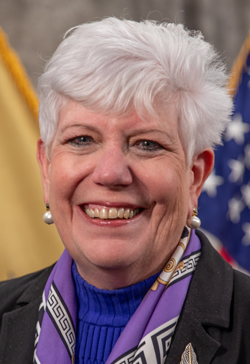
Maureen Rowan
100% support rate
Top opponent
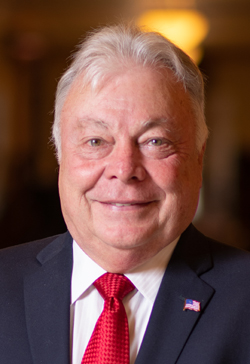
Bob Auth
6% support rate
Ranked legislators
10
5 support · 5 oppose
Key legislators

Who's moving healthcare in New Jersey

Legislators moving healthcare in New Jersey
Legislator Party Stance Support rate Decisive votes
Maureen Rowan
Maureen Rowan House · District 2
D
Strong +
100% 15
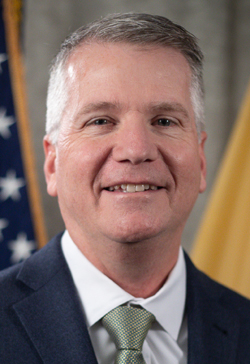
Jim Beach
Jim Beach Senate · District 6
D
Strong +
100% 14
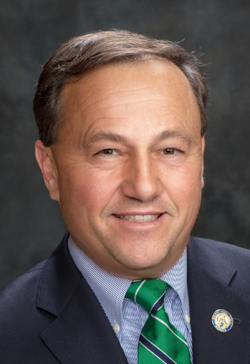
Marisa Sweeney
Marisa Sweeney House · District 25
D
Strong +
100% 14
Anthony Angelozzi
Anthony Angelozzi House · District 8
D
Strong +
100% 13
Dave Bailey
Dave Bailey House · District 3
D
Strong +
100% 13
Bob Auth
Bob Auth House · District 39
R
Strong −
6% 18
John DiMaio
John DiMaio House · District 23
R
Strong −
10% 10
Paul Kanitra
Paul Kanitra House · District 10
R
Strong −
10% 10
Erik Peterson
Erik Peterson House · District 23
R
Strong −
12% 17
Joe Pennacchio
Joe Pennacchio Senate · District 26
R
Strong −
13% 15
Showing 901–910 of 1,685 bills

All healthcare bills

in committee · New Jersey · General Assembly Jan 13, 2026

A 2604: Requires private health insurers, SHBP, SEHBP, Medicaid, and NJ FamilyCare to cover wigs under certain circumstances.

This bill requires private health insurers, the State Health Benefits Program (SHBP), State Employees Health Benefits Program (SEHBP), Medicaid, and NJ FamilyCare to cover the cost of wigs when prescribed by a dermatologist, oncologist, or physician for medical reasons. Insurers must cover wigs as "durable medical equipment" for subscribers diagnosed with illness, chronic conditions, or injury, provided the doctor certifies medical necessity. Coverage is limited to once every 36 months and cannot be restricted to chemotherapy patients only. The law applies to all health insurance contracts delivered, issued, or renewed in New Jersey after its effective date.
Sub-Topics Insurance Medicaid
in committee · New Jersey · General Assembly Jan 13, 2026

A 1243: Grants municipal courts discretion to assess court costs for certain dismissals.

This bill (A 1243) allows New Jersey municipal courts to charge court costs for traffic violations (Title 39) dismissed through plea agreements. It directly affects people charged with traffic offenses who resolve cases via such agreements. The key provision permits courts to assess specific fees: $2 per violation (to the Automated Traffic System Fund), $0.50 per fine (to the Emergency Medical Technician Training Fund), and $3 per violation (to the Automated Traffic System Modernization Fund), up to a $33 total. These fees, previously only applied to unresolved cases, are now extendable to dismissed charges under the court's discretion. The change shifts some court funding responsibility from local taxpayers to those with dismissed traffic violations.
in committee · New Jersey · General Assembly Jan 13, 2026

A 1847: Prohibits health care professionals from providing gender-affirming health care services to persons under 21 years of age.

New Jersey's A-1847 prohibits licensed health care professionals (including doctors, nurses, and therapists) from providing gender-affirming medical care - such as hormone therapy or surgery - to individuals under 21 years old. The bill defines these services as medical, surgical, or therapeutic care related to gender identity, excluding mental health or psychiatric services. Violations would result in professional disciplinary action under existing laws. The law takes immediate effect and applies to all covered health care providers statewide.
Sub-Topics Mental Health
in committee · New Jersey · General Assembly Jan 13, 2026

A 998: Directs DHS to establish Children's Partial Hospitalization Pilot Program.

This bill establishes a 36-month pilot program allowing New Jersey's NJ FamilyCare health insurance program to reimburse non-hospital-based partial hospitalization services for children aged 5-14 with mental health needs. It directly affects low-income children requiring intensive outpatient mental health care and providers who can apply to participate. The key provision changes current reimbursement rules - previously requiring services to occur in a hospital - to permit care at non-hospital locations, while maintaining all other federal and state eligibility requirements. The program requires the Department of Human Services to select one provider, monitor outcomes, and report findings to the Governor and Legislature within 36 months of selection.
in committee · New Jersey · General Assembly Jan 13, 2026

A 2946: "Iryna's Law"; establishes process for evaluating certain defendants in need of involuntary commitment in lieu of pretrial detention; establishes aggravating factor for offense committed in certain public places.

Iryna's Law (A 2946) creates a process for prosecutors to request mental health screenings for eligible defendants with mental illness who pose a danger to self or others, potentially avoiding pretrial jail detention. It allows prosecutors to file motions after arrest to immediately transport such defendants to a screening service, which determines if they need involuntary mental health treatment instead of pretrial detention. The law applies to defendants not previously involuntarily committed within the past three years and establishes an aggravating factor for offenses committed in certain public places. This directly affects defendants facing charges who may qualify for mental health evaluation rather than standard pretrial detention. The bill amends New Jersey's pretrial release and sentencing statutes to prioritize mental health assessment for specific cases.
in committee · New Jersey · General Assembly Jan 13, 2026

A 3800: Requires institutions of higher education to maintain supply of naloxone hydrochloride nasal spray for opioid overdose emergencies and permits emergency administration of naloxone hydrochloride nasal spray by licensed campus medical professionals and resident assistants.

This bill requires New Jersey colleges to keep naloxone nasal spray in secure, accessible locations across campus residence halls for opioid overdose emergencies. It permits licensed medical staff (like nurses or doctors) and trained resident assistants to administer the medication during suspected overdoses, based on their good-faith belief. Institutions must develop policies designating a medical supervisor, requiring staff training on proper administration and overdose prevention, and mandating hospital transport after naloxone use - even if symptoms improve. The law also provides liability protection for good-faith actions by medical staff, resident assistants, or pharmacists following the bill's guidelines.
in committee · New Jersey · General Assembly Jan 13, 2026

AR 97: Urges Attorney General to require training for law enforcement regarding the developmentally disabled and persons with behavioral health crises.

This non-binding resolution urges New Jersey's Attorney General to establish mandatory in-service training for all state law enforcement officers. It specifically recommends requiring a minimum of two hours of training every three years focused on interacting with developmentally disabled individuals and those experiencing behavioral health crises. The resolution notes that while basic officer training includes some awareness of these topics, statewide mandatory in-service requirements are currently lacking. It suggests using free NJLearn programs as a potential training resource and recommends guidelines for implementation. As a resolution, it does not create new law but seeks to influence training standards for law enforcement.
Sub-Topics Law Enforcement Mental Health Tags People with Disabilities
in committee · New Jersey · General Assembly Jun 30, 2026

A 4357: Extends certain pay parity regarding telemedicine and telehealth.*

This bill permanently requires New Jersey health insurance carriers to pay the same reimbursement rate for telemedicine and telehealth services as they do for in-person visits, provided the service is otherwise covered. It ensures patients face no higher deductibles, copays, or coinsurance for telehealth compared to in-person care. The law prohibits insurers from restricting where telehealth services can occur, limiting which technology platforms providers can use, or denying coverage for routine remote monitoring. It directly affects health insurance companies, healthcare providers offering telehealth, and patients receiving covered telehealth services. The policy change applies to all health benefits plans in New Jersey without time limits.
Sub-Topics Insurance Telehealth
in committee · New Jersey · General Assembly Jan 13, 2026

A 2859: Establishes Military-Connected Student Mental Health Grant Program; appropriates $1 million.

This bill establishes a $1 million grant program to expand mental health services for military-connected students in New Jersey school districts. It targets districts with high concentrations of students who have parents or guardians serving in the military (active duty, National Guard, or reserves), requiring applicants to demonstrate this concentration and outline their specific mental health needs. Grant funds can be used for counseling, outreach, and improving existing mental health services for these students, particularly during parental deployments. School districts receiving grants must report annually on service usage and outcomes, and the Department of Education must submit a program evaluation to the Governor and Legislature within two years.
in committee · New Jersey · General Assembly Jan 13, 2026

A 2728: Requires State Long-Term Care Ombudsman to assign paid or volunteer advocates to long-term care facilities; makes appropriation.

This bill requires New Jersey's State Long-Term Care Ombudsman to assign paid or volunteer advocates to work directly at long-term care facilities. These advocates must conduct in-person visits with residents to help address their financial, health, legal, and social needs. The bill mandates an appropriation from the General Fund to cover the costs of these assigned advocates. It directly affects residents of long-term care facilities by ensuring they have on-site support to advocate for their needs. The policy change is a concrete requirement for the ombudsman's office to implement, funded by the state.
Showing 901 to 910 of 1,685 bills
Previous 1 … 90 91 92 … 169 Next