Issue · Healthcare

Healthcare

Every healthcare bill, vote, and legislator stance in New Jersey, automatically classified by Maddy, our AI policy reader.

Total bills
1,685
2026-2027 Regular Session
Top supporter
Maureen Rowan
100% support rate
Top opponent
Bob Auth
6% support rate
Ranked legislators
10
5 support · 5 oppose
Key legislators

Who's moving healthcare in New Jersey

Legislators moving healthcare in New Jersey
Legislator Party Stance Support rate Decisive votes
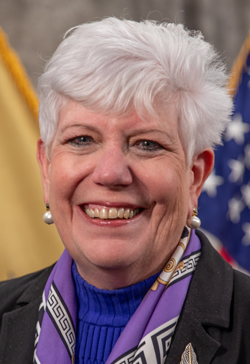
Maureen Rowan
Maureen Rowan House · District 2
D
Strong +
100% 15
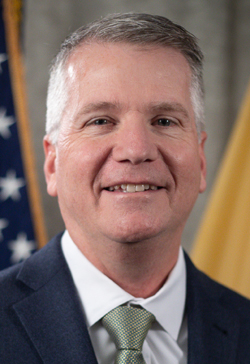
Jim Beach
Jim Beach Senate · District 6
D
Strong +
100% 14
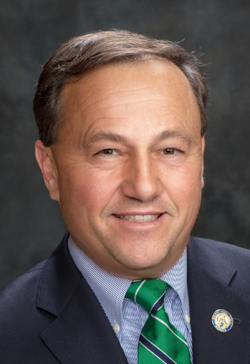
Marisa Sweeney
Marisa Sweeney House · District 25
D
Strong +
100% 14
Anthony Angelozzi
Anthony Angelozzi House · District 8
D
Strong +
100% 13
Dave Bailey
Dave Bailey House · District 3
D
Strong +
100% 13
Bob Auth
Bob Auth House · District 39
R
Strong −
6% 18
John DiMaio
John DiMaio House · District 23
R
Strong −
10% 10
Paul Kanitra
Paul Kanitra House · District 10
R
Strong −
10% 10
Erik Peterson
Erik Peterson House · District 23
R
Strong −
12% 17
Joe Pennacchio
Joe Pennacchio Senate · District 26
R
Strong −
13% 15
Showing 801–810 of 1,685 bills

All healthcare bills

in committee · New Jersey · General Assembly Feb 19, 2026

A 4261: Requires DHS to develop enhanced training curriculum for direct support professionals.

This bill requires New Jersey's Department of Human Services (DHS) to create a mandatory training program for direct support professionals working with individuals with developmental disabilities in community settings. The training, to be developed within 120 days of the bill's effective date, must be completed by new hires within 90 days of starting work or by current employees within 210 days. Key required topics include abuse/neglect prevention, first aid, CPR, medication administration, facility policies, and specialized care for conditions like seizures, multiple sclerosis, and behavioral health needs. The bill directly affects DHS, direct support professionals, and the individuals they serve in community residences.
Sub-Topics Mental Health
in committee · New Jersey · General Assembly Jan 13, 2026

A 355: Provides gross income tax credit for donations to eligible schools to assist in funding of student meals, medical supplies, and playground equipment.

This bill provides a nonrefundable 10% tax credit for New Jersey taxpayers who donate to eligible schools for specific purposes. It allows credits up to $500 per year for donations funding student meal programs, medical supplies for student treatment, or playground equipment (including shade structures). The credit applies to donations made to public or nonpublic elementary/secondary schools, with taxpayers required to obtain written documentation from the school to claim the credit. The bill takes effect immediately upon enactment.
Sub-Topics Income Tax Tax Credits
in committee · New Jersey · General Assembly Jan 13, 2026

A 3471: Requires AOC to release domestic violence central registry records to certain health care practitioners.

This bill requires New Jersey's Administrative Office of the Courts (AOC) to share domestic violence registry records with specific licensed healthcare providers. It directly affects healthcare professionals (like doctors, nurses, and therapists) who have a legal duty to warn patients about potential violence under existing law. The key change expands current access rules to allow these providers to view the registry when they have a duty to protect a patient from domestic violence. Records remain confidential and can only be used for this specific safety purpose, with violations punishable as a fourth-degree crime.
Sub-Topics Domestic Violence
in committee · New Jersey · General Assembly Jan 13, 2026

A 289: Requires health care practitioners prescribing opioid medications to limit amount of prescribed medication to seven-day supply, except in certain circumstances.

This bill would require doctors to prescribe no more than a seven-day supply of opioid pain medications for new patients with acute pain (short-term pain like injuries or surgery), except in specific cases. Doctors must also discuss addiction risks with patients, document medical history and pain management plans, and obtain patient agreements for long-term opioid use. It applies to initial opioid prescriptions for acute pain but excludes chronic pain, cancer care, hospice, or end-of-life treatment. The law aims to reduce opioid overuse by limiting initial doses and improving patient education, with additional review requirements for prescriptions lasting three months or longer.
Sub-Topics Substance Abuse
in committee · New Jersey · General Assembly Mar 16, 2026

A 3590: Requires DOLWD to identify and recruit unemployed individuals for employment in healthcare facilities, home care services, and hospice services; makes appropriation.

This bill requires New Jersey's Department of Labor and Workforce Development (DOLWD) to create a program identifying and recruiting unemployed residents for jobs in healthcare facilities, home care, and hospice services. It mandates that the recruitment process evaluate training feasibility for specific roles, consider job proximity to applicants' homes and transportation options, and address immediate barriers to employment. The bill appropriates $250,000 from the state General Fund to fund training programs and resources, using existing DOLWD infrastructure. It directly affects unemployed individuals seeking healthcare sector employment and healthcare stakeholders collaborating with DOLWD.
passed · New Jersey · General Assembly May 18, 2026

A 1502: "Patient and Provider Protection Act."

This bill regulates pharmacy benefits managers (PBMs) and insurance carriers to increase transparency and fairness in prescription drug coverage. It requires carriers and PBMs to establish pharmacy and therapeutics committees with strict conflict-of-interest rules, prohibits commission-based PBM compensation (mandating flat fees instead), and mandates detailed reporting of PBM fees for insurance filings. The law directly affects insurers, PBMs, and pharmacies by changing how drug formularies (approved drug lists) are managed and how PBM costs are calculated and disclosed. Key provisions include banning preferential formulary placement for higher-cost drugs over lower-cost generics/biosimilars and requiring actuarial documentation for PBM compensation. The bill aims to reduce patient cost-sharing and ensure PBM compensation aligns with administrative costs.
Sub-Topics Prescription Drugs
in committee · New Jersey · General Assembly Jan 13, 2026

A 3138: Establishes "Count the Kicks" public awareness campaign.

This bill requires New Jersey's Commissioner of Health to create a "Count the Kicks" public awareness campaign. It directly affects pregnant women in New Jersey by providing information on tracking fetal movements in the third trimester, including why movement matters for fetal health, how to monitor kicks per medical guidelines, and the correlation between tracking and reduced stillbirth risk. The campaign must be available online in English and Spanish and distributed through healthcare providers, WIC centers, pharmacies, libraries, and community organizations. The Commissioner must also report on the campaign's progress to the Governor and Legislature within two years. The bill takes effect immediately upon passage.
in committee · New Jersey · General Assembly Jan 13, 2026

A 2217: Codifies authority for certain health care providers to provide abortions and clarifies certain operational requirements for abortion facilities.

This bill codifies current regulations allowing more healthcare providers (including nurse practitioners and physician assistants) to perform abortions in New Jersey, which has been permitted since 2021. It removes medically unnecessary facility requirements that increase costs and create barriers to care, such as excessive licensing rules. The bill amends licensing statutes to clarify that abortion facilities must meet basic safety standards but eliminates non-essential mandates that don't improve patient health. This change directly affects abortion providers and patients seeking timely, affordable reproductive care across the state.
in committee · New Jersey · General Assembly Jan 13, 2026

A 1014: Establishes "Kidney Disease Prevention and Education Task Force."

Bill A 1014 establishes a 11-member "Kidney Disease Prevention and Education Task Force" within New Jersey's Department of Health. The task force will develop public awareness campaigns about early kidney disease detection, examine racial disparities in kidney care access and outcomes, and recommend statewide screening and treatment plans. It includes legislative leaders, health officials, and public members such as a nephrologist, dialysis center representative, and a patient with kidney disease (Stages 2-4). The task force must submit a report to the Governor and Legislature within two years, after which it will dissolve. This bill directly affects New Jersey residents, particularly those in communities disproportionately impacted by kidney disease, including Black and Hispanic populations.
Sub-Topics Public Health
in committee · New Jersey · General Assembly Jan 13, 2026

A 1916: Requires DOH to establish maternity care evaluation protocols.

This bill requires New Jersey's Department of Health (DOH) to create standardized protocols for hospitals and licensed birthing centers to collect and report detailed, de-identified data on maternity care. The data must cover specific metrics like maternal health conditions (e.g., hypertension, hemorrhage), delivery methods (e.g., induction timing, cesarean rates), and infant outcomes (e.g., birth weight, complications). The DOH will annually evaluate this data to set statewide benchmarks, identify quality improvement opportunities, and compare hospital performance. Results and recommendations must be reported to the Governor and Legislature yearly, aiming to enhance maternal and infant health outcomes through data-driven care.
Showing 801 to 810 of 1,685 bills
Previous 1 … 80 81 82 … 169 Next