Issue · Healthcare

Healthcare

Every healthcare bill, vote, and legislator stance in New Jersey, automatically classified by Maddy, our AI policy reader.

Total bills
1,685
2026-2027 Regular Session
Top supporter
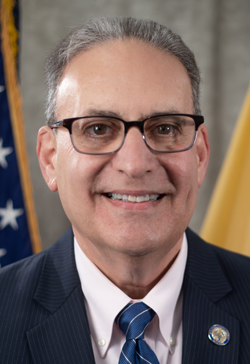
Jim Beach
100% support rate
Top opponent
Bob Auth
8% support rate
Ranked legislators
10
5 support · 5 oppose
Key legislators

Who's moving healthcare in New Jersey

Legislators moving healthcare in New Jersey
Legislator Party Stance Support rate Decisive votes
Jim Beach
Jim Beach Senate · District 6
D
Strong +
100% 14
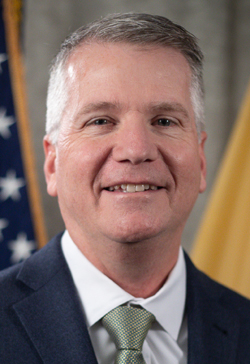
Roy Freiman
Roy Freiman House · District 16
D
Strong +
100% 11
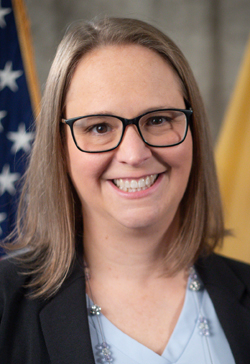
Dave Bailey
Dave Bailey House · District 3
D
Strong +
100% 10
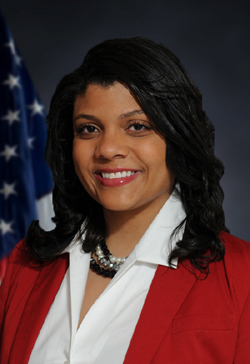
Andrea Katz
Andrea Katz House · District 8
D
Strong +
100% 9
Britnee Timberlake
Britnee Timberlake Senate · District 34
D
Strong +
100% 9
Bob Auth
Bob Auth House · District 39
R
Strong −
8% 12
Erik Peterson
Erik Peterson House · District 23
R
Strong −
8% 12
John Azzariti
John Azzariti House · District 39
R
Strong −
10% 10
John DiMaio
John DiMaio House · District 23
R
Strong −
10% 10
Paul Kanitra
Paul Kanitra House · District 10
R
Strong −
11% 9
Showing 1,301–1,310 of 1,685 bills

All healthcare bills

in committee · New Jersey · Senate Jan 13, 2026

S 836: Requires 10 percent increase in respite care services for eligible individual under State Respite Care Program with implantable cardioverter defibrillator and enrolled in NJ FamilyCare.

This bill increases the maximum annual respite care funding limit by 10% for individuals enrolled in NJ FamilyCare who have an implantable cardioverter defibrillator (ICD). It specifically raises the current $6,559.63 annual cap to $7,215.60 for this subgroup, ensuring they receive 10% more respite care services than the standard limit. The policy directly affects eligible New Jersey residents with ICDs who qualify for NJ FamilyCare (the state's Medicaid program). The change modifies existing funding rules under the Statewide Respite Care Program without creating new eligibility criteria or services.
Sub-Topics Medicaid
in committee · New Jersey · Senate Jan 28, 2026

S 3212: "New Jersey Pharmacy Fair Reimbursement and Anti-Steering Act."

This bill requires pharmacy benefits managers (PBMs) operating in New Jersey to annually report detailed financial data to the state Division of Insurance. Specifically, PBMs must disclose minimum/maximum wholesale drug prices, negotiated rebates, volume data, spread pricing revenue, and prior authorization metrics for each drug or drug group. These reports directly affect PBMs and the pharmacies that contract with them, as they increase transparency around drug pricing and rebates. The data will help the state monitor pricing practices and ensure fair reimbursement for pharmacies under insurance plans.
Sub-Topics Prescription Drugs
in committee · New Jersey · Senate Jan 13, 2026

S 2381: "New Jersey Disability Savings Act."

This bill creates the "New Jersey Disability Savings Act" to expand tax benefits for individuals with disabilities who use ABLE accounts. It provides a one-time $750 state match for new ABLE account deposits (for taxpayers earning $150,000 or less) and allows full state income tax deductions for all contributions to qualifying ABLE accounts. The program directly affects New Jersey residents with disabilities (or their families) who open ABLE accounts for disability-related expenses like housing, education, or medical costs. Funding for the matching grant depends on annual state appropriations, with the Department of Human Services handling allocation if funds are limited.
Sub-Topics Income Tax
in committee · New Jersey · Senate Jan 13, 2026

S 337: Authorizes reimbursement for EMT training from EMT Training Fund for certain volunteer firefighters.

This bill expands reimbursement eligibility under New Jersey's Emergency Medical Technician (EMT) Training Fund to include volunteer firefighters seeking EMT certification or recertification. Previously, only volunteer ambulance, first aid, and rescue squad members received reimbursement for training costs; this bill explicitly adds volunteer fire company members to the covered groups. The fund will reimburse certified training providers for EMT-A, EMT-D, and epinephrine auto-injector training, prioritizing EMT-A certification first. It also prohibits training organizations from charging fees to volunteer members of these groups.
in committee · New Jersey · Senate Jan 13, 2026

S 2987: Requires automatic registration with New Jersey Immunization Information System upon administration of vaccine for certain persons who consent to registration.

This bill requires automatic enrollment in New Jersey's Immunization Information System (NJIIS) for individuals receiving vaccines, unless they or their parent/guardian provides a written opt-out. It directly affects all New Jersey residents getting vaccinated, including newborns (automatically enrolled unless parents opt out) and others (enrolled at time of vaccination unless they or their parent/guardian opt out). Key provisions include: mandatory enrollment upon vaccine administration for non-registered individuals, written opt-out requirements, and allowing the health commissioner to override opt-outs during public health emergencies. The registry aims to track vaccination records for public health purposes like outbreak response and school enrollment verification, while ensuring access to health providers and allowing individuals to review/correct their records.
Sub-Topics Public Health
in committee · New Jersey · Senate Jan 13, 2026

S 788: Enters New Jersey into Audiology and Speech-Language Pathology Interstate Compact.

S 788 enters New Jersey into the Audiology and Speech-Language Pathology Interstate Compact, allowing licensed professionals in these fields to practice across participating states without obtaining separate licenses. The bill directly affects audiologists and speech-language pathologists licensed in New Jersey, enabling them to serve patients in other member states where the patient is located during care. Key provisions include mutual recognition of licenses, sharing of disciplinary information between states, support for military spouses relocating, and integration of telehealth services. This compact preserves each state's regulatory authority while expanding access to these healthcare services across state lines. The bill is procedural and does not change current licensing requirements within New Jersey.
Sub-Topics Telehealth
in committee · New Jersey · Senate Jan 13, 2026

S 2729: Creates Midwifery Licensing Act; modifies regulation of midwifery.

S 2729, the Midwifery Licensing Act, creates a new State Board of Midwives to regulate midwifery practice in New Jersey, replacing the current system where midwifery was overseen by the State Board of Medical Examiners. The bill establishes an 11-member board with specific representation requirements, including seven midwives (with defined categories), two physicians (OB/GYN and pediatrics), a public member, and an executive branch representative. This legislation directly affects licensed midwives - certified midwives (CM), certified nurse midwives (CNM), and certified professional midwives (CPM) - by shifting their regulatory oversight to a dedicated board. The key policy change is the creation of a specialized licensing framework to modernize midwifery regulation, as the current statutes governing midwifery are described as outdated.
in committee · New Jersey · Senate Jan 13, 2026

S 1700: Requires clinic connected with dental school at public institution of higher education to give priority to 100 percent disabled veterans.

S 1700 requires dental clinics affiliated with public university dental schools (like Rutgers School of Dental Medicine) to give priority scheduling to 100% disabled veterans seeking oral health services. It directly affects veterans certified as permanently 100% disabled by the U.S. Department of Veterans Affairs who live in New Jersey. The key provision mandates that clinics must schedule appointments for these veterans within 30 days of request, ensuring timely access to care. The law takes immediate effect and directs the Department of Military and Veterans Affairs to create implementing rules.
in committee · New Jersey · Senate Jan 13, 2026

S 2048: Establishes loan redemption program and gross income tax credit for mental health professionals who serve children and adolescents.

This bill creates a program to help mental health professionals working with children and adolescents in New Jersey reduce student loan debt. It provides two direct financial incentives: (1) up to $1,000 per year in loan redemption payments (capped at four years total) for licensed professionals employed full-time in this field, and (2) a $1,000 tax credit against state income tax for qualifying professionals. To qualify, participants must be New Jersey residents, hold relevant licenses, maintain full-time employment serving minors, and have outstanding eligible student loans. The program is administered by the Higher Education Student Assistance Authority and requires annual proof of residency and employment. The bill is pending before the Senate Higher Education Committee.
in committee · New Jersey · Senate Jan 13, 2026

S 517: Prohibits pharmacies from charging additional fee for processing prescriptions transmitted by telephone or electronic means.

This New Jersey bill (S 517) prohibits pharmacies from charging extra fees for processing prescriptions sent by phone or electronically, unless the same fee applies to written prescriptions. It directly affects pharmacies (by restricting their ability to add processing fees for electronic/phone prescriptions) and patients (who would no longer face these additional costs). The key provision requires pharmacies to treat electronic/phone prescriptions the same as paper ones regarding fees, promoting consistency. The bill focuses solely on this fee structure change, without altering prescription requirements or other policy elements.
Showing 1,301 to 1,310 of 1,685 bills