Issue · Healthcare

Healthcare

Every healthcare bill, vote, and legislator stance in New Jersey, automatically classified by Maddy, our AI policy reader.

Total bills
1,685
2026-2027 Regular Session
Top supporter
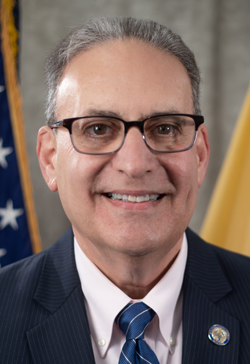
Jim Beach
100% support rate
Top opponent
Bob Auth
8% support rate
Ranked legislators
10
5 support · 5 oppose
Key legislators

Who's moving healthcare in New Jersey

Legislators moving healthcare in New Jersey
Legislator Party Stance Support rate Decisive votes
Jim Beach
Jim Beach Senate · District 6
D
Strong +
100% 14
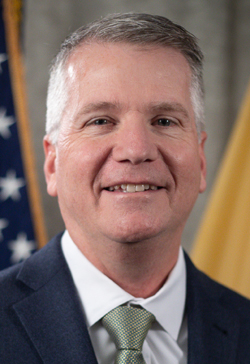
Roy Freiman
Roy Freiman House · District 16
D
Strong +
100% 11
Dave Bailey
Dave Bailey House · District 3
D
Strong +
100% 10
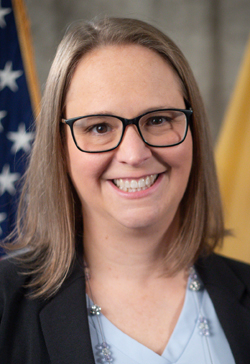
Andrea Katz
Andrea Katz House · District 8
D
Strong +
100% 9
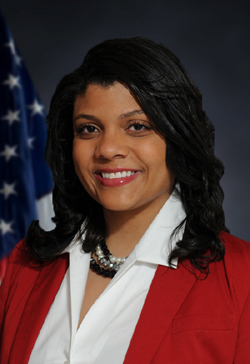
Britnee Timberlake
Britnee Timberlake Senate · District 34
D
Strong +
100% 9
Bob Auth
Bob Auth House · District 39
R
Strong −
8% 12
Erik Peterson
Erik Peterson House · District 23
R
Strong −
8% 12
John Azzariti
John Azzariti House · District 39
R
Strong −
10% 10
John DiMaio
John DiMaio House · District 23
R
Strong −
10% 10
Paul Kanitra
Paul Kanitra House · District 10
R
Strong −
11% 9
Showing 1,311–1,320 of 1,685 bills

All healthcare bills

in committee · New Jersey · Senate Jan 13, 2026

S 1432: Establishes New Jersey Center for Study and Prevention of Suicide at Rutgers School of Public Health.

This bill establishes the New Jersey Center for the Study and Prevention of Suicide at Rutgers School of Public Health. The center will research suicide causes, prevention methods, and treatment approaches - including individual, community, and societal factors - and work with state policymakers to develop evidence-based programs. It will recruit new researchers, run a competitive grant program for suicide research, and submit annual reports to the Governor and Legislature on its activities and funding. The bill requires annual state funding for the center and allows it to accept additional grants or donations for suicide-related research.
in committee · New Jersey · Senate Jan 13, 2026

S 2658: "Homeless Bill of Rights."

This New Jersey bill establishes the "Homeless Bill of Rights," prohibiting discrimination against homeless individuals in public spaces, services, and employment. It guarantees specific rights including free movement in public areas (sidewalks, parks, transit), equal treatment by government agencies, protection from employment discrimination due to lacking a permanent address, access to emergency medical care and voting without housing status bias, and privacy for shelter records. The bill also ensures homeless individuals can use service dogs in shelters and allows legal action for violations, with remedies including damages and attorney fees. It directly affects all homeless residents interacting with public services or spaces across New Jersey. The bill is pending in the Senate Health Committee.
in committee · New Jersey · Senate Jan 13, 2026

S 2492: Increases access to substance use disorder treatment; Requires Medicaid coverage for substance use disorder services provided by community-based organizations.

This bill requires New Jersey's Medicaid program to cover substance use disorder treatment services provided by community-based organizations (CBOs), directly expanding access for Medicaid recipients. It establishes new standards for opioid treatment programs, including allowing "medication units" (geographically separate clinics or mobile units) to administer medication-assisted treatment like methadone or buprenorphine. The bill also prohibits treatment programs from denying care based on a patient's refusal of counseling or missing doses, and sets limits on mandatory drug screenings. These changes aim to make treatment more accessible while maintaining clinical standards for opioid use disorder care.
in committee · New Jersey · Senate Jan 13, 2026

S 3123: Prohibits pre-approval or precertification of medical tests, procedures and prescription drugs covered under health benefits or prescription drug benefits plans.

This bill prohibits health insurers, third-party administrators, pharmacy benefits managers, and state health benefit programs (like the State Health Benefits Program and School Employees’ Health Benefits Program) from requiring pre-approval or precertification for covered medical tests, procedures, or prescription drugs. It directly affects patients and healthcare providers by removing insurance company barriers that previously delayed care. The key provision states that payment for covered services must be made without pre-approval if the service is prescribed by a licensed provider and included in the plan. The bill applies to all health and prescription drug plans issued or purchased on or after its effective date. It aims to streamline access to medically necessary treatments by ensuring insurers pay for doctor-recommended care without bureaucratic delays.
Sub-Topics Prescription Drugs
in committee · New Jersey · Senate Jan 13, 2026

S 1792: Establishes program to subsidize purchase price of medical cannabis for registered qualifying patients enrolled in Medicaid or NJ FamilyCare programs.

This bill, S 1792, creates a funding mechanism to subsidize medical cannabis costs for Medicaid and NJ FamilyCare enrollees. It amends the Cannabis Regulatory Fund to allocate monies specifically for reimbursing dispensaries and clinical registrants who provide discounted or subsidized cannabis to qualifying patients. The key provision requires the Cannabis Regulatory Commission to reimburse these providers for the cost difference between the standard price and the subsidized price paid by enrolled patients. The bill is pending before the Legislature and has not yet been enacted.
Sub-Topics Medicaid
in committee · New Jersey · Senate Jan 13, 2026

S 2222: Establishes requirements to screen certain people who are pregnant and who have given birth for endometriosis.

This bill requires hospitals, birthing centers, and healthcare providers in New Jersey to screen pregnant people or those who recently gave birth (within six weeks) for endometriosis if they were diagnosed with preeclampsia and later show symptoms. Providers must first give patients education about endometriosis and its warning signs, then obtain written consent for screening (or document a written refusal using a standardized form). If screening is positive, providers must discuss results and develop a treatment plan to manage endometriosis risks. The Commissioner of Health will create the educational program and screening guidelines in consultation with the Endometriosis Foundation of America.
Sub-Topics Women's Health
in committee · New Jersey · Senate Jan 13, 2026

S 2125: Requires DCF to publish and disseminate information on early childhood mental health to certain professionals.

This bill requires New Jersey's Department of Children and Families (DCF) to publish and share early childhood mental health information on its website and distribute it directly to social workers, teachers, and child care workers who primarily serve children under age 5. The information must cover three key areas: raising awareness about early mental health, properly sharing concerns with parents/guardians, and connecting families to state or community resources for mental health assessments. DCF may also offer in-service training for these professionals on the shared materials. The law aims to equip frontline workers with consistent, accessible resources to support young children's mental health needs.
Sub-Topics Mental Health
in committee · New Jersey · Senate Jan 13, 2026

S 2639: Permits nursing services in nonpublic schools to be delivered by licensed medical professionals, including licensed practical nurses.

This bill amends New Jersey law to allow licensed practical nurses (LPNs) and other licensed medical professionals to provide nursing services in nonpublic schools, expanding beyond the previous requirement that only registered nurses could deliver these services. It directly affects nonpublic schools (like private or religious schools) and their nursing staff by permitting LPNs to conduct required services such as dental screenings, hearing exams, scoliosis screenings for students aged 10-18, and maintaining health records. The bill maintains existing requirements for specific health services while updating who can deliver them, ensuring services align with each professional’s scope of practice. It takes effect immediately upon enactment.
in committee · New Jersey · Senate Jan 13, 2026

S 455: Makes certain amendments to expungement statutes to reduce filing burdens and expand eligibility.

This bill (S 455) is mislabeled in its title; the actual text amends **special probation rules for substance use disorder cases**, not expungement statutes. It creates a new "special probation" option for individuals with substance use disorders convicted of certain offenses (excluding serious violent crimes), requiring a court to assess their condition, confirm the offense was drug/alcohol-related, and ensure no prior violent convictions. If approved, offenders must enter licensed residential or nonresidential treatment (including medication-assisted therapy) with regular drug testing, replacing incarceration. The bill directly affects people with substance use disorders who meet strict eligibility criteria, aiming to reduce prison time by prioritizing treatment over punishment. *(Note: The bill's title incorrectly references "expungement" despite the text focusing solely on probation and treatment programs.)*
in committee · New Jersey · Senate Jan 13, 2026

S 2375: Requires suicide prevention training for mental health practitioners.

S 2375 requires mental health practitioners licensed in New Jersey - including clinical social workers, psychologists, counselors, and therapists - to complete four hours of approved suicide prevention training. New license applicants must complete this training before licensure, and all licensed practitioners must renew it every six years. Existing practitioners must complete the initial training within one year of the law's effective date. The Division of Consumer Affairs will maintain a list of approved training programs, which must cover suicide prevention, assessment, screening, treatment, and management in clinical settings. This bill directly affects all 9 licensed mental health practitioner categories under Title 45 of New Jersey law.
Showing 1,311 to 1,320 of 1,685 bills